Bobwhite Quail in Mississippi
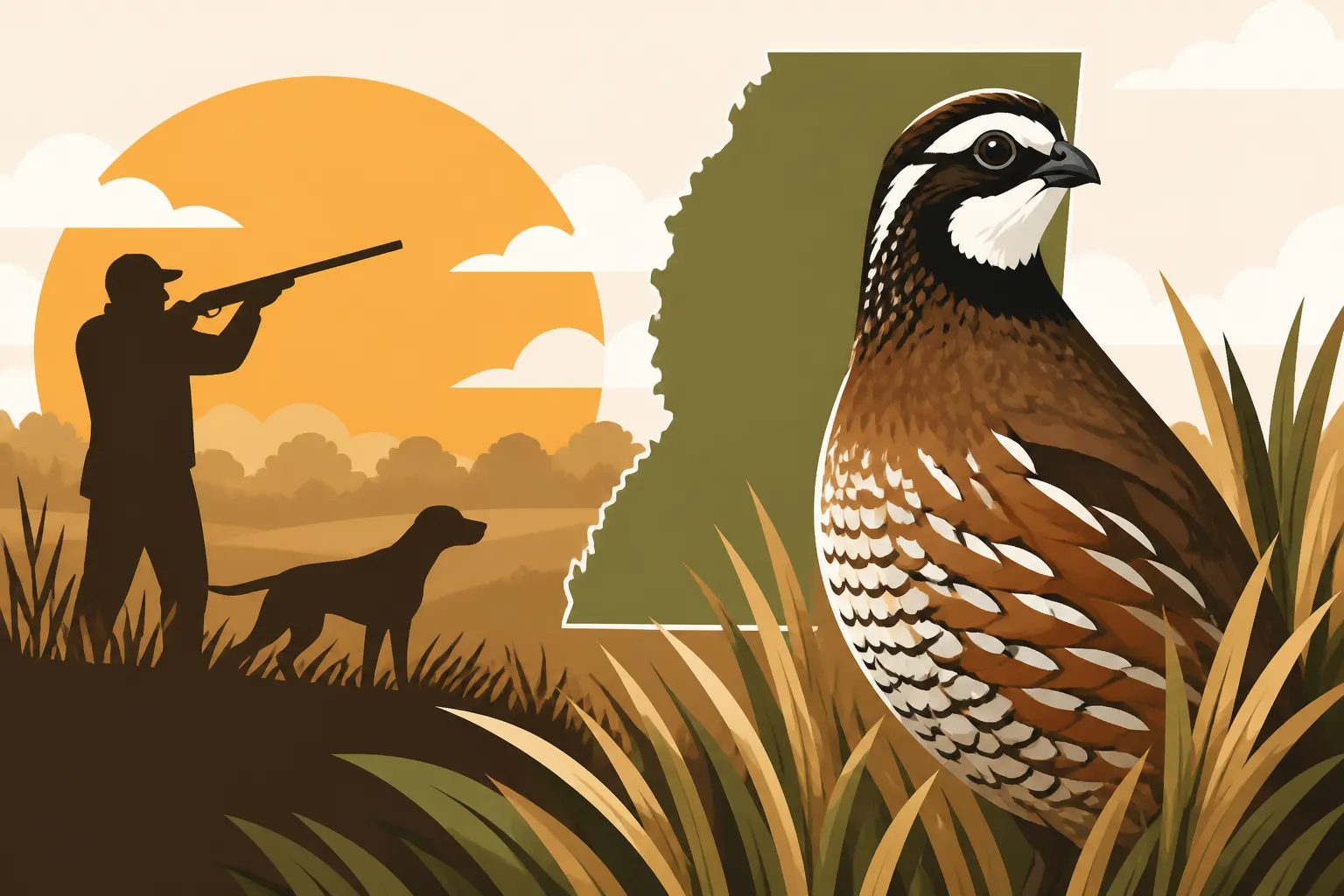
For many of us who grew up in Mississippi, the thought of a covey rise — that explosive flush of bobwhite quail scattering into the pines — is a cherished memory, or perhaps a dream of hunts past. The reality is, finding those vibrant, wild birds today is incredibly challenging, often leading to frustration and disappointment for even the most seasoned wingshooters. This guide is dedicated to exploring the rich history of bobwhite quail in our state, understanding the factors behind their significant decline, and highlighting the dedicated efforts being made to bring these iconic game birds back to our fields and forests.
Mississippi's Quail: A Glimpse into the Golden Age
There was a time, not so long ago, when bobwhite quail weren't just common in Mississippi; they were practically ubiquitous. Stories from grandfathers and old hunting journals paint a picture of abundant coveys in every fence row, every fallow field, and every patch of open pine woods. These weren't just birds; they were a central part of our state's hunting heritage and a true symbol of its wild spaces.
Abundance and the Landscape of Yesteryear
Imagine a landscape vastly different from today, one dominated by small family farms, mixed agriculture, and expansive tracts of timberland that were regularly grazed and burned. This patchwork quilt of habitats was a bobwhite paradise. Farmers planted small fields of corn, peas, and lespedeza, leaving edges untrimmed and fallow corners to grow up in weeds and briars. This created an incredible mosaic of cover, food, and nesting sites, allowing quail populations to thrive. The hunting wasn't just good; it was phenomenal, with hunters often bagging multiple coveys in a single outing. It was a time when a good bird dog was almost a family member, and the sound of its bell disappearing into a thicket meant anticipation for a coming flush.
These early 20th-century landscapes, often less "managed" in the modern sense, actually provided ideal conditions. The lack of heavy machinery meant more small, irregular fields. Crop rotations were common, leaving plenty of undisturbed stubble and edges. Pastures were often grazed by cattle, which kept undergrowth open and created a diverse ground layer crucial for quail movement and insect foraging. This natural disturbance, combined with smaller-scale farming, inadvertently created the perfect recipe for booming quail numbers across the state.
Traditional Hunting Methods
Quail hunting wasn't just a pastime; it was deeply ingrained in the culture of Mississippi. The classic image of a quail hunt often involves a pair of well-trained pointing dogs, usually Brittanys, English Pointers, or Setters, meticulously working a field edge. Hunters, dressed in briar pants and blaze orange vests, would follow, waiting for the dogs to lock up on point, their tails rigid with anticipation. The moment the covey erupted, it was pure adrenaline, a symphony of wing beats and gunshots. This was a social sport, often involving friends, family, and a hearty lunch in the field.
Beyond the classic dog-and-gun approach, other methods were also employed, though less common today. Some hunters would simply walk brushy draws or field edges, hoping to kick up birds. Others, particularly in the deep South, would utilize "bird wagons" to transport hunters and dogs efficiently across large tracts of land. These traditions were about more than just harvesting birds; they were about camaraderie, the skillful work of a good dog, and an intimate connection with the land. The ritual of the hunt, from the early morning dew to the evening stories, formed bonds and passed down knowledge through generations.
The Mystery of the Disappearing Coveys: Understanding the Decline
It’s a sad truth that the landscape for quail in Mississippi, and indeed across much of the Southeast, has changed drastically. The decline didn't happen overnight; it was a slow, insidious process driven by profound shifts in how we use our land. Many factors contributed to this heartbreaking loss, leaving hunters and conservationists scrambling to understand and reverse the trend.
Habitat Loss and Degradation
The single biggest culprit in the bobwhite quail's decline is undeniably habitat loss. As Mississippi modernized, the small, diverse farms that once defined our rural areas gave way to larger, more intensive agricultural operations. This meant bigger fields, fewer hedgerows, and the widespread use of herbicides and pesticides that eliminated crucial weed seeds and insect populations that quail rely on. The tidy, monoculture fields of today offer little in the way of food, cover, or nesting sites for quail.
Beyond agriculture, the timber industry also underwent significant changes. The shift from diverse pine and hardwood forests to vast, dense pine plantations, often managed on short rotations and without regular prescribed burning, created what's often referred to as a "pine desert" for quail. While these plantations might be great for timber production, they offer little sunlight penetration to the forest floor, eliminating the herbaceous understory that quail need for food and escape cover. Suburban sprawl further fragments remaining habitats, pushing quail into smaller, more isolated pockets where they struggle to survive. It's a cumulative effect where every piece of lost habitat, every unburned acre, pushes the birds closer to the edge.
Increased Predation Pressure
While habitat loss is the primary driver, increased predation also plays a significant role in limiting quail populations, particularly in degraded habitats. With less dense, quality cover to hide in, quail become more vulnerable to a variety of predators. Think about it: a bobwhite trying to raise a brood in a sparse field edge is far more exposed than one hidden deep in a bramble thicket or a dense clump of native grasses.
Common predators like raccoons, opossums, skunks, foxes, and even feral cats and coyotes have capitalized on these vulnerable populations. Additionally, the proliferation of species like the raptor, particularly various hawks and owls, further stresses quail. While these predators are a natural part of the ecosystem, their impact is magnified when quail lack adequate escape cover. It’s a vicious cycle where poor habitat leads to higher predation, which then makes it even harder for quail to rebound, even if some habitat improvements are made. The ability of a quail to simply "disappear" into dense cover is its primary defense, and when that cover is gone, so too is its chance of survival. For some landowners, controlling these mesopredators, often through methods like those discussed in Trapping Mississippi Feral Hogs or by implementing year-round control programs for other nuisance animals, has become a necessary part of a holistic quail management strategy.
Agricultural Transformation and Modern Practices
The transformation of Mississippi's agricultural landscape cannot be overstated in its impact on quail. The move from small-scale, diversified farming to large-scale, industrialized agriculture had profound consequences. Farmers, driven by efficiency and market demands, adopted practices that are anathema to quail survival. Fields became larger, eliminating fence rows and wooded buffers that once served as crucial travel corridors and nesting sites.
The widespread use of powerful herbicides eradicated broadleaf weeds that produced seeds essential to a quail's diet and harbored insects vital for chick survival. Insecticides, while protecting crops, simultaneously removed a critical food source for newly hatched quail. Furthermore, the practice of disking or plowing fields right up to the very edge, or even winter tilling, destroyed valuable cover and food sources during the leanest months. Modern farming often leaves behind a pristine, but ultimately barren, environment for wildlife, a stark contrast to the messy, bountiful edges of our grandfathers' farms.
Mississippi's Quail Today: A Glimmer of Hope in Sparse Numbers
Despite the widespread decline, bobwhite quail are not entirely gone from Mississippi. They persist, often in isolated pockets, providing a testament to their resilience. However, their numbers are dramatically lower than historical levels, making encounters with wild coveys a rare and special event rather than a common occurrence.
Regional Differences in Population
You're not going to find quail everywhere in Mississippi, and certainly not in the numbers you once did. Quail populations today are highly localized and concentrated in areas that still retain some semblance of suitable habitat. The highest densities, albeit still low overall, are typically found in the Piney Woods region and portions of the Loess Bluff Hills, where private landowners and some public land managers have actively worked to restore or maintain critical habitat. Areas with extensive, actively managed pine forests, often employing prescribed burning, tend to hold the most promise.
In contrast, the Delta region, with its vast agricultural landscapes, offers very little suitable habitat, and wild quail are exceedingly rare. The North Central Unit and much of the Black Prairie also show very low numbers. It’s a stark reminder that quail are incredibly sensitive to their environment, and their presence or absence is a direct indicator of habitat quality. Hunters seeking them out must be prepared to scout extensively and focus on these specific, often privately managed, regions.
MDWFP Monitoring and Research Efforts
The Mississippi Department of Wildlife, Fisheries, and Parks (MDWFP) is acutely aware of the quail situation and has ongoing efforts to monitor populations and research recovery strategies. While statewide surveys for such a dispersed and cryptic bird can be challenging, MDWFP biologists conduct various surveys, including roadside call counts, to track population trends. They also work closely with private landowners and conservation organizations to gather data and implement habitat improvement projects.
Much of their work revolves around educating the public and landowners on best management practices, often detailed in resources like Mississippi's Historic Quail Decline and How Managed Pine Could Restore Mississippi Quail. These efforts are crucial, as a coordinated, data-driven approach is essential for any chance of a significant rebound. The department also participates in regional quail conservation initiatives, understanding that the problem extends beyond state lines and requires a broader strategy.
| Habitat Component | Importance for Quail | Example Species/Feature | Management Action |
|---|---|---|---|
| Early Successional Cover | Nesting, brooding, escape cover | Native grasses (e.g., bluestem), briars, forbs | Disking, prescribed fire, selective herbicide use |
| Bare Ground/Open Understory | Foraging, dusting, chick movement | Sparse areas within cover, sandy patches | Prescribed fire, light disking |
| Forb/Insect Rich Areas | Food for adults (seeds), crucial protein for chicks (insects) | Ragweed, partridge pea, native legumes | Planting native food plots, rotational disking |
| Shrubby Thickets/Hedgerows | Thermal cover, predator escape, roosting sites | Blackberry brambles, sumac, plum thickets, brush piles | Protecting existing hedges, creating brush piles |
| Pine Savanna/Open Woods | Ideal combination of cover, food, and open ground | Longleaf pine with diverse understory | Thinning pines, frequent prescribed fire |
Habitat is King: Restoring Quail in the Magnolia State
If there's one resounding truth about quail conservation, it's this: habitat is absolutely paramount. Without the right kind of cover, food, and nesting sites, all other efforts are largely in vain. Restoring bobwhite quail populations in Mississippi means a concerted, long-term commitment to creating and maintaining the specific mosaic of habitats these birds need to thrive.
The Power of Prescribed Fire
Prescribed fire is arguably the single most effective tool for restoring and maintaining bobwhite quail habitat in Mississippi's pine and mixed pine-hardwood forests. Historically, natural wildfires, often started by lightning, shaped these ecosystems, creating open understories and promoting a diverse array of native grasses and forbs. When fire is suppressed, the forest floor becomes choked with dense, undesirable vegetation, creating a habitat unsuitable for quail.
A properly executed prescribed burn removes this dense understory, stimulates the growth of beneficial plants, and creates the bare ground patches that quail chicks need to move and forage for insects. It also helps control woody encroachment, keeping the habitat open and accessible. Burning on a short rotation (1-3 years) is key to mimic natural processes and maintain high-quality habitat. Landowners who adopt this practice often see dramatic improvements in not just quail numbers, but overall ecosystem health. Anyone considering this needs proper training and permits, but the ecological benefits are immense.
Developing and Maintaining Pine Savanna
Beyond just burning, the concept of a true "pine savanna" is the gold standard for quail habitat in many parts of Mississippi. This involves thinning pine stands to a much lower density than typically practiced in commercial timber operations, allowing ample sunlight to reach the forest floor. Once sunlight hits the ground, prescribed fire can then be used to manage the understory, promoting a lush growth of native grasses (like bluestem and indiangrass) and forbs (like partridge pea and lespedeza).
This open, park-like environment with scattered pines and a rich herbaceous layer provides everything a quail needs: nesting cover in tall grasses, brooding cover with abundant insects, seeds for food, and good visibility for predator detection. Creating and maintaining pine savanna is a long-term commitment, but it yields incredible results for quail and a host of other ground-dwelling wildlife. It often requires a shift in mindset from maximizing timber production to optimizing wildlife habitat, but it's a worthwhile investment for those passionate about quail.
Strategic Food Plots and Native Plantings
While large-scale habitat restoration is key, strategic food plots and native plantings can play a supplementary role, especially on smaller tracts or as part of a larger plan. These aren't your typical deer food plots of straight clover; rather, they are designed with quail-specific needs in mind. Think small, irregular patches of annual grains like sorghum, millet, or even old-field mixes that include ragweed, partridge pea, and various legumes.
These plots should be allowed to go to seed and often remain undisturbed through the winter, providing crucial food during lean times. Crucially, they should always be bordered by dense, protective cover, allowing quail safe access. Integrating native perennial grasses and forbs around these plots helps create additional nesting and brooding habitat. Landowners can use tools like GoHunt to analyze their property's topography and existing vegetation, helping them identify optimal locations for these quail-centric plantings, ensuring they integrate seamlessly into the broader habitat. Remember, a quail food plot isn't just about food; it's about providing the right food in the right place with the right escape cover.
The Role of Hunters and Landowners in Quail Recovery
The future of bobwhite quail in Mississippi largely rests on the shoulders of private landowners and the hunting community. While state agencies provide guidance and support, the vast majority of potential quail habitat is privately owned. Engaged, informed individuals are the true catalysts for change.
Private Land Initiatives and Conservation Partnerships
Many forward-thinking private landowners in Mississippi are actively engaged in quail conservation. This often involves partnering with organizations like the National Wild Turkey Federation (NWTF), Quail Forever, and other wildlife groups that provide technical assistance, cost-share programs, and equipment for habitat work. These partnerships are vital, helping landowners implement complex management practices like prescribed burning, timber thinning, and native grass establishment.
For instance, a landowner might work with a Quail Forever biologist to develop a comprehensive management plan for their property, focusing on creating interconnected patches of suitable habitat. These plans often include detailed recommendations for specific plant species to encourage, burning regimes, and even strategies for predator control. This is where dedicated tools can come in handy. Landowners using platforms like GoHunt can access satellite imagery and mapping tools to plan timber thinnings, map out burn units, and identify potential areas for habitat corridors, turning their vision into a tangible plan. These private land efforts, though often localized, collectively contribute significantly to the broader recovery effort. Getting Private Land Permission in Mississippi for hunting these birds often means understanding the landowner's conservation goals.
Public Land Efforts and Limited Opportunities
While the focus on quail conservation is often on private land, some public lands in Mississippi also play a role, albeit a smaller one. The MDWFP manages several Wildlife Management Areas (WMAs) where quail habitat restoration is a part of the overall management plan. These areas, particularly those in the Piney Woods region, may implement prescribed burning, timber thinning, and native grass plantings to benefit quail and other early successional species.
Hunting opportunities for wild quail on public land are extremely limited and require immense effort and knowledge of specific managed areas. Hunters often spend more time scouting than actually hunting, seeking out these rare pockets of suitable habitat. For those committed, Scouting Mississippi Public Land Before Season is non-negotiable, and tools like the MDWFP app or ONX Hunt can be invaluable for identifying potential areas within WMAs. It’s important to manage expectations; public land quail hunting in Mississippi is not for the faint of heart, but it does exist for the dedicated enthusiast willing to put in the legwork. Mississippi Wildlife Management Areas are your best bet for these public land opportunities.
Hunting Bobwhite Quail in Modern Mississippi
Let's be realistic: quail hunting in Mississippi today is not what it used to be. It's a sport that demands dedication, persistence, and often, a willingness to travel to find opportunities. It's less about filling a bag limit and more about the experience, the dogs, and the thrill of a covey rise.
The Realities of Limited Opportunities
For the modern quail hunter in Mississippi, the biggest reality is scarcity. Wild quail coveys are few and far between, meaning you can't just pick a spot and expect to find birds. Most hunting opportunities exist on private lands where extensive habitat management has been undertaken. This often means being part of a hunting club, having personal access to a well-managed private tract, or participating in a guided hunt.
Public land opportunities, as mentioned, are exceptionally rare. Hunters should expect to cover a lot of ground, often without seeing a single bird. The focus shifts from high volume to quality encounters. When you do find a wild covey, it's a truly special moment, a reward for the effort and a connection to a bygone era. It's about celebrating the presence of the birds, even if it's just a fleeting glimpse.
Best Practices for Ethical and Successful Hunts
If you are fortunate enough to find a place to hunt wild quail in Mississippi, practicing ethical and responsible hunting is paramount. This starts with respecting the land and the landowner's wishes. Always prioritize the health of the covey; taking too many birds from a small covey can impact its ability to reproduce. Many conservation-minded hunters today opt for smaller bag limits than those allowed by regulations, or even practice "shoot one, leave the rest" to ensure the covey can rebuild.
Working with well-trained dogs is not just traditional; it's essential for efficient bird recovery and minimizing crippled birds. Furthermore, understanding Mississippi Small Game Season Rules and ensuring you have the proper licenses, like the Mississippi Resident Sportsman's License, is a must. Modern hunters are also embracing technology, with mapping apps helping them track dog movement, mark covey locations (for future reference, not to over-harvest), and better understand the terrain. The goal is not just to harvest, but to be a steward of the resource, ensuring that future generations might also get to experience the magic of a bobwhite covey rise. This thoughtful approach extends to species like those covered in Rabbit and Upland Hunting in Mississippi, emphasizing respect and sustainability.
Looking Ahead: The Future of Quail Hunting in Mississippi
While the challenges facing bobwhite quail in Mississippi are significant, there is a strong and growing commitment to their recovery. The future isn't about simply lamenting the past; it's about active conservation, smart land management, and a collective effort from hunters, landowners, and state agencies.
Ongoing Research and Conservation Initiatives
Across the Southeast, and certainly within Mississippi, there's continuous research into bobwhite quail ecology, habitat needs, and population dynamics. Universities and state agencies are studying everything from the impact of specific management practices to genetic diversity and disease prevalence. These scientific insights are crucial for refining conservation strategies and ensuring that efforts are as effective as possible.
Conservation initiatives, often driven by organizations like Quail Forever and the National Wild Turkey Federation, continue to expand. These groups are actively working on the ground, providing technical assistance to landowners, advocating for quail-friendly agricultural policies, and funding critical habitat projects. The commitment to these birds is unwavering, and every new piece of research or successful habitat project brings renewed hope.
Collaborative Conservation: A United Front
The most promising path forward for bobwhite quail in Mississippi lies in collaborative conservation. This means hunters, landowners, state biologists, timber companies, and even agricultural producers working together towards a common goal. It requires open communication, shared understanding, and a willingness to adapt land management practices to benefit wildlife.
Initiatives that bridge the gap between timber production and quail habitat, for example, are gaining traction. Incentive programs that encourage landowners to adopt quail-friendly practices are expanding. The understanding that healthy ecosystems benefit more than just one species is growing, fostering a more holistic approach to land management. By forming a united front, dedicated to both habitat restoration and sustainable hunting, we can collectively strive to bring back the whistling call of the bobwhite and ensure that future generations can experience the thrill of a wild covey rise in the Magnolia State.
Disclaimer
The information provided in this guide is for general informational purposes only and does not constitute legal advice. Hunting regulations, license requirements, and land access rules in Mississippi are subject to change. Always consult the latest official regulations from the Mississippi Department of Wildlife, Fisheries, and Parks (MDWFP) before engaging in any hunting activities. It is your responsibility to know and follow all applicable laws and regulations.