Mississippi Osprey Nesting Platforms
There's a special thrill that comes from spotting an osprey soaring high above a Mississippi waterway, then watching it dive with pinpoint precision to snatch a fish from the water. It’s a moment that connects us to the wild beauty of our state, but it’s also a reminder of how fragile these natural wonders can be. If you've ever worried about where these magnificent "fish hawks" will build their nests as old snags fall and human development creeps closer to the water's edge, you're not alone. This guide is all about understanding the crucial role of osprey nesting platforms in Mississippi, how they help these incredible birds thrive, and what you can do to support their future.
The Urgent Need for Osprey Nesting Platforms in Mississippi
For generations, ospreys relied on tall, strong trees, often dead snags standing sentinel near major rivers, lakes, and coastal marshes, to build their bulky nests. These elevated perches offered a commanding view of their fishing grounds and kept their precious eggs and young safe from most ground predators. But our landscape is always changing, and those perfect natural nesting sites are becoming harder and harder to find. It's a real frustration for anyone who loves seeing these birds, knowing their traditional spots are disappearing.
Declining Natural Habitat and Human Impact
Think about the sprawling bottomland hardwoods along the Mississippi River or the ancient cypress swamps that once dotted our landscape. Many of those towering trees that would naturally provide nesting opportunities have been cleared for agriculture, development, or simply succumbed to age and storms without adequate replacement. The remaining mature trees are often located in areas with increased human activity, leading to disturbances that can scare ospreys away from viable nesting sites.
Another significant challenge comes from our infrastructure. Power poles, cell towers, and other man-made structures often mimic the height and prominence of natural nest sites. While ospreys, ever the opportunists, will readily use these, it often puts them in direct conflict with human interests. Nests on power poles can cause power outages, and more tragically, expose the birds to electrocution. It’s a tough situation because the birds are just trying to survive, and we’re unintentionally putting them in harm’s way. That's where the thoughtful placement of dedicated nesting platforms becomes a game-changer. These platforms redirect nesting efforts to safe, accessible locations, protecting both the birds and our power grid.
The Role of Nesting Platforms in Conservation
This is where the idea of installing purpose-built osprey nesting platforms really shines. These structures aren't just a nice gesture; they're a vital conservation tool that offers safe, elevated nesting sites specifically designed for ospreys. By providing these artificial platforms, we can mitigate the loss of natural habitat and create secure homes where ospreys can raise their young without the constant threat of disturbance or electrocution. It's a proactive step that shows our commitment to ensuring these magnificent birds remain a vibrant part of Mississippi's wildlife tapestry.
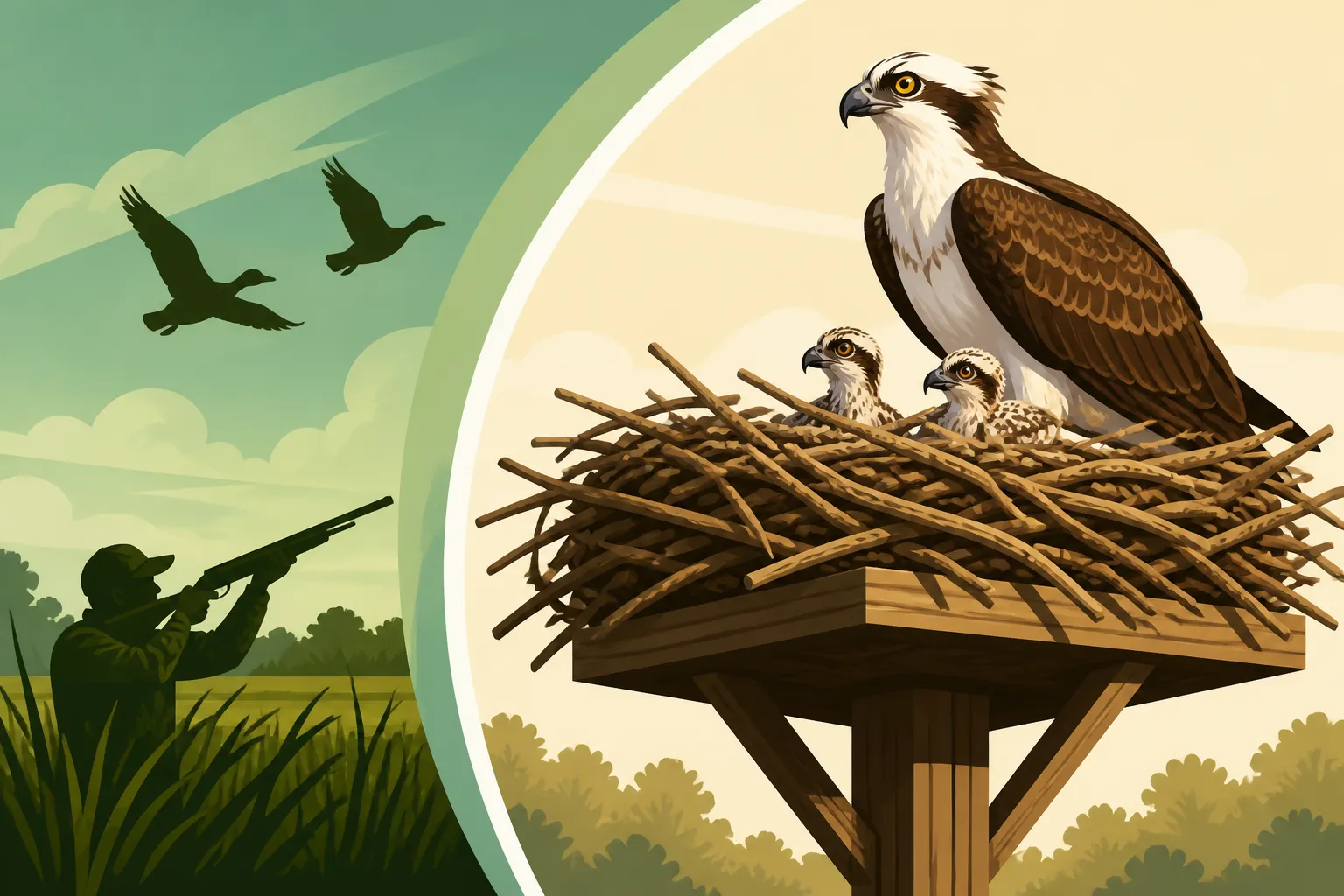
Think of it as giving them a leg up, a helping hand when their traditional real estate market has dried up. These platforms are typically poles sunk deep into the ground near water, topped with a sturdy, open-sided box or basket structure that mimics the broad, flat base an osprey needs for its nest. They’re placed in locations that offer plenty of fish, open flyways, and a measure of protection from land-based predators. This targeted approach has been instrumental in helping osprey populations recover in many areas, including right here in Mississippi. It's a tangible way to support wildlife right in our backyards, or at least in our nearest public waters. If you're passionate about preserving wildlife habitat, understanding where these birds thrive can be further enhanced by exploring resources like Scouting Mississippi Public Land Before Season to identify potential conservation areas.
Building and Installing an Effective Osprey Platform
If you're considering installing an osprey nesting platform, whether on private land or through a public land conservation project, it's crucial to get it right. These aren't just glorified birdhouses; they're substantial structures that need to be built to last and positioned correctly for the birds to accept them. A poorly designed or located platform is a wasted effort, and we certainly don't want that when we're trying to help.
Essential Platform Design and Materials
The basic design for an osprey nesting platform is surprisingly straightforward, but the details matter. You're essentially creating a durable, elevated surface that can support a large, heavy nest and withstand Mississippi's weather, including our strong winds and heavy rains.
- Pole: The foundation is a sturdy, tall pole, typically 30-50 feet in height. Treated utility poles are often used because they're designed for outdoor exposure and can be sunk deep enough into the ground for stability. Metal poles can also be an excellent, more durable option. The height is critical to offer safety from predators and a clear flight path.
- Platform Surface: At the top of the pole, you'll need a platform that's roughly 30-40 inches square. This gives the osprey enough room to build its nest. Many platforms use a durable, weather-resistant material like treated lumber, composite decking, or even a heavy-gauge welded wire mesh. A mesh base is often preferred because it allows water to drain through, preventing the nest from becoming waterlogged. Some designs include a short lip or rail around the edge to help contain nesting material in high winds, but it shouldn't be so high as to impede the birds' access or view.
- Nest Starter: Often, a small amount of "nest starter" material, like some sticks or an old bicycle rim, is placed on the platform. This isn't just decoration; it signals to prospecting ospreys that this is a suitable site and gives them a head start on construction.
Here’s a quick comparison of common platform materials:
| Feature | Treated Lumber Platform | Metal Platform (Steel/Aluminum) |
|---|---|---|
| Durability | Good, but can warp, crack, or rot over decades. | Excellent, highly resistant to weather and pests. |
| Cost | Generally lower initial material cost. | Higher initial material cost. |
| Weight | Moderate. | Moderate to heavy, depending on gauge. |
| Maintenance | May require checking for rot/loose fasteners over time. | Minimal, mainly structural integrity checks. |
| Installation | Can be DIY-friendly with proper tools and safety. | Often requires specialized welding/fabrication or professional installation. |
| Drainage | Requires gaps between boards or mesh insert for drainage. | Mesh design is inherent for drainage. |
Strategic Placement for Success
Even the most robust platform won't be used if it's in the wrong spot. Ospreys are particular, and their primary criteria revolve around food access and safety.
- Proximity to Water: This is non-negotiable. Ospreys are fish eaters, so their platform needs to be within a reasonable flying distance of reliable fishing grounds—think large lakes, slow-moving rivers, expansive reservoirs, or coastal estuaries. Being close to prime areas like the Mississippi River Backwaters or parts of the Mississippi River Batture Public Access will significantly increase the chances of attraction.
- Open Flight Paths: Ospreys have a wingspan that can easily exceed five feet. They need a clear, unobstructed flight path to approach and depart the nest, especially when carrying large fish. Avoid placing platforms too close to dense tree lines, power lines, or tall buildings that might hinder their access.
- Distance from Disturbance: While ospreys can tolerate some human presence, excessive or constant disturbance can cause them to abandon a nest. If placing a platform on private land near a home, try to keep it at least a couple hundred yards away from high-traffic areas. On public lands, choose quieter sections of lakes or rivers, perhaps even within Mississippi Wildlife Management Areas where human activity might be managed.
- Safety First: Installing a 30-50 foot pole is no small feat. This is often a job for professionals with the right heavy equipment. If doing it yourself, prioritize safety above all else, using proper lifting equipment, secure footings, and a well-planned installation process. We want to help the birds, not endanger ourselves.
Remember, patience is key. It might take a season or two for ospreys to discover and adopt a new platform, but once they do, they often return to the same site year after year.
Maintaining Your Osprey Nesting Platform
Putting up a platform isn't a "set it and forget it" situation. Just like any other piece of infrastructure, these platforms require periodic maintenance to ensure they remain safe, sturdy, and attractive to ospreys for years to come. Neglecting maintenance can lead to platform failure, which is heartbreaking for the birds and a waste of your efforts.
Annual Inspections and Repairs
The best time for a thorough inspection is in the late fall or early winter, after the ospreys have migrated south for the colder months and before they return in early spring. This timing minimizes disturbance to the birds.
Here’s what to look for:
- Structural Integrity: Check the pole for any signs of cracking, rotting (if wood), or corrosion (if metal). Ensure all fasteners, bolts, and welds holding the platform to the pole are secure and free from rust or damage. High winds can put immense stress on these structures, so a sturdy base is paramount.
- Platform Surface: Examine the platform itself. Are any boards loose or rotting? Is the mesh bent or torn? Make sure the surface is still solid and provides a stable base for a nest. Sometimes, squirrels or other animals might try to chew at wood components, so look for any damage.
- Nest Debris: Ospreys build incredibly large nests, often incorporating unusual items like plastic bags, fishing line, or even old clothing alongside sticks. While they’re good at cleaning house, sometimes hazardous debris can get woven into the nest. If you can safely remove any obvious non-natural or dangerous items (like fishing line that could entangle a bird), it's a good idea. However, generally leave the natural nesting material in place as it can serve as a "starter nest" for returning birds.
- Predator Guards: If you have predator guards installed, inspect them to ensure they are still effective and haven't been compromised by time or persistent critters. We'll talk more about these in the next section.
- Pole Stability: After years of wind and weather, the ground around the base of the pole can sometimes erode. Check for any leaning or instability and reinforce as needed with additional soil or concrete if the structure appears compromised.
Any necessary repairs, from replacing a rotten board to tightening bolts, should be done during this dormant period. Doing so ensures the platform is in prime condition when the ospreys return, ready for another successful nesting season.
Mitigating Predator and Human Disturbance
Once a platform is up and accepted, your goal is to make it as safe and peaceful as possible for the nesting pair. This involves minimizing threats from both the natural world and human activity.
- Predator Control: While the height of an osprey platform deters many ground predators, persistent climbers like raccoons and snakes can still pose a threat to eggs and nestlings. Installing a "predator guard" around the pole can be incredibly effective. This is typically a wide, smooth metal cone or a section of PVC pipe installed horizontally around the pole, making it impossible for climbing predators to get a grip and reach the nest. It's a small addition that can make a huge difference in nesting success.
- Minimizing Human Disturbance: This is crucial. Once ospreys are nesting, they are quite sensitive to disturbances, especially during the incubation and early nestling phases.
- Keep Your Distance: Avoid approaching the platform too closely, whether by boat or on foot. Use binoculars or a spotting scope to observe the birds from a respectful distance.
- Educate Others: If the platform is on public land or visible to neighbors, gently educate people about the importance of not disturbing the nesting birds. Explain that getting too close can cause the adults to flush off the nest, leaving eggs or young vulnerable to heat, cold, or predators.
- Noise Control: Try to minimize loud noises, especially during critical nesting periods.
- Fishing Etiquette: If fishing near an osprey platform, be mindful of your lines and hooks. Entanglement in fishing line is a real danger to ospreys and other wildlife. Always retrieve lost line.
By taking these steps, you create a sanctuary for these magnificent birds, allowing them to focus on the important work of raising the next generation of Mississippi ospreys. If you ever encounter an injured osprey or other wildlife, knowing about resources like Mississippi Wildlife Rehabilitation for Injured Game can be life-saving.
Mississippi's Osprey Population and Broader Ecological Benefits
The story of the osprey in Mississippi, much like the broader narrative of many raptors across North America, is one of both challenge and inspiring recovery. Understanding their journey helps us appreciate why these nesting platforms are so vital.
Osprey Recovery in the Magnolia State
For a time, especially during the mid-20th century, osprey populations faced significant declines, primarily due to the widespread use of DDT and other persistent pesticides. These chemicals accumulated in their prey fish, leading to thin eggshells that often broke during incubation. It was a dark period for many of our top predators. Thankfully, with the ban of DDT and dedicated conservation efforts, ospreys have made a remarkable comeback.
Today, you can see ospreys across Mississippi, from the coastal marshes of the Gulf Coast to the large reservoirs in central and northern parts of the state. They are especially visible along major river systems like the Mississippi and Pascagoula rivers, and around our larger lakes. Their return is a testament to the power of environmental protection and direct conservation actions like the installation of nesting platforms. Each platform that helps a pair successfully fledge young contributes directly to the overall health and expansion of the population. As a conservation-minded outdoors enthusiast, keeping up with wildlife trends and habitat improvement efforts is easy with tools like GoHunt, which can help you stay informed about areas where these success stories are unfolding.
The sight of an osprey gracefully fishing or tending its nest is no longer as rare as it once was, and that’s a win for everyone who cherishes our natural world. It’s also an indication that the aquatic ecosystems supporting these birds are healthy enough to sustain them.
The Ripple Effect: Beyond Just Ospreys
When we support ospreys, we're not just helping one species; we're often contributing to the health of an entire ecosystem. Ospreys are what we call "indicator species"—their presence and health can tell us a lot about the quality of the water and the fish populations within it. A thriving osprey population suggests a healthy fish stock, which in turn points to good water quality and balanced aquatic habitats.
Furthermore, these nesting platforms, while specifically designed for ospreys, can sometimes offer secondary benefits to other wildlife. While not their primary purpose, an abandoned osprey nest or a platform that isn't currently occupied might occasionally be utilized by other large birds, or provide a temporary perch for other raptors. More directly, the very act of maintaining these platforms often involves stewardship of the surrounding wetland or riparian areas, which benefits countless other species. For example, efforts to protect osprey habitat near rivers often indirectly support species like the Mississippi Bald Eagle Recovery Near the Rivers or various species of Mississippi Waterfowl on the Mississippi Flyway.
It’s about recognizing the interconnectedness of our natural world. Every effort we make, whether it’s installing a single platform or participating in larger habitat restoration projects, has a ripple effect. It's a long game, but one worth playing for the continued beauty and biodiversity of our state. We, as hunters and conservationists, have a crucial role to play in ensuring these efforts continue.
Disclaimer
This article is for general informational purposes only and does not constitute professional advice. Laws, prices and regulations vary by location and change over time. Consult a qualified professional for guidance on your specific situation.