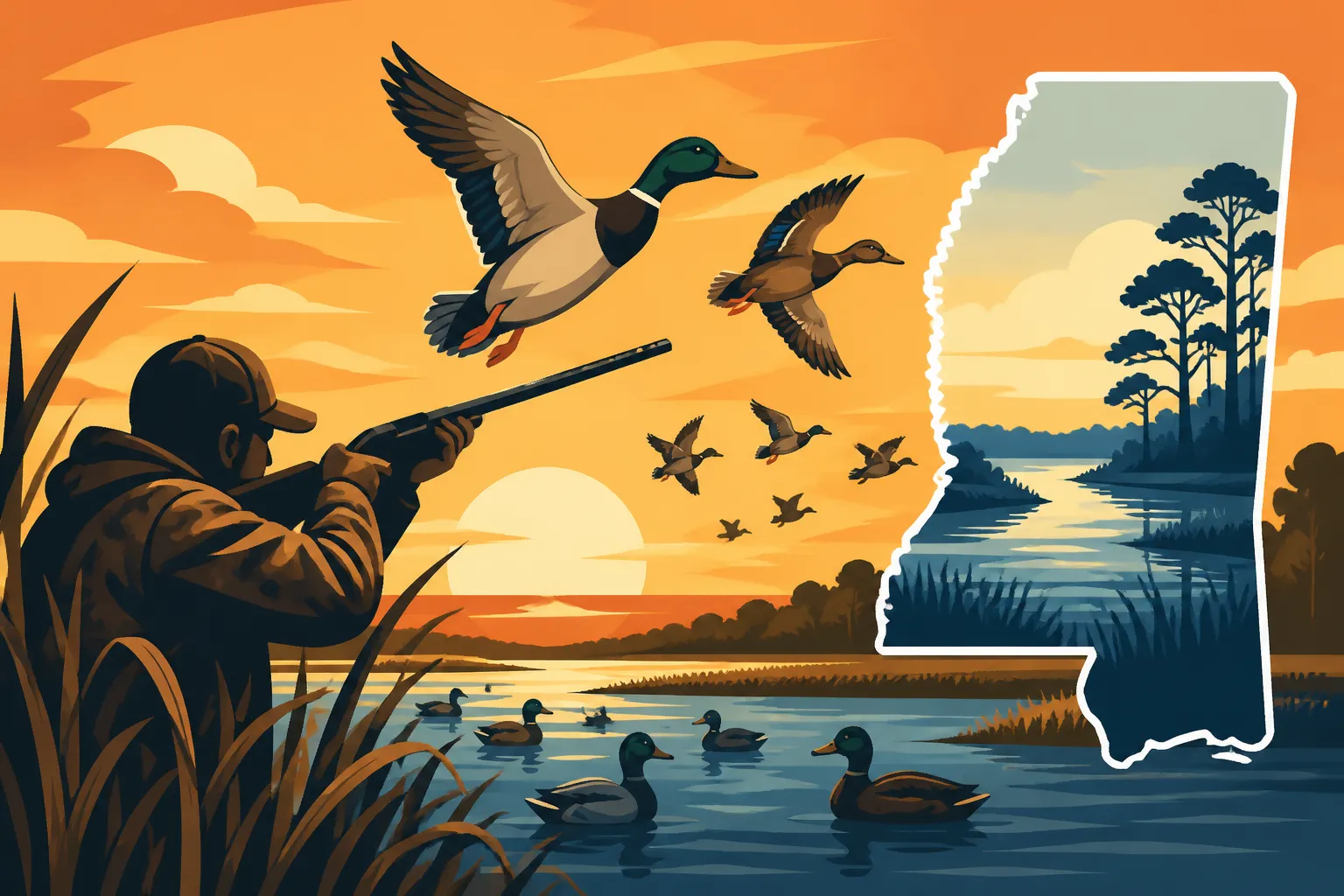
Mississippi Waterfowl on the Mississippi Flyway
It can feel incredibly daunting to wrap your head around waterfowl hunting in Mississippi. With its complex web of migration patterns, diverse habitats, and sometimes confusing season structures across different zones, hunters often feel overwhelmed just trying to plan their next outing. This comprehensive guide is designed to cut through that complexity, offering a detailed look at everything from the Mississippi Flyway's profound influence on our state's duck and goose populations to essential scouting techniques and critical gear, ensuring you're well-equipped and confident for a successful hunt.
Understanding the Mississippi Flyway's Importance for Waterfowl
When we talk about waterfowl hunting in Mississippi, we're really talking about the Mississippi Flyway. It’s not just a fancy name; it’s the lifeblood of our duck and goose seasons, a massive aerial superhighway that funnels millions of birds from their breeding grounds in the far north down to their wintering havens, many of which are right here in our state. Understanding this flyway is the first step to truly grasping why Mississippi is such a waterfowl mecca.
The Grand Highway in the Sky: What Makes the Mississippi Flyway Special
Imagine a colossal, invisible aerial route, stretching from the arctic tundra of Canada and Alaska, all the way down through the heart of North America, eventually reaching the warm Gulf Coast and even parts of Central and South America. That, in essence, is the Mississippi Flyway. It’s one of four major migratory bird routes on the continent, and arguably the most significant for waterfowl, simply due to the sheer volume of birds and the incredible diversity of species that rely on it. Mississippi sits strategically positioned towards the southern end of this flyway, making us a critical wintering ground and a crucial stopover point for ducks and geese needing to rest and refuel.
What makes our stretch of the flyway so special? It's a combination of geography and habitat. The mighty Mississippi River, with its vast floodplain, oxbow lakes, and associated wetlands, creates an undeniable magnet for migrating birds. As winter approaches and temperatures drop up north, these birds instinctively follow the food and milder weather, riding favorable winds south. Mississippi provides exactly what they need: abundant shallow water habitats, flooded timber, and vast agricultural fields rich with waste grain. It’s a perfect storm of resources that draws in ducks and geese year after year, offering them refuge from harsh northern winters. Without this grand highway, our duck seasons simply wouldn't exist as we know them, and the rich tradition of waterfowling in Mississippi would be a far different, and much poorer, experience.
Key Species and Their Migration Patterns Through Mississippi
The diversity of waterfowl that travel the Mississippi Flyway and grace our waters is truly impressive. While everyone immediately thinks "mallards" when you mention duck hunting, there’s a whole cast of characters that make their way to Mississippi. Mallards are, of course, king. These "greenheads" are often the primary target for many hunters, known for their strong migration instincts and preference for flooded timber and grain fields. They typically start arriving in numbers from late October through November, with peak populations often seen in December and January as colder weather pushes more birds south.
But it’s not just mallards. You'll find plenty of gadwalls, often called "gray ducks," which are quick to take advantage of flooded agricultural fields and emergent vegetation. Northern shovelers, easily identified by their oversized bills, are common in shallow, nutrient-rich waters. Green-winged and blue-winged teal are early migrants, with blue-wings often passing through quickly in September and October, while green-wings stick around longer, especially in smaller, shallower water bodies. Wood ducks, with their stunning plumage, are resident birds to a degree, but their numbers swell significantly with migrants, especially in the flooded timber and swamps. For diving ducks, like ring-necked ducks and scaup, you’ll often find them in larger, deeper oxbows and river backwaters. Geese, primarily snow geese and specklebellies (greater white-fronted geese), arrive a bit later, typically showing up in significant numbers from November onward, often preferring wide-open agricultural fields for feeding. Understanding these general migration timings and preferences, along with paying attention to current conditions, is key to targeting specific species and knowing when to expect them in our state. Staying updated on the latest migration reports, perhaps through resources like the GoHunt app or website, can give you a real edge in predicting when the birds will be arriving in force.
The Delta's Irresistible Pull for Wintering Ducks and Geese
If the Mississippi Flyway is a highway, then the Mississippi Delta is a major service station and resort town for wintering waterfowl. This flat, fertile region, carved out by the Mississippi River, is truly unique. It encompasses a vast expanse of bottomland hardwoods, cypress-tupelo swamps, and incredibly productive agricultural lands—a combination that creates an unparalleled habitat for ducks and geese. Historically, before widespread timber clearing, the Delta was one of the largest continuous bottomland hardwood forests in North America, a natural haven that drew millions of birds. Even with the changes brought by agriculture, the instinct of the birds to funnel into this area remains incredibly strong.
The Delta’s appeal lies in its reliable food sources and abundant water. After the fall harvest, corn and rice fields are often flooded, providing a readily available buffet of waste grain for dabbling ducks like mallards, pintails, and gadwalls. These birds can spend weeks, even months, gorging themselves, building up fat reserves for the spring migration. The vast network of ditches, bayous, and oxbows, often fed by the rising and falling Mississippi River, offers consistent shallow water habitat. And then there's the flooded timber—stands of oak, pecan, and cypress that, when inundated, transform into magical duck woods. These areas provide both food (like acorns) and crucial sanctuary from predators and hunting pressure. It’s this combination of factors—the historical draw, the rich agricultural bounty, and the extensive network of wetlands—that makes the Delta the ultimate winter destination for so many waterfowl. For countless generations, this region has been where ducks congregate, a tradition that continues to draw hunters from far and wide, eager to experience the legendary shooting the Delta can offer. Want to dig deeper into why so many ducks choose this particular spot? Check out our article on "Why the Delta Draws Waterfowl Every Winter".
Prime Waterfowl Habitat Across Mississippi
Mississippi is blessed with a diverse landscape, and that diversity translates directly into a wide array of prime waterfowl habitats. While the Delta often gets all the glory, there are fantastic opportunities across the state, from the big river systems to the piney woods. Understanding where different species prefer to hang out is paramount to putting together a successful hunt. It’s not just about finding water; it’s about finding the right water with the right food and cover.
Flooded Timber: The Duck Hunter's Paradise
For many Mississippi duck hunters, "flooded timber" isn't just a habitat type; it's a spiritual experience. Imagine standing chest-deep in frigid water, surrounded by ancient cypress and oak trees, their branches laden with Spanish moss, as the first rays of dawn pierce through the canopy. Suddenly, a whistle of wings, a flash of green, and the frantic splashing as a flock of mallards bombs into your decoys. That's the magic of flooded timber. This habitat, particularly prevalent in the Delta, along the Mississippi River batture, and in certain Wildlife Management Areas, is exactly what mallards and wood ducks crave.
These bottomland hardwood forests, when naturally or artificially flooded, provide abundant natural food sources like acorns from various oak species (especially Nuttall, willow, and pin oaks), cypress seeds, and submerged aquatic vegetation. The trees themselves offer protection from the elements and predators, making them ideal roosting and loafing areas. Hunting flooded timber requires specialized gear—good waders are a must, and often a boat or ATV to access remote spots. Success hinges on finding areas with fresh duck sign, identifying feeding trees, and setting up to catch birds as they come off larger water bodies to feed. It’s often a more challenging hunt, requiring patience and a good understanding of duck behavior, but the rewards of a close-quarters shoot in the timber are second to none. If you're looking for an in-depth guide on these unique hunts, our article "Hunting Flooded Timber for Wood Ducks" offers some fantastic insights.
Agriculture Fields: Geese and Dabblers' Buffet
While flooded timber is iconic, Mississippi's vast agricultural fields are equally crucial, especially for geese and many species of dabbling ducks. Once the corn, rice, and soybean harvests are complete, countless acres of waste grain remain scattered across the landscape. When these fields receive ample rainfall or are intentionally flooded, they become an irresistible buffet for waterfowl. Snow geese, specklebellies, and even resident Canada geese will descend upon these fields in huge numbers, gorging themselves on the high-energy grain. It's not uncommon to see thousands of geese in a single field in the Delta during the peak of winter.
Dabbling ducks like mallards, pintails, and gadwalls also frequent these fields, especially rice and corn. They'll pitch into shallowly flooded areas to dabble for submerged seeds and leftover grains. Hunting these fields typically involves layout blinds, a lot of decoys, and careful scouting. You need to identify where the birds are feeding, not just that they are feeding in a particular field. This often means driving around at dawn and dusk, glassing fields, and getting landowner permission. The setup for field hunting can be labor-intensive, but a good spread in the right spot can lead to some truly unforgettable action, especially when a big flock of specklebellies commits to your spread. If you're interested in mastering field setups, our guide on "Layout Blind Hunting Delta Farm Fields" delves into the specifics of setting up effectively.
River Systems and Oxbow Lakes: Hidden Gems for Divers and Woodies
Beyond the well-known flooded timber and agricultural fields, Mississippi's extensive network of river systems, oxbow lakes, and associated sloughs offers fantastic, often overlooked, waterfowl hunting opportunities. The mighty Mississippi River itself, along with its major tributaries like the Yazoo, Sunflower, and Big Black Rivers, provides miles of diverse habitat. These larger water bodies and their adjacent backwaters are particularly attractive to diving ducks, such as ring-necked ducks, scaup, and canvasbacks, which prefer deeper water for feeding on submerged vegetation and mollusks.
Oxbow lakes, formed by the meandering of rivers over time, are often deep and rich in nutrients, making them ideal for divers. Many of these lakes, particularly those off the main Mississippi River channel, can hold impressive numbers of birds throughout the season. Jump-shooting smaller sloughs and beaver ponds along these river systems can also be incredibly productive for wood ducks, often providing fast-paced, exciting hunts. These areas often see less pressure than public WMAs or high-dollar private leases, offering a more tranquil hunting experience. Access might require a boat, canoe, or even just some good old-fashioned legwork, but the reward can be finding unpressured birds that are more willing to decoy. Don't underestimate these "hidden gems" – a little exploration of a topographic map or satellite imagery can often reveal overlooked honey holes along Mississippi's beautiful river systems. You might even find success with strategies discussed in our piece on "Hunting the Mississippi River Backwaters".
Mississippi's Waterfowl Seasons and Regulations
Navigating the rules and regulations for waterfowl hunting in Mississippi can feel like trying to untangle a particularly stubborn fishing line. It’s not always straightforward, with different zones, split seasons, and varying bag limits that can change from year to year. But trust me, understanding these intricacies is absolutely non-negotiable for a legal and successful hunt. The Mississippi Department of Wildlife, Fisheries, and Parks (MDWFP) does its best to manage our precious waterfowl resources, and it's our responsibility as hunters to know and follow their guidelines.
Navigating Duck Zones and Splits
Mississippi is divided into different duck zones, primarily the North Zone and the South Zone, each with its own specific season dates. This isn't just for fun; it's a strategic decision based on migratory patterns and the average arrival times of birds in different parts of the state. The idea is to maximize hunting opportunities when birds are most abundant in a given region. The North Zone, which covers the majority of the Delta and northern Mississippi, typically sees ducks arrive earlier and in larger numbers due to its position further up the flyway. The South Zone, encompassing the central and southern parts of the state, usually experiences a later peak in migration.
To further complicate things, both zones often have "split seasons." This means the season is open for a period, then closes for a week or two, and then reopens. These splits are designed to allow birds to rest and redistribute, potentially improving hunting later in the season, and also to provide different hunting opportunities before and after the peak migration. For example, you might have an early split in November, followed by a closure, and then a longer split from December through January. This structure can be frustrating if you miss a window, but it’s crucial for managing pressure and ensuring birds have sanctuary. Always, always check the current year's MDWFP waterfowl regulations guide for the precise dates for your zone. The season dates are subject to change annually, so what was true last year might not be true this year. For a more detailed breakdown, our guide on "Mississippi Waterfowl Zones and Seasons" can be a great starting point.
Here's a simplified look at how the zones and typical splits might appear (always verify with current MDWFP regs!):
| Zone | Early Split (Example) | Late Split (Example) | Primary Target Birds |
|---|---|---|---|
| North Zone | Mid-November – Late November | Early December – Late January | Mallards, Gadwalls, Green-winged Teal |
| South Zone | Late November – Early December | Mid-December – Late January | Wood Ducks, Ring-necked Ducks, Mallards |
Note: These dates are purely illustrative. Always consult the official MDWFP waterfowl regulations for the current season. Dates and splits are subject to change annually based on federal frameworks and state needs.
Understanding Bag Limits and Species Restrictions
Beyond knowing when you can hunt, it's absolutely vital to understand what you can take and how many. Bag limits dictate the maximum number of birds you can harvest per day, and there are often species-specific restrictions within that overall limit. For instance, the total daily bag limit for ducks might be six birds, but within that six, there could be sub-limits for specific species. You might only be allowed two mallards (only one of which can be a hen), two wood ducks, one pintail, or one canvasback. Geese also have their own daily bag limits, which can be quite generous for snow geese but much more restrictive for specklebellies.
These limits are in place for conservation, ensuring sustainable populations for future generations of hunters. Identifying your birds in flight and on the water before you shoot is not just good practice; it's a legal requirement. Misidentifying a hen mallard for a gadwall, or shooting over your limit, can lead to stiff fines and loss of hunting privileges. It takes practice and experience to become proficient at waterfowl identification, especially in low light conditions. Spend time studying field guides, watch birds through binoculars, and learn their unique flight patterns, calls, and plumage. There's no shame in passing on a shot if you're not 100% sure of the species. When you're ready to dive into the specific numbers, check out our detailed article on "Mississippi Duck and Goose Bag Limits" for the most recent information.
Essential Licenses and Stamps Required for Waterfowl Hunting
Before you even think about setting foot in a duck blind or wading into flooded timber, you need to ensure all your paperwork is in order. Mississippi has a specific set of licenses and stamps required for waterfowl hunting, and missing even one can turn a great day into a costly one. For most residents, a Mississippi Resident Sportsman's License is the most common starting point. This license covers a wide range of hunting and fishing activities. However, it doesn't cover everything.
In addition to your basic hunting license, all migratory bird hunters, including waterfowl hunters, must possess a valid Mississippi Migratory Bird Privilege (sometimes referred to as the HIP certification). This certification collects crucial data for wildlife managers. Furthermore, you'll need a Federal Duck Stamp. This is a physical stamp that you sign and carry with you, and the funds generated from its sale go directly to wetland conservation efforts across the country. It's truly one of the most impactful conservation tools we have. Some hunters also opt for a Mississippi Waterfowl Stamp, though requirements can vary. Non-residents, of course, have different license requirements, often involving a Mississippi Nonresident All-Game License or a shorter-term option, plus all the necessary stamps. Always carry your licenses and stamps with you while hunting, either physically or digitally on an app like GoHunt, as game wardens will certainly be checking. Don't let a simple oversight ruin your hunt; double-check everything before you leave the house! Our article on "Mississippi Resident Sportsman's License" can help you get started on what you need.
Scouting and Decoy Strategies for Mississippi Waterfowl
Successfully hunting waterfowl in Mississippi is rarely about sheer luck. It's a calculated endeavor that heavily relies on two critical components: diligent scouting and intelligent decoy strategies. You can have the best gear and the most expensive lease, but if you haven't done your homework on where the birds want to be and how to convince them to land, you'll be watching them fly by all day long.
Reading the Landscape: Scouting Public and Private Land
Scouting is the single most important factor in waterfowl hunting success. Period. It's about knowing where the birds are, what they’re feeding on, and where they want to rest. This means putting in time before the hunt, often days or even weeks in advance. On public lands, this might involve extensive walking, using binoculars to glass distant fields or open water, and looking for fresh sign like droppings, tracks, or recently worked-over fields. Don't be afraid to walk a few miles, especially on large WMAs like Mahannah or Malmaison. The birds will often be where the pressure isn't, and that usually means a longer hike. Pay attention to water levels, as a sudden rise or fall can completely change where birds are feeding and roosting. Using mapping apps like GoHunt can be invaluable for identifying potential access points, water features, and agricultural fields.
For private land, scouting often involves driving around at dawn and dusk, identifying active feeding fields, or observing where ducks are pitching into flooded timber. Building relationships with landowners can provide access and crucial insights into bird movements. On both public and private ground, observe the wind direction and how it affects bird flight paths. Look for natural funnels or pinch points that birds are using to move from roosting to feeding areas. Don't just scout once; bird patterns change with weather, pressure, and food availability. A spot that was hot last week might be cold this week. Continuous scouting, even throughout the season, keeps you in tune with the birds and ensures you're always adapting to their movements. Understanding "Mississippi Duck Migration Timing Through Mississippi" is a huge component of effective scouting.
Decoy Spreads for Different Scenarios: Fields vs. Water
Decoy spreads are an art form, and what works in one scenario might fail miserably in another. There’s no single "magic" spread; it all depends on the species you're targeting, the type of habitat, and the hunting pressure.
For Field Hunting (Geese & Dabblers):
When hunting geese in agricultural fields, volume is often your friend. Large spreads of full-body goose decoys, often 100+ for snows, are common. For specklebellies, a smaller spread of two to three dozen quality full-body decoys with some motion is often effective. Ducks in fields, especially mallards, respond well to smaller spreads of two to four dozen field decoys, often combined with a spinning-wing decoy or two to grab their attention from afar. The key is realism and motion. Decoys should be positioned to simulate birds comfortably feeding, with a landing zone (often called "the hole") directly in front of your blinds, downwind, where birds will want to land.
For Water Hunting (Dabblers & Divers):
In flooded timber or open water, decoy spreads tend to be more compact. For mallards in timber, a spread of two to three dozen decoys, including some mallard hens and drakes, along with a few confidence decoys like a gadwall or pintail, works wonders. A spinning-wing decoy or a jerk string can add crucial motion. In open water, like oxbows or large sloughs, a larger spread of three to five dozen decoys, often mixed with divers if they are present, creates a visible beacon for passing birds. Again, leave a clear landing zone downwind of your blind. Spreads like a "J" hook or a "U" shape are common, guiding birds into your shooting zone. Consider the current and wind when placing water decoys, ensuring they look natural and aren't tangled. "Hunting Greentree Reservoirs for Mallards" provides more specific spread advice for those unique locations.
Calling Tactics: Quacking, Honking, and Confidence Calls
Just like decoy spreads, calling is an art that takes practice, patience, and a keen understanding of bird behavior. You don't need to be a world champion caller, but you do need to know how to effectively use a call to seal the deal.
Duck Calling:
For mallards, the basic greeting call, comeback call, and feeder chuckle are your bread and butter. The greeting call (a series of five to seven quacks) grabs attention. If birds respond or turn, switch to a comeback call (a louder, more urgent series of quacks). Once they're committed and working towards your decoys, softer quacks and feeder chuckles create the illusion of contented birds on the water. Don't overcall! Many hunters make the mistake of calling too much or too loudly. Sometimes, a few soft quacks are all it takes. For wood ducks, a simple squeal can often turn them.
Goose Calling:
Goose calling, especially for specklebellies and snow geese, is a different beast. Specklebelly calls mimic their distinctive "potato chip" or "cluck-and-moan" sounds. Replicating the excited chatter of a feeding flock is key. Snow goose calling is often about volume and rhythm, creating the roar of a massive flock. It’s a very aggressive, often loud, calling style that takes significant practice to master. For all species, confidence calls—like a lone quack from a wood duck, the purr of a contented Canada goose, or the occasional chuckle of a gadwall—can make your spread feel more inviting and natural. Listen to real birds, practice frequently, and learn to read the birds' reactions to your calling. There are many fantastic resources online to help you hone your calling skills, and spending time learning from experienced callers can accelerate your progress significantly.
Essential Gear for Mississippi Waterfowl Hunting
Waterfowl hunting in Mississippi is a gear-intensive pursuit. From staying dry in the often-chilly, wet conditions to effectively concealing yourself and retrieving downed birds, having the right equipment makes a monumental difference in your comfort, safety, and success. Investing in quality gear isn't just about luxury; it's about preparation for whatever Mother Nature throws your way in the Delta or a flooded timber hole.
Waders, Boats, and Blinds: Staying Dry and Concealed
These three items are arguably the foundation of your waterfowl hunting setup in Mississippi.
Waders: Good quality waders are non-negotiable. Whether you're slogging through a flooded field, setting decoys in a slough, or standing chest-deep in a greentree reservoir, you will get wet without them. Look for breathable, insulated waders, preferably in a durable material like neoprene or GORE-TEX, that fit well. Breathability helps prevent sweating and chilling on warmer days, while insulation is vital for those bitter cold mornings when you're standing still in freezing water. Pay attention to the boot fit—you want enough room for thick socks but not so much that your feet slosh around. Neoprene repairs kits are also a wise addition to your gear bag.
Boats: Depending on where and how you hunt, a boat can be absolutely essential. For hunting flooded timber or accessing remote areas of WMAs, a flat-bottomed jon boat or an aluminum duck boat with a mud motor or outboard is often necessary. These boats can navigate shallow water, stumps, and dense vegetation. For larger open water bodies like oxbows, a V-hull boat might be more suitable. Consider portability, especially if you're frequently launching in remote areas. A reliable boat allows you to transport decoys, dogs, and gear safely and efficiently, saving you a lot of strenuous walking.
Blinds: Concealment is paramount. Whether it's a permanent blind on a private impoundment, a portable layout blind in a field, or simply brushing yourself into natural cover, you must disappear from the birds' view. Layout blinds are perfect for field hunting, allowing you to lie prone and blend seamlessly with the stubble. Portable panel blinds or "A-frame" blinds are versatile for field edges, ditches, or shallow water. In flooded timber, natural cover is often sufficient, but you might want to add some natural brush to break up your outline. Always ensure your blind material matches the surrounding vegetation and that you have a good overhead cover to prevent birds from seeing faces or shiny gun barrels. Our guide to "Using a Ground Blind on Mississippi Public Land" provides excellent tips for maximizing your concealment.
Shotgun and Ammunition Selection for Waterfowl
Your shotgun is your primary tool for harvesting birds, and choosing the right one, along with appropriate ammunition, is critical.
Shotgun Selection:
The vast majority of waterfowl hunters in Mississippi use 12-gauge shotguns. They offer the best balance of payload, recoil management, and availability of ammunition. A 3-inch chamber is standard, allowing you to shoot both 2 ¾-inch and 3-inch shells. Some hunters prefer 3 ½-inch chambers for maximum payload, though modern 3-inch loads are incredibly effective. Semi-automatic shotguns are popular for their fast follow-up shots and reduced recoil, while pump-actions are reliable and durable workhorses. Durability is key; waterfowl hunting is tough on firearms, so look for guns with synthetic stocks and corrosion-resistant finishes. Common choices include models from Remington, Benelli, Beretta, and Browning.
Ammunition Selection:
Federal law mandates the use of non-toxic shot for all waterfowl hunting. Steel shot is the most common and affordable option, but it requires careful consideration. Steel is lighter than lead, so you typically need to use a larger shot size (e.g., #2 steel instead of #4 lead) to get similar energy. Tungsten-based shot (like Federal Heavyweight, Boss Shotshells, or Kent Tungsten Matrix) is significantly denser than steel, offering better energy retention and tighter patterns, but at a much higher cost. Bisumth is another excellent option. For ammunition, consider shot size based on the birds you're targeting:
- #4 or #3 steel: Good for close-range teal, wood ducks, and smaller dabblers.
- #2 or BB steel: Versatile for mallards, gadwalls, and medium-range geese.
- BBB or T steel: Preferred for larger geese (snows, Canadas) and longer-range shots.
- Non-toxic alternatives (Tungsten, Bismuth): Can often use smaller shot sizes (e.g., #4 or #5) with superior performance across the board.
Always pattern your chosen load and choke combination at different distances (20, 30, 40 yards) to understand its effective range. Knowing your gun's limitations, and your own, is crucial for clean kills and reducing cripples.
Retrievers: The Unsung Heroes of the Duck Blind
While not strictly "essential" in the same way waders or a shotgun are, a well-trained retriever is an invaluable asset for any serious waterfowl hunter in Mississippi. In fact, many would argue they are the most essential part of the experience.
Why a Retriever?
- Reduced Cripple Loss: Ducks and geese are incredibly resilient. Even a well-placed shot can result in a bird that glides a hundred yards into thick cover or deep water. A good retriever dramatically reduces the chance of losing downed birds, which is not only ethical but also maximizes your harvest.
- Safety: Retrieving birds from cold water, muddy banks, or dense briars can be dangerous for a human. A dog is purpose-built for it, saving you from potential slips, falls, or exposure to hazardous conditions.
- Efficiency: A dog can quickly retrieve multiple birds, allowing you to stay focused on the skies for incoming flocks rather than wading out after every single bird.
- Enhance the Experience: There's an undeniable joy and camaraderie that comes from hunting with a well-trained dog. Watching them work, their unwavering focus, and their triumphant return with a bird is a highlight of the hunt.
Training and Care:
While Labrador Retrievers are the most popular choice, breeds like Chesapeake Bay Retrievers, Golden Retrievers, and Boykin Spaniels are also excellent waterfowl dogs. Training requires consistency, patience, and often professional guidance. Start with basic obedience and gradually introduce retrieves, gunfire, and water work. Keep your dog healthy with proper nutrition, regular exercise, and veterinary care. During the hunt, ensure they have a comfortable, dry place in the blind, access to fresh water, and are kept warm, especially on cold days. Remember, your retriever is a partner, not just a tool, and their well-being should always be a top priority.
Public Land Opportunities for Waterfowl Hunters
For many hunters, especially those new to Mississippi or without access to private land, public hunting opportunities are a lifeline. While private lands often boast exclusive access and meticulously managed habitats, Mississippi’s public lands offer accessible, diverse, and often challenging waterfowl hunting experiences. It might take more scouting and effort, but the rewards of a successful public land hunt are incredibly satisfying.
Key Wildlife Management Areas and National Wildlife Refuges
Mississippi is fortunate to have a significant amount of public land managed by the MDWFP and the U.S. Fish and Wildlife Service, many of which offer excellent waterfowl hunting.
Wildlife Management Areas (WMAs): The MDWFP manages numerous WMAs across the state, and many have dedicated waterfowl units or substantial habitat that attracts ducks and geese. Some of the most renowned for waterfowl include:
- Mahannah WMA (Issaquena County): Located deep in the Delta, Mahannah is famous for its flooded timber and managed impoundments. It's a premier spot for mallards and wood ducks, often requiring quota permits or draw hunts for specific units, but offering incredible experiences.
- Malmaison WMA (Grenada County): Another Delta gem, Malmaison features extensive flooded timber and moist soil units. Similar to Mahannah, access can involve draw hunts, and it sees significant pressure, but holds large numbers of birds.
- Trim Cane WMA (Oktibbeha County): While not in the Delta, Trim Cane offers excellent opportunities in managed impoundments, particularly attractive to dabblers and sometimes geese.
- Pascagoula River WMA (Jackson, George, Greene Counties): Down in the coastal plain, this WMA offers unique swamp and riverine habitat for wood ducks and other dabblers, often requiring boat access.
National Wildlife Refuges (NWRs): These federal lands are managed primarily for wildlife conservation and often have specific hunting seasons within their boundaries.
- Panther Swamp NWR (Yazoo County): Part of the vast Yazoo National Wildlife Refuge Complex, Panther Swamp offers significant flooded timber habitat and managed impoundments. Hunting is typically through special draw permits.
- Yazoo NWR (Washington County): Another refuge within the complex, Yazoo NWR also provides managed waterfowl habitat, often with quota hunts.
When planning a hunt on a WMA or NWR, always check the specific area regulations, as they can differ significantly from statewide rules. Many require special permits, WMA user permits, or participation in draw hunts. Use tools like GoHunt or the MDWFP website to locate these areas and understand their unique rules.
Accessing and Navigating Public Land Challenges
Hunting public land for waterfowl comes with its own set of challenges, but with careful planning and a realistic mindset, they are entirely surmountable.
Access: Many prime public waterfowl spots require significant effort to access. This might mean long walks through mud or water, or utilizing a boat. Road systems within WMAs can be restricted, especially during wet periods, requiring ATVs or side-by-sides. Always check vehicle restrictions and access points before you go. Early mornings in the dark, navigating unfamiliar terrain, can be tricky. Use GPS, mapping apps (like GoHunt), and headlamps to stay oriented. Don't be afraid to scout on foot during the off-season to learn the lay of the land without the pressure of a hunt day.
Crowds: Public land, especially popular WMAs during peak season or opening weekend, can be crowded. You'll likely encounter other hunters. The key is to be respectful, arrive early, and be prepared to put in the extra effort to get away from the easy-access spots. "Hunting Pressure on Mississippi Public Land" is a real factor. The farther you walk or boat, the more likely you are to find unpressured birds. This also means being mindful of other hunters' spreads and not setting up too close, or "sky busting" birds that are working someone else's decoys. Communication and courtesy go a long way in ensuring everyone has a positive experience.
Dealing with Pressure and Finding Unpressured Birds
Waterfowl are incredibly intelligent and quickly learn to associate certain areas with danger. High hunting pressure on public land can make birds "shy" or "educated," causing them to flare from decoys, fly high, or simply avoid areas that see a lot of activity.
Strategies for Success:
- Hunt Mid-Week: If possible, avoid weekends, especially opening weekend. Mid-week hunts often see significantly less pressure, and birds might be more willing to work decoys.
- Go Deeper: As mentioned, the farther you're willing to walk or boat into a WMA, the more likely you are to find birds that haven't seen as many hunters.
- Find the Sanctuary: Birds need places to rest and feed undisturbed. Look for natural refuges or areas of a WMA that are closed to hunting. Birds will often roost in these areas and then fly out to feed, providing opportunities along the edges of these sanctuaries.
- Weather Changes: A significant cold front or major weather event can bring in new birds and redistribute existing ones, often making them less wary. Be ready to hunt immediately after a cold front pushes through.
- Adapt Your Tactics: If birds are flaring from spinning-wing decoys, take them out. If they're shy of calling, scale it back. Observe how birds are reacting and adjust. Sometimes, simply using a smaller, more realistic spread and minimal calling is more effective on pressured birds.
- Scout Constantly: The best way to find unpressured birds is to know where they are at any given moment. This means ongoing scouting throughout the season, not just before it begins.
Public land waterfowl hunting in Mississippi can be immensely rewarding. It forces you to become a better hunter, more attuned to the environment and the birds' behavior. While it requires more effort and patience, the satisfaction of calling in a flock of mallards on a public WMA is a truly special feeling. For those looking to learn more about specific hunting regulations, our guide to "Mississippi WMA Permit Requirement" is a must-read.
Conservation Efforts and the Future of Mississippi Waterfowl
Waterfowl hunting, at its heart, is deeply intertwined with conservation. Without the dedicated efforts of hunters, landowners, and organizations, the incredible spectacle of millions of ducks and geese gracing the Mississippi Flyway simply wouldn't exist. Understanding these conservation efforts, and our role within them, is crucial for ensuring a vibrant future for both the birds and our hunting heritage.
The Role of Hunters in Habitat Preservation
It's a common misconception among non-hunters that hunting is detrimental to wildlife. In reality, hunters are the driving force behind most wildlife conservation efforts in North America. This is particularly true for waterfowl. Every time you purchase a hunting license, a duck stamp, or other permits, a significant portion of those funds goes directly to habitat acquisition, restoration, and management. For example, the Federal Duck Stamp program, initiated by hunters, has protected millions of acres of wetlands across the country.
In Mississippi, hunters contribute directly to the MDWFP's budget, which is then used to manage WMAs, conduct wildlife surveys, and enforce regulations—all vital for healthy waterfowl populations. Beyond financial contributions, hunters are often on the front lines of habitat preservation. Many participate in wetland restoration projects, plant food plots, or work with landowners to create and maintain waterfowl habitat on private lands. Without hunters, there would be significantly less funding and less incentive to protect the very ecosystems that ducks and geese rely on. It's a powerful and often misunderstood relationship: hunters love waterfowl so much, they pay for their survival. You can learn more about these foundational requirements in our article on the "Mississippi Federal Duck Stamp Requirement".
Organizations Making a Difference in Mississippi
While individual hunters contribute immensely, large-scale conservation efforts are often spearheaded by dedicated organizations that work tirelessly to protect and enhance waterfowl habitat.
Ducks Unlimited (DU): This organization is synonymous with waterfowl conservation. DU has conserved over 15 million acres of habitat across North America, with a significant presence and impact in Mississippi. Their work focuses on restoring and managing wetlands in the Delta and other key regions, often working with private landowners to create managed impoundments and moist soil units. Their efforts directly ensure wintering habitat for millions of birds.
Delta Waterfowl: Another prominent organization, Delta Waterfowl focuses on duck production in the prairie pothole region (the "duck factory") and also works on critical wintering habitat initiatives. They fund research and implement programs to increase nesting success and improve survival rates for ducks throughout their life cycle.
Mississippi Wildlife Federation (MWF): While broader in its scope, the MWF is a strong advocate for all wildlife and hunting in Mississippi, supporting policies and initiatives that benefit waterfowl and their habitats.
These organizations, along with countless local hunting clubs and conservation groups, are constantly engaged in projects that benefit waterfowl. This includes everything from land acquisition and easement programs to water management, invasive species control, and public education. Their combined efforts are literally changing the landscape for the better, ensuring that the Mississippi Flyway remains a vibrant corridor for generations of birds and hunters. Understanding how "Mississippi Waterfowl Banding Programs" contribute to data-driven conservation efforts is also incredibly insightful.
Understanding Climate and Environmental Impacts
Unfortunately, conservation efforts are also constantly battling against larger environmental challenges, notably climate change and habitat loss. These factors pose significant threats to the future of waterfowl populations and the integrity of the Mississippi Flyway.
Climate Change: Shifting weather patterns, including more extreme droughts and floods, can severely impact waterfowl. Droughts in the breeding grounds can reduce nesting success and poult survival. Altered timing of cold fronts can disrupt traditional migration patterns, meaning birds might arrive later or leave earlier from Mississippi, or even bypass certain areas entirely. Changes in precipitation can also affect water levels in our crucial wintering habitats, making them less reliable. Warmer winters might mean birds don't migrate as far south, reducing the number of ducks and geese we see in Mississippi.
Habitat Loss: Beyond climate, direct habitat loss continues to be a major concern. Urban sprawl, industrial development, and conversion of wetlands to agriculture (despite some counter-efforts) chip away at the critical breeding, staging, and wintering grounds that waterfowl need. While organizations like DU are restoring millions of acres, the sheer scale of ongoing habitat degradation is immense.
Water Quality: Pollution from agricultural runoff and industrial sources can degrade water quality in wetlands and rivers, impacting the food sources and overall health of waterfowl. Diseases like avian influenza, while naturally occurring, can also have devastating localized impacts on bird populations, requiring careful monitoring and management.
As hunters, staying informed about these broader environmental impacts is part of our responsibility. Supporting conservation organizations, advocating for sound environmental policies, and practicing ethical hunting methods are all ways we can contribute to mitigating these challenges and safeguarding the future of Mississippi waterfowl for our children and grandchildren.
Disclaimer
The information provided in this guide is for general informational purposes only and does not constitute legal advice. Hunting regulations, seasons, bag limits, and licensing requirements are subject to change by the Mississippi Department of Wildlife, Fisheries, and Parks (MDWFP) and federal agencies. It is the sole responsibility of the hunter to consult and comply with the most current official MDWFP regulations and federal migratory bird hunting regulations before engaging in any hunting activity. Failure to do so may result in fines or other penalties. Always prioritize safety and ethical hunting practices.