Rabbit Hunting Thick Mississippi Brush
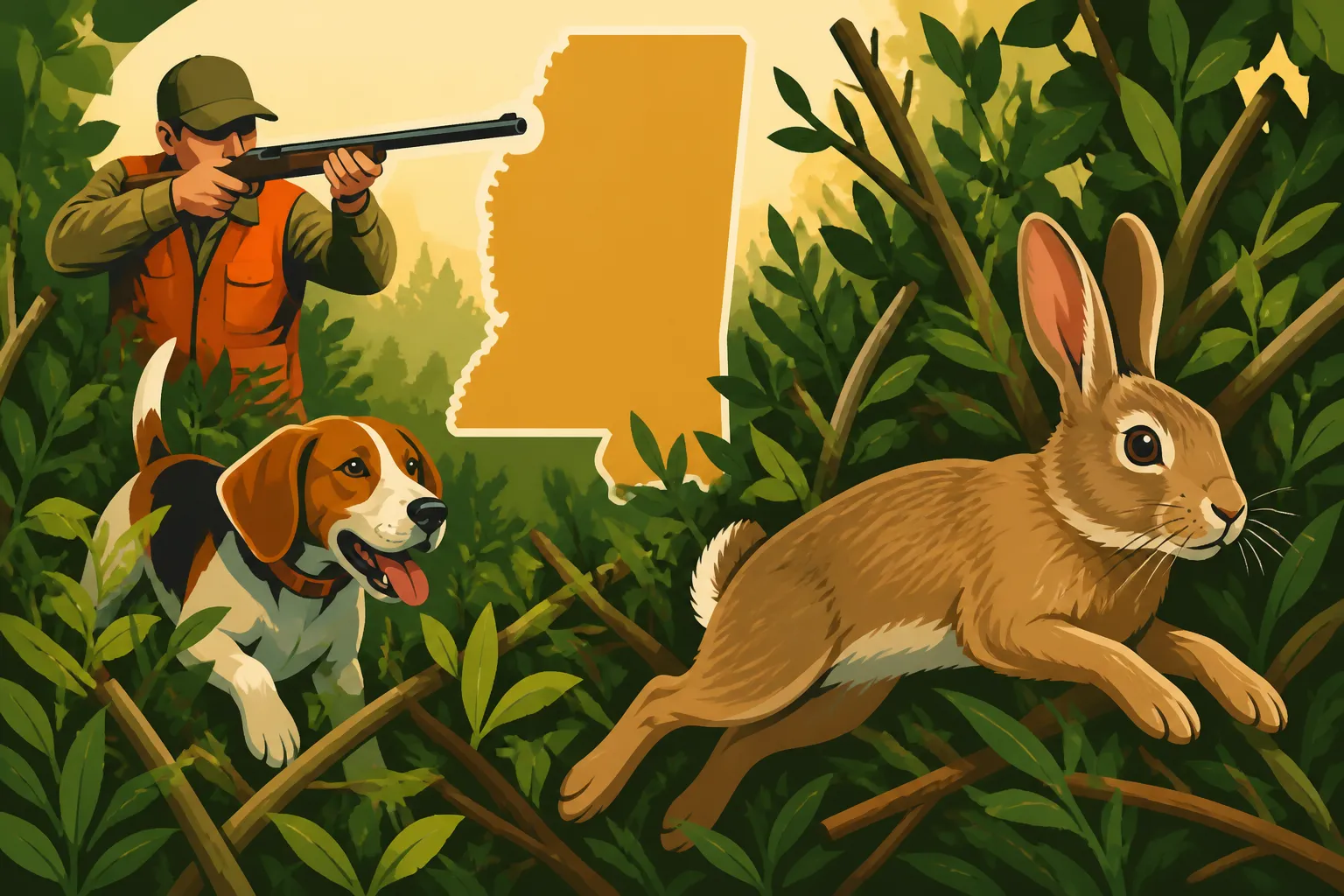
There’s nothing quite like the thrill of a rabbit hunt in Mississippi, especially when you’re pushing those thick, nasty briar patches where the cottontails love to hide. It's often where the biggest, wariest rabbits are found, precisely because most hunters shy away from such dense cover. But if you’re willing to get a little scratched up and put in the effort, these almost impenetrable thickets can lead to some incredibly rewarding hunts. This guide is all about equipping you with the know-how to tackle Mississippi’s thickest brush for those elusive cottontails.
Understanding Mississippi's Brush and Rabbit Havens
Hunting rabbits in Mississippi isn't always about wide-open fields; in fact, the real action often happens in places that look impossible to navigate. Understanding why rabbits gravitate towards these dense, almost impenetrable areas is the first step to becoming a successful brush hunter.
Why Rabbits Love the Thick Stuff
Think about it from a rabbit's perspective: survival is all about avoiding predators. A wide-open field is like a buffet for a hawk or a coyote. But a gnarly briar patch, a tangled mat of kudzu, or a dense stand of honeysuckle offers immediate, almost impenetrable refuge. These spots are natural fortresses. The sheer density of vegetation makes it difficult for larger predators, like coyotes or even domestic dogs, to maneuver effectively. A rabbit, being small and agile, can dart through tunnels and undergrowth that a larger animal simply cannot follow.
Beyond predator evasion, these thick areas often provide a consistent food source and shelter from the elements. Beneath the canopy of briars and vines, you'll find tender shoots, clover, and seeds, especially after a frost. Furthermore, the insulation provided by the dense cover helps rabbits stay warm in winter and cool in summer, offering essential thermal regulation. These spots become their primary bedding and feeding areas, especially during daylight hours when predator activity is higher. So, when you look at a seemingly impossible thicket, a rabbit sees home.
Identifying Prime Brush Pockets
Mississippi is blessed with an abundance of diverse landscapes, and with that comes a variety of thick cover types that rabbits call home. Your job is to learn to spot them, even from a distance. One of the most common and productive types of thick cover is overgrown clear-cuts. When timber is harvested, sunlight floods the forest floor, causing an explosion of briars, saplings, and weeds. These spots are absolute rabbit magnets, offering both food and protection.
Another classic rabbit habitat is the fencerow, particularly those that haven't been meticulously maintained. A neglected fencerow, thick with multiflora rose, honeysuckle, or greenbrier, creates a linear superhighway of cover. Rabbits will travel these fencerows, using them as safe corridors between feeding areas and more extensive bedding thickets. River bottoms and creek drains often hold dense, impenetrable cane brakes or stands of privet hedge, creating tunnels and hideouts that can hold multiple rabbits. Even small, isolated clumps of briars in an otherwise open field can harbor a surprising number of cottontails. Using modern mapping tools, like those found on platforms such as GoHunt, can help identify these potential hotspots from aerial views before you ever step foot in the woods. Look for abrupt changes in vegetation density, areas that appear darker green or clumpy on satellite imagery, indicating heavy growth.
Seasonal Changes and Rabbit Movement
Just like deer, rabbit behavior and preferred habitat can shift with the seasons. In late summer and early fall, before the first hard frost, rabbits might still be found in taller grasses and crop fields. But as soon as those temperatures drop, and especially after the leaves fall and softer cover dies back, they retreat to the densest cover available. This is when briar patches, honeysuckle thickets, and piney woods clear-cuts become even more critical.
During the colder months, a rabbit’s priority is warmth and concealment. You’ll find them tucked deep into brush piles, under fallen trees overgrown with vines, or burrowed into the thickest briar patches imaginable. The lack of foliage elsewhere means these dense spots offer the only real protection from both predators and the cold wind. Conversely, in spring and early summer, when new growth abounds, rabbits might spread out a bit more, taking advantage of fresh clover or tender shoots in slightly less dense cover. However, even then, a thick, briary escape cover is never far away. Understanding these seasonal shifts helps you pinpoint where to focus your efforts for the best chance of success.
Essential Gear and Canine Companions for Thick Cover
Hunting thick brush for rabbits demands more than just a shotgun; it requires the right gear to protect you and, crucially, the right canine partners to do the dirty work. Without a good dog, tackling these dense areas is often an exercise in futility.
Recommended Dog Breeds and Training
When it comes to rabbit hunting in thick Mississippi brush, a good hound is your best friend. Small to medium-sized hounds with an undeniable drive to root out game are essential. Beagles, of course, are the undisputed kings of rabbit hunting. Their size allows them to navigate tight spaces, their keen noses are legendary, and their persistent, musical chase is what makes the sport so enjoyable. A good beagle will stick to a rabbit's trail through the nastiest cover, baying loudly to let you know they're on the scent. Basset Hounds, with their long ears and low-slung bodies, are also excellent choices for scent trailing, though they might be a bit slower than a beagle. While not as common for brush hunting, some hunters also find success with Dachshunds, given their compact size and tenacity.
Training is paramount. A rabbit dog needs to understand the difference between a rabbit and other game animals, focusing solely on cottontails and swamp rabbits. They need to be conditioned to work close enough to the hunter (or at least within earshot), to recall when called, and to push through dense vegetation without giving up. Many hunters spend countless hours in the off-season, letting young dogs trail rabbits in controlled environments, building their confidence and their drive. A well-trained pack of two or three beagles working together is a force to be reckoned with in any briar patch. For a deeper dive, check out our guide on Running Beagles on Mississippi Cottontails.
| Dog Breed | Key Characteristics | Ideal Cover Type | Pros | Cons |
|---|---|---|---|---|
| Beagle | High scent drive, vocal, energetic, compact size | Briar patches, fencerows, dense undergrowth | Excellent nose, relentless pursuit, good maneuverability in thickets | Can be headstrong, requires consistent training |
| Basset Hound | Exceptional nose, low-slung body, persistent | Dense woods, heavy brush, slower trails | Unwavering scent trailing, very thorough in cover | Slower pace, less agile than beagles |
| Dachshund | Small, tenacious, agile, good for burrowing | Very dense, low-lying brush, brush piles, fallen trees | Can get into extremely tight spaces, high courage | May lack the endurance for long chases, less vocal than hounds |
Hunter's Clothing and Footwear
You simply cannot go into thick Mississippi brush in your everyday hunting clothes and expect to come out unscathed. Briars, thorns, and sharp branches will shred cotton and thin synthetics in minutes. Briar-proof clothing is not a luxury; it's a necessity. Look for heavy-duty denim, canvas, or specialized briar-resistant nylon pants or chaps. These will save your legs from countless scratches, punctures, and tears. Some popular brands offer excellent briar pants with reinforced fronts that are practically impenetrable.
For your upper body, a thick canvas or denim jacket will offer some protection, but expect it to get snagged. The most important thing is visibility. Mississippi requires hunters to wear a certain amount of blaze orange, and this is even more critical when hunting in dense cover where visibility is limited. A blaze orange vest and hat are non-negotiable, ensuring your hunting partners can always see you. For more details, refer to Mississippi Blaze Orange Requirements. Sturdy, waterproof boots with good ankle support are also crucial. You'll be stepping on uneven ground, over fallen logs, and potentially through muddy or wet areas. A good pair of snake boots or snake gaiters can also provide peace of mind, especially during warmer parts of the season when venomous snakes might still be active.
Shotgun and Ammunition Choices
In the close-quarters, fast-paced world of rabbit hunting in thick brush, your firearm choice should prioritize quick swings and effective patterns at short ranges. A lightweight 12-gauge or 20-gauge shotgun is ideal. Shorter barrels (24-26 inches) are easier to maneuver through dense vegetation without getting hung up. An open choke, like improved cylinder or skeet, is almost always the best choice. Rabbits burst out of cover at high speed, often at very close range, and a wide pattern increases your chances of connecting with the fast-moving target.
For ammunition, smaller shot sizes are preferred. Number 6 or 7 ½ shot is typically sufficient for cottontails and swamp rabbits. These smaller pellets create a dense pattern that is effective on small game without over-penetrating or causing excessive meat damage. Carry plenty of shells, as the action can be furious when the dogs get on a hot trail. Remember, quick reaction time and the ability to snap-shoot are far more important than long-range accuracy in these environments.
Tactics for Flushing Rabbits from Dense Thickets
Okay, you've got your gear, your dogs are ready, and you've identified a promising thicket. Now comes the real art of rabbit hunting: getting those elusive cottontails to break cover and into your sights.
Working the Cover Systematically
One of the biggest mistakes hunters make in thick brush is just aimlessly wandering through it. This scatters rabbits haphazardly and often gives them an easy escape. The key is to work the cover systematically, like a team. If you have multiple hunters, establish a line and move through the cover together, maintaining visual contact (or at least vocal contact) as much as possible. A common strategy is to push rabbits towards a natural "funnel" or an area with slightly thinner cover where you expect them to break. This might be a field edge, a logging road, or a creek bank.
If you're hunting alone or with just one dog, focus on dissecting the thicket into manageable sections. Start on one side and work your way across, ensuring your dog covers every foot of ground. Pay close attention to subtle signs of rabbit activity: droppings, chewed vegetation, or small runs. Rabbits create tunnels and pathways through dense brush, and learning to spot these can give you an edge. Don't be afraid to push hard through the thickest parts; that's where the rabbits are hiding, confident they won't be bothered.
The Art of the Push and Stand
This tactic is particularly effective when hunting with a group and a good pack of dogs. It involves two roles: the "pusher" and the "stander." The pushers are the hunters who go into the thickest cover with the dogs, breaking brush and encouraging the dogs to work the scent. Their job is to keep the dogs hot on the trail and to drive the rabbits out. The standers, on the other hand, position themselves quietly at strategic points around the thicket, typically along known escape routes or edges where rabbits are likely to bolt.
The standers must remain absolutely still and silent, ready for a quick shot. When the dogs strike a trail, the pushers move with them, maintaining the pressure. The standers listen to the dogs' chorus – a rising crescendo of barks indicates the rabbit is on the move and getting closer. A common scenario sees the rabbit circling back, trying to outsmart the dogs. This is where the standers often get their shot as the rabbit breaks into a slightly more open area before dipping back into cover. Communication between pushers and standers is vital, often using hand signals or pre-arranged calls, especially when visibility is poor.
Reading Dog Work and Anticipating the Flush
Your dogs are your eyes and ears in the thickest cover. Learning to "read" their behavior is crucial for anticipating where and when a rabbit might flush. When a dog "strikes" a scent, their barks will change in tone and intensity, indicating they've found a fresh trail. As they work the scent, the barking often becomes more excited and continuous, signaling that the rabbit is on the move. Listen for changes in the dog's path; if they suddenly swing wide, the rabbit might be circling back. If the barking suddenly moves rapidly away, the rabbit has likely broken out of the thicket and is making a run for it.
Standers should pay close attention to the direction of the dog's movement and position themselves to intercept the rabbit. If the dogs are pushing hard towards a fencerow, get ready to cover that fencerow. If they're moving towards a creek bottom, anticipate the rabbit running along the bank. Often, a rabbit will run just ahead of the dogs, giving you a precious second or two to raise your gun when it bursts into view. Don't rely solely on seeing the rabbit before shooting; sometimes, you'll need to shoot at movement or a fleeting glimpse through the brush. Remember, rabbit hunting is fast and furious!
Post-Shot Tracking in Heavy Cover
Even with a perfect shot, recovering a downed rabbit in thick brush can be a challenge. The dense vegetation that protected the rabbit before the shot now swallows it whole. The first rule is to mark the spot precisely where the rabbit went down. Pick a landmark – a distinctive tree, a large briar clump, a uniquely shaped log – and walk directly to it. Don't assume you can just "find it later"; thick brush makes everything look the same.
If you have a well-trained dog, they can often help with the recovery, using their nose to locate the rabbit. Encourage them to "fetch" or "find it." If you're relying on yourself, get down on your hands and knees and meticulously search the area. Look for any disturbed vegetation, blood trails (though these can be sparse on a rabbit), or even just a tell-tale patch of fur. Work in ever-widening circles from your marked spot. It can be frustrating, but persistence is key. Losing a downed animal is something no ethical hunter wants, so take your time and be thorough.
Safety and Responsible Hunting in Thick Brush
Hunting in dense, challenging cover like Mississippi's briar patches requires an extra layer of caution. Safety should always be your top priority, not just for yourself but for your hunting partners and the wildlife.
Navigating Challenging Terrain Safely
Thick brush isn't just tough on your clothes; it's tough on your footing. Hidden logs, tangled vines, uneven ground, and unseen holes are constant hazards. One wrong step can lead to a twisted ankle, a nasty fall, or worse. Always maintain situational awareness of where your feet are going. Walk slowly and deliberately, using your shotgun (unloaded or pointed safely) or a sturdy walking stick for balance.
Beyond footing, consider the potential for encounters with local wildlife. Snakes, particularly venomous species like cottonmouths and rattlesnakes, love to hide in dense cover, especially in warmer weather. Always be mindful of where you're stepping and reaching, and wear appropriate snake-proof footwear. Insects, like ticks and chiggers, are also abundant in these areas, so use insect repellent and check yourself thoroughly after the hunt. Staying hydrated is also crucial, as pushing through thick brush can be physically demanding, even on cooler days.
Communicating with Your Hunting Party
In areas of limited visibility, clear communication among your hunting party is paramount. Before the hunt begins, establish clear verbal signals or calls. For instance, a specific whistle could mean "I'm here," while another signal could indicate "rabbit sighted" or "I'm moving." Avoid yelling, as it can spook game and is generally less effective than distinct, consistent calls. Always confirm the location of your fellow hunters before raising your gun. Never take a shot if you're not 100% certain of your target and what lies beyond it.
Using radios or walkie-talkies can also be incredibly helpful, especially for larger groups or when hunting particularly vast tracts of dense cover. Platforms like GoHunt, while primarily mapping tools, also have features that allow you to track your group's real-time location on a map, which is invaluable for safety and coordination in thick terrain. Before heading out, a quick check of the GoHunt app can confirm property lines and WMA boundaries, preventing accidental trespassing, which is another crucial aspect of responsible hunting. Remember, "safety first" isn't just a cliché; it's the foundation of a successful and enjoyable hunting experience.
Respecting Landowner Boundaries
A lot of prime rabbit habitat, especially those thick fencerows and neglected woodlots, often sits on private land in Mississippi. Gaining permission from landowners is not just good etiquette; it's the law. Always seek permission before hunting on private property, and respect their wishes regarding access, vehicle use, and hunting methods. A polite request, a clear explanation of your intentions (especially if you're running dogs), and an offer to share some of your harvest can go a long way in securing future access.
When hunting near property lines, be acutely aware of where those boundaries lie. Even with permission on one tract, you don't want your dogs or your shot straying onto unpermitted land. Digital mapping tools, like the property line overlays available on many hunting apps, are invaluable for this. If a rabbit runs onto adjoining private property where you don't have permission, you should not pursue it. This respect for private property is essential for maintaining a positive image of hunters and preserving access for everyone in the future. Remember, always carry your Mississippi Hunting Licenses and What They Cost and other necessary permits.
Disclaimer
The information provided in this article is for general guidance only and does not constitute legal advice. Hunting regulations, seasons, and licensing requirements in Mississippi can change. It is the responsibility of every hunter to consult the latest regulations published by the Mississippi Department of Wildlife, Fisheries, and Parks (MDWFP) and any applicable local ordinances before engaging in any hunting activities. Always prioritize safety, respect wildlife, and adhere to all hunting laws.