Flooded Timber Versus Field Duck Guides
For duck hunters in Mississippi, the choice between pursuing greenheads in the enchanting flooded timber or pulling limits from a spread in an open agricultural field is a classic dilemma. Both offer incredible experiences, but they are distinctly different, and understanding those differences is key to booking a guided hunt that perfectly matches your expectations and hunting style. This guide will walk you through the nuances of each, helping you decide which Mississippi duck hunting adventure is right for you.
The Mystique of Flooded Timber Duck Hunting
There's something almost sacred about standing in flooded timber, knee-deep in water amongst ancient cypress and oak trees, waiting for the whistle of wings. This isn't just a hunt; it's an immersion into a unique ecosystem that defines Mississippi's Delta waterfowl culture.
What Makes Timber Hunting Unique
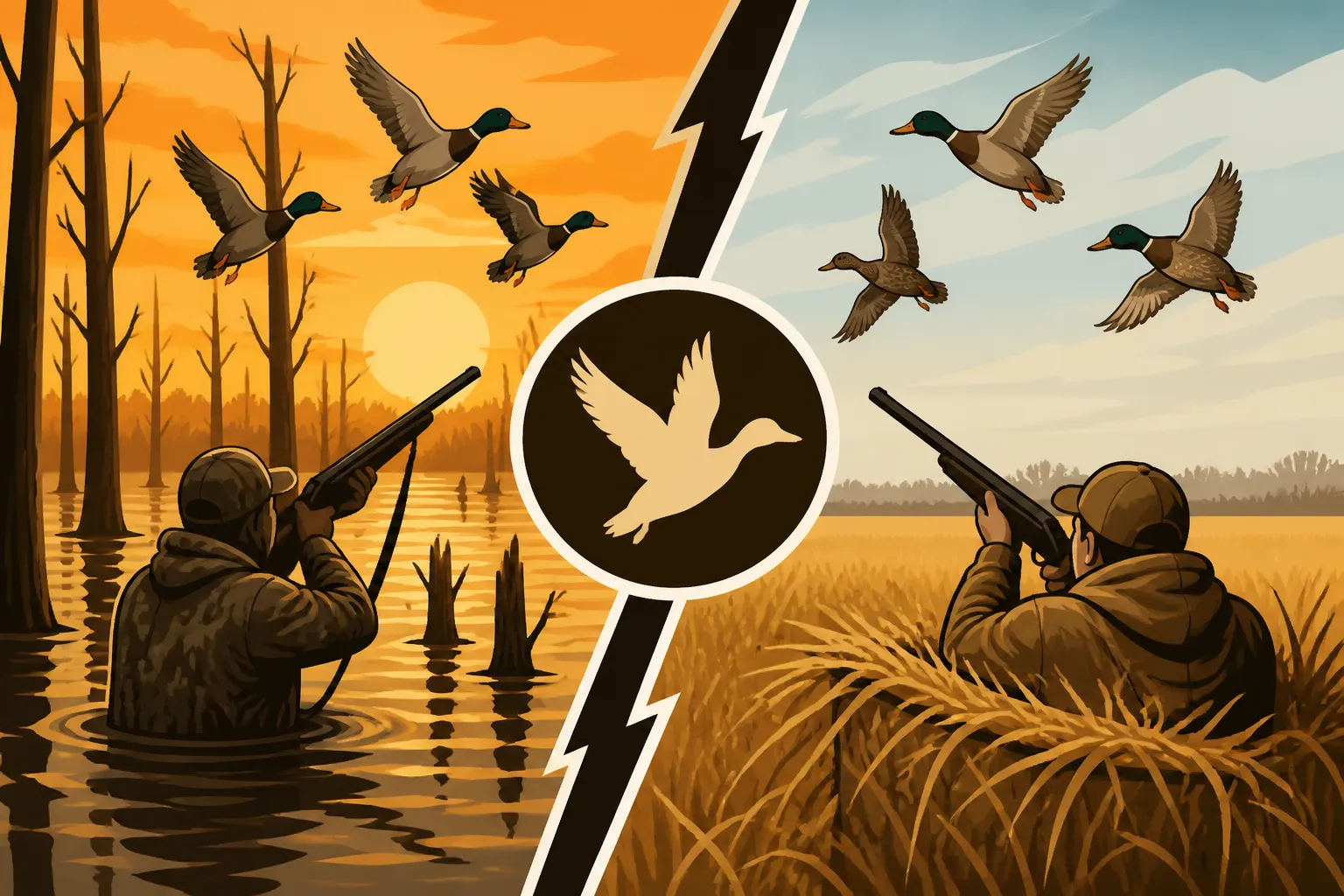
Flooded timber hunting is steeped in tradition, especially here in Mississippi. It's often a more intimate experience, typically involving smaller groups of hunters nestled into natural cover or sometimes a custom-built blind high up in the trees. The setting itself is the primary draw: dappled sunlight filtering through branches, the reflections of the sky on the still water, and the hushed anticipation broken only by the splashes of decoys or the soft cadence of a duck call. The "working" of ducks in timber is a sight to behold, as they swirl and pitch through the canopy, often locking up at eye level before dropping into your spread. This close-quarters action makes for thrilling, often challenging, shooting. Mallards in Delta Flooded Timber are a prime target, alongside beautiful Hunting Flooded Timber for Wood Ducks.
Tactics and Challenges in Timber
Guides specializing in flooded timber hunts are masters of their environment. They know which stands of trees are holding water, where the ducks are feeding, and how to set a spread that looks natural amidst the timber. Calling is critical here, often more subtle and precise than in open fields, designed to coax birds through the trees rather than just attract them from a distance. You'll typically be standing for extended periods, sometimes on platforms or benches, in water that can be anywhere from a few inches to waist-deep. The shooting can be fast and furious in tight quarters, requiring quick reflexes and accurate swings through obstacles. Wading through muddy water, navigating fallen logs, and setting up decoys in a dynamic environment are all part of the challenge and reward.
When and Where Timber Hunts Shine
Flooded timber hunts truly shine during colder weather when ducks are seeking shelter and food in the protected woods. The Mississippi Delta, with its vast bottomland hardwoods and managed greentree reservoirs, offers some of the best timber hunting opportunities anywhere. Guides often manage private tracts with extensive water control, ensuring prime habitat. These hunts are fantastic for those who appreciate the aesthetic and traditional aspects of duck hunting, who enjoy intricate calling, and who want to experience close-range decoying. They are also ideal for hunters who value the experience as much as the sheer volume of birds, though limits are certainly possible. For prime opportunities, consider booking early through resources like BookYourHunt, which often lists specialized timber operations.
The Dynamics of Field Duck Hunting
In stark contrast to the timber, field duck hunting in Mississippi offers a completely different kind of adrenaline rush. Imagine hundreds of decoys stretching across a cut-over corn or soybean field, the big Mississippi sky above, and ducks and geese pouring in from every direction.
What Defines a Field Hunt
Field hunting is about wide-open spaces and capitalizing on waterfowl's primary need: food. Mississippi's agricultural landscape, particularly in the Delta, is a magnet for migrating ducks and geese. Layout Blind Hunting Delta Farm Fields is the quintessential field experience. Hunters recline in low-profile blinds, perfectly concealed amidst the stubble, watching the horizon for incoming birds. The decoy spreads are often massive, sometimes numbering in the hundreds or even thousands, creating a powerful visual magnet. Calling can be much louder and more aggressive, designed to grab the attention of large flocks from miles away. The experience is often characterized by high-volume action, with multiple species of ducks and sometimes even large numbers of specklebelly and snow geese working the spread simultaneously.
Tactics and Challenges in Fields
A skilled field guide is a strategist, scouting daily to pinpoint which fields the birds are using and setting up the spread to perfection based on wind, light, and bird patterns. They’ll also have an arsenal of calls to work a variety of species. Your role as a hunter is to stay still, call when instructed, and be ready for fast, high-volume shooting. The primary challenge here is concealment and patience. Birds often circle high, scrutinizing the spread, and any movement or glint can send them flaring. Shooting can involve birds passing at speed or dropping quickly into the decoys. Physical demands are generally lower than timber hunting, as you're typically lying or sitting in a blind, but it can be cold and windy out in the open.
When and Where Field Hunts Excel
Field hunts excel when waterfowl numbers are high, especially during the peak of migration through the Mississippi Waterfowl Zones and Seasons. The abundance of feed in agricultural fields draws vast numbers of birds, making these hunts potentially very productive. They are an excellent choice for hunters who prioritize seeing a large quantity of birds, experiencing high-octane action, and perhaps targeting species like pintails, wigeon, or even snow and specklebelly geese in addition to mallards. These hunts are also fantastic for groups, as layout blinds can accommodate several hunters comfortably. Many outfitters offer these kinds of hunts, and you can often find reputable guides through platforms like GoHunt that specialize in high-volume field operations in Mississippi.
Key Differences Between Guide Styles
While both types of guides are focused on putting you on ducks, their approaches, expertise, and what they offer can vary significantly.
Habitat and Species Targeted
- Flooded Timber Guides: These guides are intimately familiar with the intricate waterways and forested areas. They often specialize in working mallards, wood ducks, and sometimes gadwall or teal that prefer the protection and food sources found within the trees. Their knowledge of specific sloughs, oxbows, and managed greentree reservoirs is unparalleled.
- Field Guides: Their domain is the vast agricultural landscape—corn, soybean, rice, and wheat fields. They're experts at locating concentrations of birds feeding in these areas. While they'll certainly target mallards, they're also adept at drawing in pintails, wigeon, shovelers, and often Canada geese, Early Goose Season Tactics in Mississippi or specklebelly geese that frequent open fields.
Gear and Setup
- Flooded Timber: Expect smaller, more natural decoy spreads—often just a few dozen blocks strategically placed to mimic feeding birds. Guides may use custom-built platforms, natural cover like cane blinds, or simply position hunters around trees. Waders are essential, and a good waterproof blind bag is a must.
- Field Hunting: Here, the scale is much larger. Decoy spreads can range from dozens to hundreds, even thousands, with a mix of full-body, shell, and sometimes even motorized decoys. Hunters will typically use comfortable layout blinds, though pits or A-frame blinds can also be employed depending on the field and guide's setup. What to Pack for a Guided Mississippi Hunt will include layers suitable for open, potentially windy conditions.
Hunter Experience and Expectations
- Flooded Timber: This hunt is for the hunter who savors the traditional, aesthetic experience. It's often slower-paced between flurries, with moments of quiet observation and deep connection to the environment. Shooting can be more challenging due to tight windows through the trees. It’s perfect for those who appreciate the artistry of calling and decoying.
- Field Hunting: This is for the hunter looking for high-energy, potentially high-volume action. The thrill comes from seeing large numbers of birds respond to the spread and calls. It’s often a more social hunt, with hunters communicating across the spread. While limits are never guaranteed, the opportunity for consistent shooting is generally higher. The guide's skill in Working a Dove Field on Opening Day can translate directly to their duck field expertise.
Cost Considerations
The cost of a guided hunt can vary based on many factors, including the outfitter's reputation, the amenities provided (meals, lodging), and the duration of the hunt. Generally, flooded timber hunts might command a slightly higher premium due to the specialized gear, specific habitat requirements, and the often more exclusive nature of the hunting grounds. Field hunts, while still a significant investment, can sometimes be found at a slightly lower per-person rate, especially for larger groups. Always clarify What a Day of Guided Delta Ducks Costs and what is included in the package.
Choosing the Right Guide for Your Mississippi Duck Hunt
Deciding between flooded timber and field duck hunting comes down to your personal preferences, physical capabilities, and what kind of experience you're truly seeking. Both offer phenomenal opportunities in Mississippi, but they cater to different desires.
Factors to Consider
- Personal Preference: Do you dream of ducks dropping silently into cypress trees, or flocks circling a vast field? Your ideal aesthetic should weigh heavily in your decision.
- Physical Ability: Flooded timber hunts often require more physical exertion—wading through water, sometimes uneven terrain. Field hunts, with layout blinds, are generally less physically demanding, making them suitable for a wider range of mobility levels.
- Group Size: Field hunts can often accommodate larger groups more easily, spreading hunters across a long line of blinds. Timber hunts tend to be for smaller, more intimate groups.
- Target Species: If Mallards in Delta Flooded Timber is your sole focus, timber might be your best bet. If you want a mixed bag that includes other dabblers and potentially geese, a field hunt could offer more variety.
- Budget: While both are investments, costs can vary. Be clear about your budget upfront.
What Questions to Ask a Potential Guide
Before booking, don't be shy about asking specific questions to ensure the guide's style aligns with your expectations.
- "Do you primarily offer flooded timber or field hunts, or both?"
- "What kind of duck species can I expect to target on this type of hunt?"
- "What's the typical group size for your hunts?"
- "What gear should I bring, especially waders or blind bags?"
- "What are the physical demands of this particular hunt?"
- "Do you provide decoys, calls, and transportation to the blind?"
- "What is your typical Mississippi Duck Daily Bag Limit success rate for this type of hunt?"
- "Can you provide references from previous clients?"
Many reputable guides list their specialties on platforms like BookYourHunt or GoHunt, making it easier to filter by flooded timber or field hunt options. Don't hesitate to reach out directly to the outfitters listed to get a full picture of their operations and ensure a good fit. Some guides even offer combination packages where you can experience both types of hunts over a multi-day trip, giving you the best of both worlds.
| Feature | Flooded Timber Hunting | Field Duck Hunting |
|---|---|---|
| Habitat | Bottomland hardwoods, cypress swamps, greentree reservoirs | Agricultural fields (corn, beans, rice), open water |
| Atmosphere | Intimate, traditional, quiet, natural beauty | High-energy, vast, dynamic, social |
| Target Species | Primarily Mallards, Wood Ducks, Gadwall | Mallards, Pintails, Wigeon, Shovelers, Geese |
| Decoy Spread | Smaller, natural, few dozen to 100 blocks | Larger, extensive, hundreds to thousands of decoys |
| Calling Style | Subtle, intricate, close-range working | Louder, aggressive, long-range attraction |
| Shooting Distance | Close-quarters, often fast through trees | Varied, sometimes passing, sometimes dropping into spread |
| Concealment | Natural cover, tree blinds, platforms | Layout blinds, pit blinds, A-frames |
| Physical Demands | Moderate to high (wading, standing) | Low to moderate (lying in blind, occasional walking) |
| Best For | Traditionalists, close-up action, scenic experience | High-volume action, mixed bag, large groups |
Ultimately, both flooded timber and field duck hunting in Mississippi offer unique and thrilling experiences. There's no single "better" option; it all depends on what kind of adventure you're chasing. Whether you prefer the shadowy magic of the timber or the wide-open excitement of the fields, Mississippi's diverse waterfowl habitats and skilled guides ensure an unforgettable hunt.
Disclaimer
This article is for general informational purposes only and does not constitute professional advice. Laws, prices and regulations vary by location and change over time. Consult a qualified professional for guidance on your specific situation.