Entry Routes Through Standing Soybeans
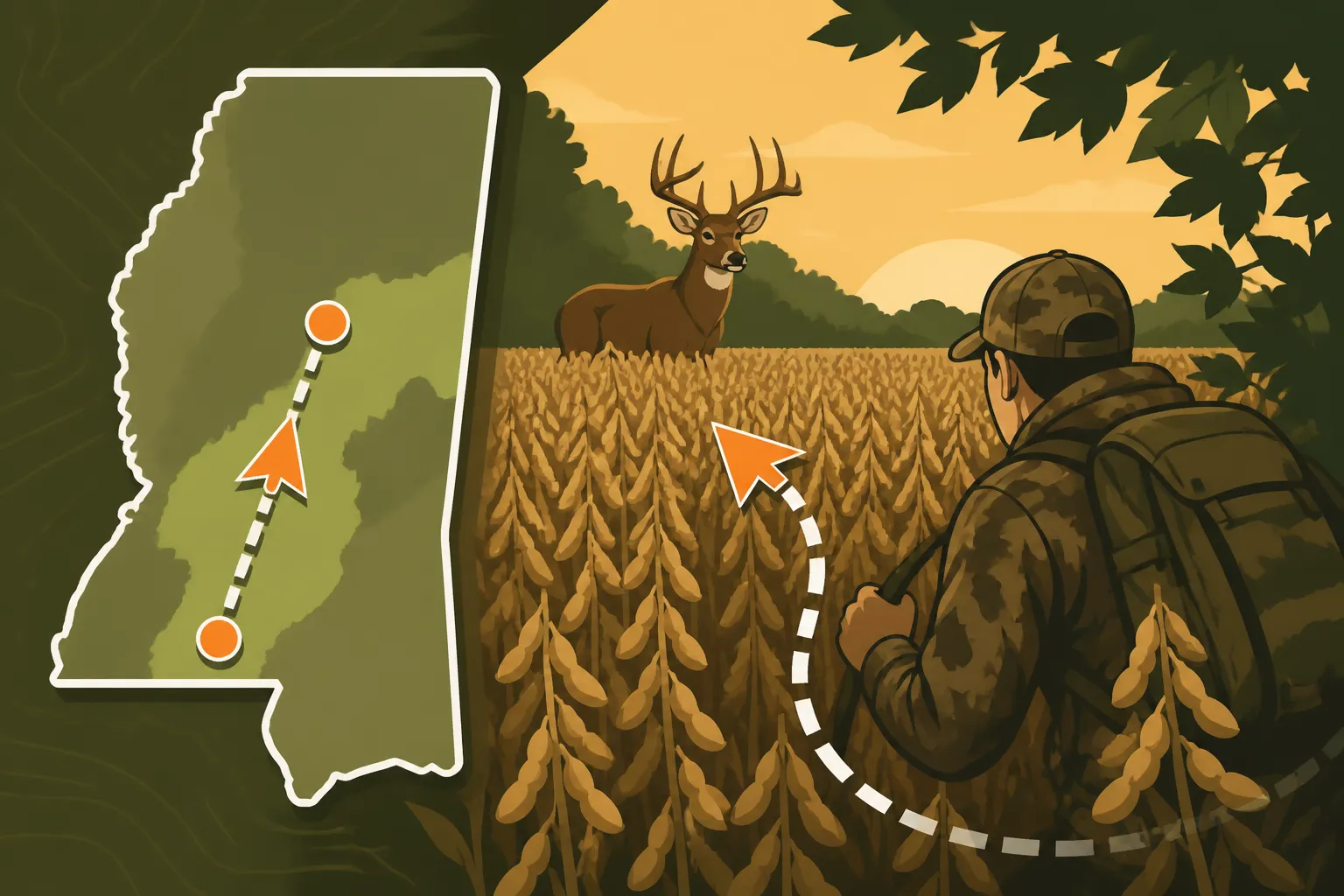
We all know the feeling, don't we? You've spent countless hours scouting, pouring over maps, and checking trail camera photos, only to realize that the deer you're after are spending all their daylight hours hunkered down in a massive field of standing soybeans. It's frustrating to know they're there, but seemingly impenetrable. How do you get close without blowing them out of the county? This guide is here to walk you through the nitty-gritty of successfully navigating and hunting those challenging standing soybean fields in Mississippi.
Understanding Deer Behavior in Standing Soybeans
Before we even talk about how to get in there, let's really dig into why deer love standing soybeans so much. It's not just a passing fancy; these fields offer a potent combination of food and cover that's hard for a whitetail to resist, especially in our neck of the woods.
Why Deer Love Standing Soybeans
Think about it from a deer's perspective. A field of mature soybeans is essentially a five-star, all-inclusive resort. First off, it's an incredible food source. Soybeans are packed with protein, and deer absolutely hammer them, especially as the pods start to fill out and mature later in the season. They'll browse the leaves and stems, but it's those protein-rich beans themselves that become a major draw. Many a Mississippi hunter has seen the evidence of deer having a feast, with rows of chewed-down plants marking their nighttime buffet.
Beyond the delicious nutrition, standing soybeans offer unparalleled cover. These plants can grow quite tall, often reaching three to four feet in height, sometimes even more depending on the variety and growing conditions. This dense, vertical cover allows deer to feel incredibly secure. They can bed down right in the middle of a vast field, completely hidden from human eyes. It's not uncommon to jump deer out of the middle of a bean field during the late archery or gun season, proving they’re not just feeding there, but living there. This creates a combined bedding and feeding area, making it an incredibly efficient and safe place for them to spend their time.
In Mississippi’s often warm and humid climate, standing soybeans also provide excellent thermal regulation. The dense canopy offers shade during hotter days, helping deer stay cool and conserve energy. On colder, windier days, the thick stalks act as a natural windbreak, giving them a cozy spot out of the elements. It's this perfect storm of food, security, and comfort that makes standing soybean fields such a magnet for whitetails. Knowing this helps us predict where and when they'll be in the fields, which is the first step in planning your entry.
The Challenge of Human Intrusion
Now, for the flip side of the coin: getting into these havens without giving yourself away. It's a real head-scratcher, and probably one of the most frustrating aspects of hunting agricultural fields. The very things that make soybeans so attractive to deer also make them incredibly difficult for us hunters to penetrate undetected.
The visual aspect is a major hurdle. While soybeans are tall, they don't always offer a complete visual screen for a standing human. A deer's acute eyesight can pick up subtle movements, especially if you're silhouetted against the sky or a distant tree line. Even if you're crawling, the constant movement required to advance through the dense foliage can easily be spotted if a deer is alert and looking your way. You might think you’re hidden, but those wary eyes will often prove you wrong.
Then there's the scent problem, which is amplified in Mississippi's variable winds and often stagnant air. Wind currents behave strangely over large, flat fields. What feels like a steady breeze at the edge can swirl and eddy unexpectedly deep within the beans, carrying your scent directly to a bedded deer. You try your best with scent control, but it feels like the wind always finds a way to betray you. And if you're hunting during one of our warmer fronts, which happens more often than not, scent just hangs in the air, drifting for what feels like miles.
Finally, the sound. Walking through dry, brittle soybean stalks is like trying to sneak through a field of potato chips. Every step can produce a crunch, a rustle, or a snap that echoes far louder than you'd expect in the quiet of the morning or evening. You try to step carefully, pick your feet up, but it's nearly impossible to move silently. This combination of visual exposure, scent dispersal, and noise generation means that many a hunter has spooked deer before even getting within a reasonable shooting distance, leaving you with that gut-wrenching feeling of a blown opportunity.
Scouting and Planning Your Entry
Conquering the soybean field starts long before you ever step foot in it with your bow or rifle. It begins with meticulous scouting and a solid plan. You can't just walk up and hope for the best; that's a recipe for disaster and empty hands.
Pre-Season Aerial Scouting and On-Foot Recon
Before the season even kicks off, you should be doing your homework. Digital tools are your best friends here. Platforms like GoHunt, Google Earth, or even the MDWFP App Without Cell Service are invaluable for aerial scouting. Zoom in and identify potential entry and exit points for deer, look for natural funnels where the field narrows, or where small woodlots, ditches, or sloughs break up the expanse of beans. Pay close attention to field edges that border thicker cover, creek bottoms, or standing timber, as these often act as deer highways. You can often see subtle changes in vegetation or slight elevations that create travel corridors even within the field itself.
Once you have some promising spots identified on your map, it's time for boots on the ground. During the off-season or well before hunting pressure begins, walk the perimeter of these fields. Look for well-worn trails leading into and out of the beans. Find rub lines or scrapes along the edges that indicate consistent deer activity. Don't be afraid to walk a little way into the field edges if the beans aren't too tall, just enough to confirm a trail without disturbing the core of the bedding area. The key here is to do this reconnaissance well in advance to avoid leaving fresh human scent or disturbing deer right before or during the season. This kind of diligent Scouting Mississippi Public Land Before Season will pay dividends when the hunting actually begins. The goal is to identify existing deer highways and figure out how to parallel them without walking directly on them.
Wind Direction is Paramount
I cannot stress this enough: wind direction is not just important, it is paramount when hunting standing soybeans. This isn't just about general wind direction; it's about understanding how the wind interacts with the topography of the field and the surrounding cover. The golden rule, etched into every hunter's mind, is to always hunt with the wind in your favor, carrying your scent away from where you expect deer to be. In a vast, open soybean field, this becomes even more critical because there's little to block or diffuse your scent.
Large, flat fields, especially in our Delta bottomlands, can experience unpredictable wind currents. What feels like a steady breeze at your truck might be swirling and eddying along a field edge or dipping into a low spot further in. This is where a simple milkweed puffer or a bottle of unscented powder comes in handy. Check the micro-thermals and subtle air movements as you approach your stand. Observe how the air behaves at different elevations—it might be different at ground level than ten feet up in a stand. Planning multiple entry and exit routes for different wind directions is crucial. You might have a perfect stand location, but if the wind isn't right, that spot is dead for the day. Don't force it. It's better to stay home or choose an alternate location than to blow out a prime area due to a bad wind. This understanding of Wind and Thermals in Delta Bottomland will make or break your hunt. Even a slight shift can compromise your entire setup when deer are bedded deep in the beans.
Stealthy Entry Techniques
You’ve scouted, you’ve planned, and you’ve waited for the perfect wind. Now comes the moment of truth: the actual entry. This is where your patience, discipline, and understanding of deer movement will be truly tested.
Using Natural and Man-Made Cover
The first rule of sneaking into a soybean field is to use every shred of available cover to your advantage. Don't just walk straight across an open area. Look for natural pathways that offer concealment. Fencerows, drainage ditches, creek bottoms, or even small strips of brush adjacent to the field are your best friends. These features provide not only visual blockage but can also act as natural sound and scent corridors that deer are already accustomed to. If there's a line of timber running along the field, even a narrow one, use it like a deer highway. Walk just inside the tree line, utilizing the trunks and branches to break up your silhouette.
Sometimes, the best entry isn't into the beans, but along the edge, using a strategically placed blind. A well-brushed-in ground blind, for example, can be deadly effective. Position it along an edge where you've identified a consistent travel corridor or where deer frequently enter the field. Ensure it blends seamlessly into the surroundings. This strategy minimizes your direct intrusion into the main part of the field. This method is often employed when hunting a Standing Cornfield in Farm Country, which presents similar challenges. You can also utilize climbing stands set up on isolated trees or small clumps of timber within or very close to the field. This allows you to get above their line of sight and often their primary scent cone. The key is to get your stand up well in advance, letting the deer get used to its presence, and then making a quiet approach to it under the cover of darkness. Remember, Brushing In a Blind on a Field Edge is an art form; the more natural it looks, the better your chances.
Timing Your Approach and Exit
Timing is everything. How you approach the field depends heavily on whether you’re hunting morning or evening, and what the deer are generally doing during those periods. For a morning hunt, you need to be in your stand well before first light. This often means walking in pitch-black darkness, using a headlamp only when absolutely necessary and pointed downwards. Deer are often still out in the field feeding at first light, or making their way from the beans to a nearby bedding area. Getting in early allows you to intercept them as they transition. Your goal is to be a ghost, completely settled before the world wakes up.
For an evening hunt, you can often approach a little later, but still aim to be in your stand a few hours before last light. This gives the deer time to filter out of their bedding areas and into the soybean field to feed. Approaching too late means you might spook them as they are already on the move. Your movement needs to be slow, deliberate, and quiet, regardless of the time of day. Every step should be planned, picking up your feet to avoid crunching dry leaves or beanstalks. This takes immense patience, especially when you're itching to get to your spot. This thoughtful approach ties directly into a good Warm-Weather Sitting Strategy in Mississippi, where deer activity often picks up closer to dusk and dawn, making these transition times critical.
Exiting is just as important as entering. If you shoot a deer and need to track, obviously you do what you need to do. But if your hunt is unsuccessful, or if you simply need to move, plan an exit route that again minimizes disturbance. If deer are in the field, wait until full darkness, or until they've moved off into other areas before slipping out. You never want to educate deer about your presence or scare them away from a preferred food source with a sloppy exit.
Minimizing Scent and Sound
This is where the rubber meets the road. Even with the best wind and cover, if you're not on top of your scent and sound game, you're toast. Scent control is a multi-layered approach. It starts at home with showering in scent-free soaps, washing your hunting clothes in scent-free detergent, and storing them in airtight bags or containers. Many hunters swear by activated carbon suits or sprays like Scent Killer, and while they don't make you invisible, every little bit helps. When you get to the field, dress quickly and minimize sweating. Carry your outerwear in a backpack and only put it on when you're near your stand. Use a milkweed puffer religiously to check wind currents, even subtle ones, as you walk. If you feel the wind swirling or hitting you from the wrong direction, you've got to be willing to back out.
For sound, it's about being incredibly intentional with every step. Wear soft-soled boots. Pick your feet up, rather than dragging them, to avoid crunching dry leaves, twigs, or, most critically, those brittle soybean stalks. Move slowly, taking one step at a time, pausing to listen. If you hear a deer blow or stomp, freeze. Don't move until they settle down or move off. If you do accidentally spook a deer during entry, the best thing you can do is back out quietly. Don't press the issue; it's better to retreat and try another day than to completely ruin a hot spot by pushing deer into high alert. This constant vigilance against being detected by Wind and Thermals in Delta Bottomland and by sound is what separates successful hunters from frustrated ones in these tricky situations.
Strategic Stand Placement and Hunting Methods
Now that we've covered the art of getting in undetected, let's talk about where to set up and how to hunt these challenging soybean fields. It's not always about diving deep; sometimes, the edges hold the most consistent action.
Edge Hunting vs. Deep Field Penetration
When it comes to hunting standing soybeans, you generally have two main approaches: hunting the edges or trying to penetrate deep into the field. Both have their pros and cons, and the best choice often depends on the specific field, deer behavior, and your risk tolerance.
Edge Hunting is often the safer and less intrusive option. This involves setting up a stand or ground blind along the perimeter of the soybean field, focusing on where deer enter and exit. This strategy is excellent for intercepting deer as they move from bedding areas to feed in the beans, or vice versa. It minimizes your intrusion into the primary bedding/feeding area within the field, reducing the chance of blowing deer out. You can utilize natural cover along the edge, such as a fencerow, a treeline, or even a ditch, to conceal your approach and your stand. This is often the go-to method for hunters who prioritize not spooking deer and want consistent, albeit sometimes later, shot opportunities.
Deep Field Penetration, on the other hand, is a higher-risk, potentially higher-reward strategy. This involves setting up a stand or blind within the standing soybean field itself, often targeting a known travel corridor or a secluded pocket where deer might bed. The advantage here is that you're right in the heart of the action, potentially catching deer that never even venture to the edges during daylight. However, the risk of detection is significantly higher. Your entry and exit must be absolutely flawless, and the wind must be perfect. If you're going for deep penetration, a sturdy, well-concealed ground blind like a Redneck Blind or even a popup blind brushed into the beans can work. Setting it up well in advance is crucial, letting deer acclimate to its presence. This method is for the bold and patient, but when it pays off, it can result in an incredible close-range encounter with a mature buck.
| Strategy | Pros | Cons | Best Conditions |
|---|---|---|---|
| Edge Hunting | Lower risk of spooking deer | May only see deer at dawn/dusk transitions | Fields with strong, consistent edge cover, distinct trails |
| Deep Field Penetration | Higher chance of seeing bedded deer | Very high risk of detection during entry/exit | Large, sprawling fields with internal cover or pinch points |
Identifying Key Deer Movement Corridors
No matter if you're edge hunting or venturing deep, identifying key deer movement corridors is crucial for stand placement. Deer are creatures of habit, and even in a vast field, they will often stick to established "highways." These aren't always visible, worn trails, especially within the beans, but they are routes deer consistently use.
Look for natural pinch points where the cover narrows. This could be where a point of timber juts into the field, or a drainage ditch cuts across, creating a natural funnel that forces deer into a smaller area. These are prime locations for an ambush. Similarly, isolated clumps of trees, small sloughs, or thickets within the field can act as mini-bedding areas or staging points. Deer will use these islands of cover to travel from one part of the field to another, making their edges excellent stand locations. Using aerial maps, like those available on GoHunt, to identify these breaks and funnels is incredibly effective. For instance, knowing how to approach and set up on a Hanging a Stand on a Delta Bottomland Funnel applies just as much to those subtle funnels within or along a soybean field.
Pay attention to subtle signs of movement. Sometimes it's just a slightly disturbed row of beans, or a few tracks in a muddy spot along a ditch. These seemingly minor details are actually major clues to consistent deer movement. Don't underestimate the power of observing the subtle nuances, which is exactly what you do when Reading Delta Mud for Fresh Deer Movement.
Patient Observation and Adaptation
Deer behavior is fluid, not static. What worked yesterday might not work today, especially with changing weather patterns, hunting pressure, or the stage of the soybean crop. Therefore, patient observation and the willingness to adapt are indispensable.
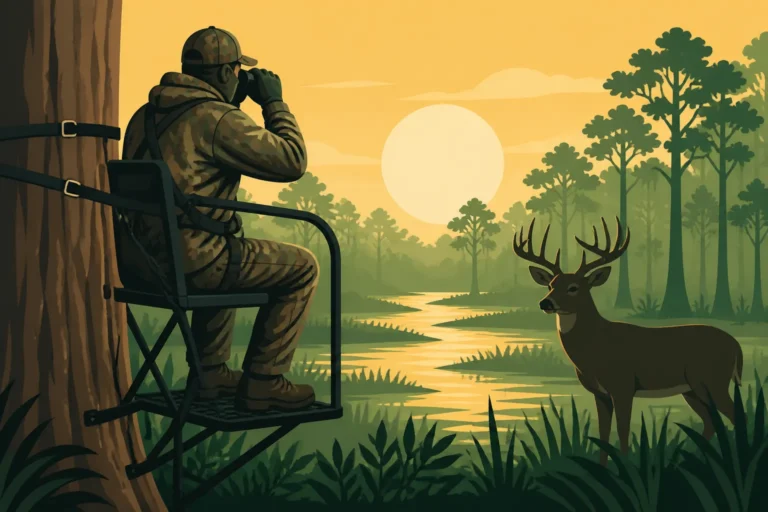
Once you're in your stand, become a statue. Use high-quality binoculars to constantly scan the field. Look for subtle movements, a flick of an ear, a patch of brown against the green or gold. Often, deer will pop their heads up for a quick look before committing to full movement. The more you watch, the more you'll learn about how these specific deer use this specific field. If you're not seeing deer where you expected, don't get discouraged. Instead, try to understand why. Are they still bedded? Have they changed their entry point? Sometimes, a different stand location on the opposite side of the field, or even waiting a few days for a new weather front, can completely change your luck.
And sometimes, a radical shift in tactics is needed. If you're hunting an incredibly large bean field on public land and observing that deer are bedded deep and unwilling to move during legal shooting hours, you might consider alternative methods. For instance, if you have a hunting party, carefully executed Deer Drives With Three or Four Hunters might be an option to push deer out of the deepest cover. This is a tactic often reserved for later in the season and requires careful planning and communication to be safe and effective. Ultimately, the best hunters are those who can read the signs, remain patient, and aren't afraid to adjust their game plan based on what the deer are telling them.
Disclaimer
Hunting is an inherently dangerous activity. This guide provides general information and strategies, but it is your responsibility to understand and comply with all local, state, and federal hunting laws and regulations. Always prioritize safety, including proper firearm handling, treestand safety, and knowing your target and beyond. Conditions in the field can change rapidly, and hunters must use their own judgment and experience to make safe and ethical decisions. The author and publisher are not liable for any accidents, injuries, or legal repercussions resulting from the use of this information.