Setting Up Against a Big Oak
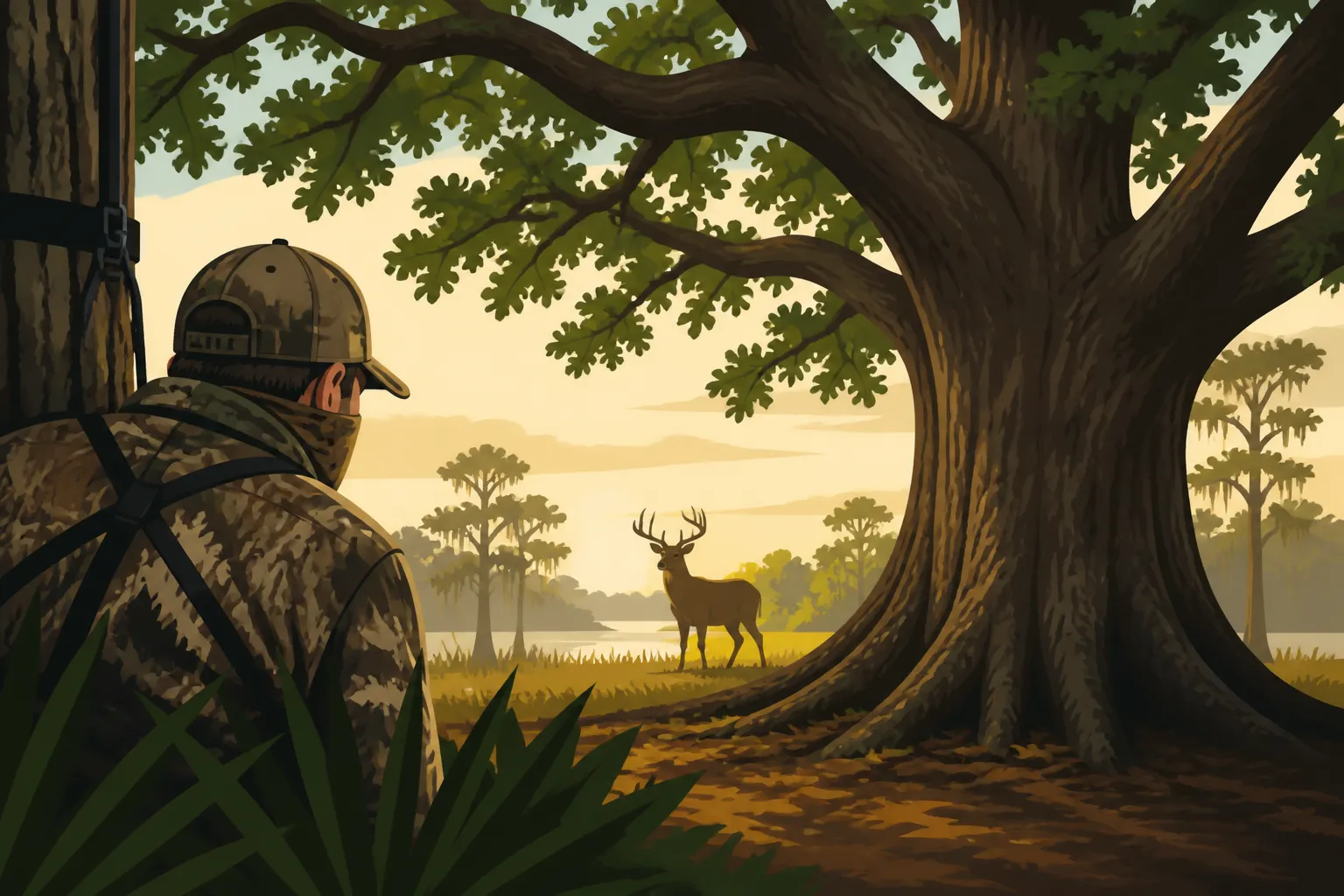
Finding the perfect spot to intercept a mature whitetail in Mississippi can often feel like solving a complex puzzle, especially when dealing with the vast, diverse landscapes of our state. One of the most common and often most productive pieces of that puzzle is the big, old oak tree. Hunters frequently struggle with how to approach these natural magnets without spooking every deer in the county. This guide is dedicated to breaking down the nuances of effectively setting up against a big oak, ensuring you maximize your chances for a successful hunt.
Why Big Oaks Are Deer Magnets in Mississippi
There’s a reason why hunters gravitate towards oak trees, and it’s not just folklore. In Mississippi, big oaks are undeniable hotspots for deer activity, acting as both a pantry and a sanctuary for whitetails throughout a significant portion of the hunting season. Understanding why they draw deer is the first step to successful hunting.
The Acorn Advantage
Acorns are nature's candy for deer. When they start hitting the ground, especially those from preferred oak species, deer will often abandon other food sources to gorge themselves. Here in Mississippi, we have a fantastic variety of oak trees, each with its own timing and palatability. White oaks, with their less bitter acorns, are often targeted first by deer. Think about those massive Southern live oaks or swamp chestnut oaks – when their acorns drop, deer will literally compete for them. Red oaks, which include species like willow oaks and water oaks, tend to drop their acorns later in the season, and while slightly more bitter, they become a crucial late-season food source after the white oak acorns are gone. This consistent availability across different species makes a stand of mixed oaks incredibly attractive, providing a sustained food plot from early fall right into winter. Understanding which acorns are dropping, and where, can be easily tracked using tools like GoHunt, which can help pinpoint areas with optimal oak distribution.
Natural Cover and Sanctuary
Beyond the caloric bounty, big oak trees, especially those with sprawling canopies or in thick stands, offer significant natural cover and a sense of security for deer. A large oak in a more open area might serve as a temporary stop, but a dense block of oaks or a large oak situated on the edge of heavy cover, like a creek bottom or a pine thicket, becomes a true sanctuary. Deer feel less exposed feeding under a broad canopy, and the sheer number of trees can break up their silhouettes, making them harder for predators (and hunters) to spot. These areas often provide thermal cover as well, shielding deer from harsh winds or providing shade on warmer days, which is a real consideration during Mississippi's often mild autumn and winter months. The structure of these trees, with their rough bark and often dense understory, also allows deer to move through them with relative quietness, making approach and escape less risky for them.
Identifying Productive Oaks and Prime Setup Spots
You can't just pick any big oak and expect success. The key lies in identifying which oaks are actively being used by deer and then pinpointing the absolute best location to set up your stand or blind without blowing out the area. This requires keen observation and careful planning, especially when you're Scouting Mississippi Public Land Before Season.
Reading the Ground for Fresh Sign
The ground around a big oak tells a story if you know how to read it. First, look for disturbed leaf litter and fresh tracks. Deer are creatures of habit, and they'll create worn paths or "deer trails" to and from their preferred feeding trees. The fresher the track, the more recent the activity. Next, scrutinize for droppings. Fresh droppings are typically dark, moist, and soft, indicating deer have been feeding there recently. Pay attention to the quantity and distribution – a high concentration suggests heavy feeding. Don't forget rubs and scrapes, especially on smaller trees surrounding the big oak. Bucks often mark their territory in these feeding areas, and fresh rubs (where bark is scraped off) and scrapes (bare patches of earth pawed out, often with an overhanging branch worked) are clear indicators of buck presence. These signs, coupled with the presence of dropped acorns, paint a vivid picture of a prime feeding zone.
Wind Direction and Entry/Exit Routes
This is arguably the most critical aspect of any deer hunt, and it's amplified when hunting a primary food source like a big oak. Deer, especially mature ones, rely heavily on their sense of smell to detect danger. You must understand the prevailing wind direction for your planned hunt and ensure your scent cone is blowing away from where you expect deer to approach and feed. Using a detailed mapping tool, like GoHunt, can help visualize terrain features that might influence thermals, especially in varied topography like the Hills Unit Ridges or the flat expanses of the Delta. Beyond wind, planning your entry and exit routes is paramount. Your approach to the stand should be as quiet and scent-free as possible, ideally using natural cover or terrain features to shield you from a deer's line of sight. Avoid walking directly through the feeding area or bedding areas. Similarly, your exit should be planned to minimize disturbance, especially if you plan to hunt the same spot multiple times.
Identifying Stand Trees and Ground Blind Locations
Once you've confirmed deer activity and planned your scent strategy, it's time to pick your actual setup location. If using a treestand, look for a tree that offers good concealment (branches, other trees) and a clear line of sight to the primary feeding zone and any major trails. A stand placed 20-25 feet high can help with scent dispersal and give you a better vantage point, but ensure you have enough cover to break up your outline. For ground blinds, consider natural brush piles, thickets, or the base of another large tree slightly off the main feeding area. The goal is to blend in completely. You want to be close enough for a clean shot but far enough not to alert deer with slight movements or ambient noise. Sometimes, a big oak on a field edge, or near a distinct funnel, is the ideal setup, allowing you to intercept deer as they transition. For those hunting in the Delta National Forest, understanding optimal Treestand Setups in Delta National Forest can be immensely beneficial.
Executing Your Setup: Stands, Blinds, and Scent
After all the scouting and planning, the actual setup and execution are where success is truly made or broken. It’s about being invisible, silent, and scent-free.
Treestand Placement Considerations
When hanging a treestand near a big oak, don't just pick the first convenient tree. Think strategically. You want a tree that's not directly in the deer's anticipated travel lane but offers excellent visibility into the feeding area. Often, setting up slightly downwind or crosswind, about 20-40 yards off the primary feeding area, is ideal. This gives you some buffer for scent and movement. Look for a tree with good natural cover, like a cluster of branches or another tree nearby, to help break up your silhouette. Ensure your shooting lanes are clear to all likely approach angles and feeding spots before the season starts. If you're trimming branches, do it well in advance to avoid leaving fresh human scent and disturbance. Remember, in Mississippi, we often have dense canopies, so getting above that canopy might mean a higher hang than you're used to in more open timber.
Ground Blind Advantages and Disadvantages
Sometimes, a treestand just isn't feasible or preferable. This is where a ground blind shines. If you're on public land or hunting a property where stand hanging is restricted, Using a Ground Blind on Mississippi Public Land is a great alternative. For hunting big oaks, a ground blind offers fantastic concealment, especially if brushed in naturally. You can literally disappear into the landscape. The advantage here is comfort and the ability to move more freely, which is especially good for youth hunters or those with physical limitations. However, ground blinds put you at deer level, making scent control even more critical. Placement needs to be meticulous – you must be fully concealed with solid cover behind you to prevent being silhouetted. Try to place it in a location that forces a deer to pass at a reasonable distance, giving you ample time to prepare for a shot without being seen. Consider setting up the blind weeks in advance if possible, allowing deer to get accustomed to its presence.
Scent Control and Quiet Movement
No matter how good your setup, if a deer smells you, your hunt is over. Scent control is paramount. This starts long before you ever step into the woods. Wash your hunting clothes in scent-free detergent, store them in airtight containers, and dress in the field to minimize contamination. Use scent-eliminating sprays on your clothes, boots, and gear. Pay particular attention to your boots, as they carry your ground-level scent directly to your stand. When moving to your oak, do so slowly and deliberately. Avoid snapping twigs or rustling leaves unnecessarily. Every step should be calculated. While in your stand or blind, minimize movement. Even subtle shifts can catch a deer's eye, especially if they are looking directly at the tree. Consider what you bring into the stand – rattle bags, grunt calls, or even a rangefinder – and ensure they can be used quietly. Using Grunt Calls in Mature Mississippi Timber can be effective, but only if executed silently until the critical moment.
Strategic Timing for Oak-Centric Hunts
Timing is everything, and nowhere is this more true than when hunting a specific food source like acorns. The best oak in the world won't do you any good if the deer aren't there or are feeding elsewhere.
Early Season: Transitioning from Soft Mast to Hard Mast
The early archery season in Mississippi, often beginning in October, sees deer still heavily reliant on soft mast like persimmons, muscadines, and honeysuckle. However, as soon as the first white oak acorns start dropping, usually late September into October, deer begin to transition their diets. This is a fantastic time to scout for those early dropping white oaks. They'll be the first hard mast source, and deer will hammer them. Look for fresh droppings and disturbed leaves under white oaks. This early shift can be a gold mine because deer are often less pressured and more predictable in their feeding patterns. While deer might still be hitting a lush green field at dawn, they're likely to be under a productive white oak come mid-morning or late afternoon. This window is crucial for those chasing Bowhunting Mississippi's Long Archery Season.
Peak Season: When Acorns Are Falling Heavily
As November rolls around and into the gun season opener, the acorn drop is usually in full swing across various oak species. White oaks are still productive, and red oaks start coming online. This period, often coinciding with parts of the rut in different units, sees deer movement peak, and acorns are a primary driver. Bucks will frequent oak flats as they cruise for does, knowing that does are concentrated there for feeding. This is the time to really focus on those mixed oak stands. Use your GoHunt app or other mapping tools to identify large blocks of oaks. The challenge during peak season is that deer might have too many acorns, making it harder to pinpoint their exact feeding tree. Your best bet is to find those concentrated feeding areas with the most sign, especially if they're close to bedding cover or travel corridors used during the rut.
Late Season: Hunting Remaining Mast or Secondary Food Sources
By late December and into January, much of the white oak mast has been consumed, but red oak acorns often remain. These become an incredibly important Late-Season Food Sources for Mississippi Whitetails. When other natural food sources become scarce, deer will zero in on these remaining acorns. This is when a productive red oak stand can be a game-changer. Also, consider that in a year with a poor overall acorn crop, deer might be forced to shift to other food sources earlier. In such scenarios, your strategy might need to adapt to Hunting After a Poor Acorn Year, focusing more on planted food plots or agricultural fields. However, never underestimate the appeal of a standing red oak with remaining mast. The cold weather often means deer need more calories, and those late-dropping acorns provide exactly that, concentrating deer in specific areas.
| Oak Species | Acorn Drop Period | Deer Preference | Acorn Characteristics | Key Identification Tips |
|---|---|---|---|---|
| White Oak | Late Sept. – Early Nov. | High (Preferred) | Less bitter, higher moisture, quicker germination | Rounded lobes, light gray bark, small caps |
| Swamp Chestnut Oak | Late Sept. – Mid Nov. | High | Large, sweet, often abundant | Deeply lobed leaves, flaky bark |
| Live Oak | Oct. – Dec. | Moderate-High | Smaller, dark, less bitter | Leathery, evergreen leaves, sprawling canopy |
| Water Oak | Late Oct. – Jan. | Moderate-High | Small, dark, slightly bitter, can persist on ground | Spatula-shaped leaves, smooth bark on young |
| Willow Oak | Nov. – Feb. | Moderate | Small, bitter, persistent into winter | Long, narrow, willow-like leaves |
| Southern Red Oak | Oct. – Jan. | Moderate | Medium size, bitter, good late-season source | Deeply lobed, pointed leaves, blocky bark |
Disclaimer
Hunting involves inherent risks, and conditions can change rapidly. Always consult the official Mississippi Department of Wildlife, Fisheries, and Parks (MDWFP) regulations for the most up-to-date information on seasons, bag limits, and licensing requirements before engaging in any hunting activity. This guide is for informational purposes only and does not supersede state regulations or expert advice. Be safe, hunt ethically, and respect the wildlife and the land.