Bowfishing Mississippi Rivers in the Off-Season
When deer season closes, turkey tags are filled, and the duck migration has long passed, many of us hunters feel that familiar ache: the off-season blues. We miss the thrill of the chase, the time spent outdoors, and the satisfaction of putting food on the table. But what if I told you there’s an exhilarating way to stay active, sharpen your shooting skills, and still fill the freezer with delicious protein, all while enjoying Mississippi’s beautiful waterways? Bowfishing during the off-season is an often-overlooked opportunity that provides non-stop action and keeps those hunting instincts sharp when traditional game seasons are closed. This guide will walk you through everything you need to know to get started, from finding the best spots to gearing up for success.
Why Off-Season Bowfishing is Your Next Big Adventure
For many of us, the end of hunting season feels like a long, quiet wait until fall rolls around again. The deer are shedding antlers, the turkeys are long gone from the fields, and the ducks are nesting far to the north. But Mississippi’s rivers and backwaters are teeming with activity, offering a completely different kind of challenge that’s perfect for the hunter who just can’t sit still. Bowfishing isn't just a pastime; it's a dynamic, hands-on experience that demands precision, quick reflexes, and an intimate knowledge of aquatic environments. It’s a fantastic way to extend your time in the outdoors, stay connected to nature, and truly appreciate the diverse ecosystems Mississippi offers.
The Thrill of the Hunt, Year-Round
One of the biggest frustrations for avid hunters is the seasonal limitations. We pour our hearts into scouting, practicing, and preparing for those brief windows, only to have them slam shut. Bowfishing shatters that limitation for many species. While you'll still need to be mindful of specific regulations for certain fish, the core non-game fish species like carp, gar, and buffalo are fair game for most of the year. This means that when you’re done Hunting Mississippi's Year-Round Feral Hogs in the swamp, you can trade your rifle for a bow and hit the water. This continuous access to action is incredibly rewarding, allowing you to refine your aim and develop a deeper understanding of animal behavior, albeit in a different medium. Plus, the fast-paced nature of bowfishing is a rush—no quiet waits in a stand here, usually.
Targeting Abundant Invasive and Rough Fish Species
Let's be real, some fish are just not meant to be in our waterways, or they outcompete native game fish. Bowfishing primarily targets species like common carp, grass carp, silver carp, bighead carp, buffalo, and various species of gar. Many of these, particularly the carp, are non-native or invasive, causing significant ecological damage by disturbing habitat and competing for food sources. By actively bowfishing for these species, you're not just having fun; you're actually contributing to the health of Mississippi's aquatic ecosystems. It’s a win-win: you get to hunt, and you help the local environment. This also means there are often generous or no bag limits on these fish, allowing for a truly productive outing.
Navigating Mississippi's Prime Bowfishing Waters
Mississippi is blessed with an incredible network of rivers, bayous, oxbow lakes, and backwater sloughs that are absolutely ripe for bowfishing. The key is knowing where to look and understanding what kind of water holds the fish you’re after. Different species prefer different habitats, and water conditions like clarity and depth play a huge role in your success. You'll find that some of the same areas that provide excellent Hunting the Mississippi River Backwaters for ducks or deer also offer prime bowfishing opportunities, especially during lower water levels.
Major Rivers and Their Productive Backwaters
The Mississippi River itself is a monster, and its vast batture lands and interconnected oxbow lakes, like Lake Washington or Lake Chotard, are phenomenal bowfishing grounds. These areas often have extensive shallow flats and vegetation where rough fish like carp and buffalo love to feed and spawn. Tributaries like the Yazoo, Big Black, Pearl, Pascagoula, and Tombigbee rivers also offer fantastic opportunities. The slower-moving sections, particularly where they merge with smaller creeks or form oxbows, are usually teeming. I remember one scorching August day near Vicksburg, just off the main Mississippi River channel, where the backwater lakes were low and clear. We hammered carp for hours, spotting them in mere inches of water. It takes a little more planning to navigate these big river systems safely, but the reward is often a boatload of fish. Don't forget that many areas along the main stem offer Mississippi River Batture Public Access, but always double-check specific regulations for navigation and fishing.
Shallow Flats, Cypress Swamps, and Flooded Timber
When you think about bowfishing, envision shallow water. Fish like carp and buffalo will push into incredibly shallow areas to feed or spawn, especially in the spring and early summer. Look for vast, shallow flats in oxbows or backwaters, areas with emergent vegetation, or flooded timber. Cypress swamps, which are abundant in the Mississippi Delta and along the Pearl River, are also fantastic. The dark water provides great cover for fish, and the cypress knees create perfect ambush points. When Reading a Delta Slough for a Morning Flight during duck season, you're often looking at prime bowfishing habitat when the water levels are right in the off-season. These shallow, sheltered spots are where you'll find large numbers of fish, often with their backs exposed or creating ripples on the surface, making them easier targets. In these areas, a good pair of polarized sunglasses is almost as important as your bow for spotting fish.
Essential Gear for Your Mississippi Bowfishing Adventure
Just like any other hunting pursuit, having the right equipment for bowfishing can make or break your trip. You can start with a basic setup and upgrade as you get more serious, but there are some non-negotiables to consider from the get-go. Unlike traditional archery, bowfishing gear is designed for submersion, quick retrieval, and shooting through water. It’s a different beast, but incredibly fun to put together.
Bows, Reels, and Specialized Arrows
You don't need a super-fast hunting bow for bowfishing. In fact, many dedicated bowfishing bows are simpler, heavier, and often set at a lower draw weight (30-50 pounds is common) because you're shooting at close range, often quickly, and through a dense medium like water. Recurves, traditional bows, or even older compound bows can be converted for bowfishing. The most crucial component is the reel, which stores your retrieval line. There are two main types:
- Bottle/Drum Reels: These are simple, hand-operated reels where the line is manually pulled out before each shot. They are durable, reliable, and generally less prone to tangles.
- Spincast Reels: Mounted similarly to a fishing rod reel, these allow for quick, push-button shooting and retrieval. They are faster but can be more prone to tangles if not spooled correctly.
Personally, I lean towards bottle reels for their sheer reliability in harsh conditions. As for arrows, they are heavy, solid fiberglass or carbon, designed to penetrate fish and not float. They have a specialized barbed point that holds the fish once struck, but allows for easy removal. Make sure your arrow rest is designed for bowfishing arrows, too; a standard hunting rest won't cut it. For a comprehensive look at your off-season hunting options, including license requirements for bowfishing, check out Mississippi Hunting Licenses and What They Cost.
Lights, Boats, and Safety Equipment
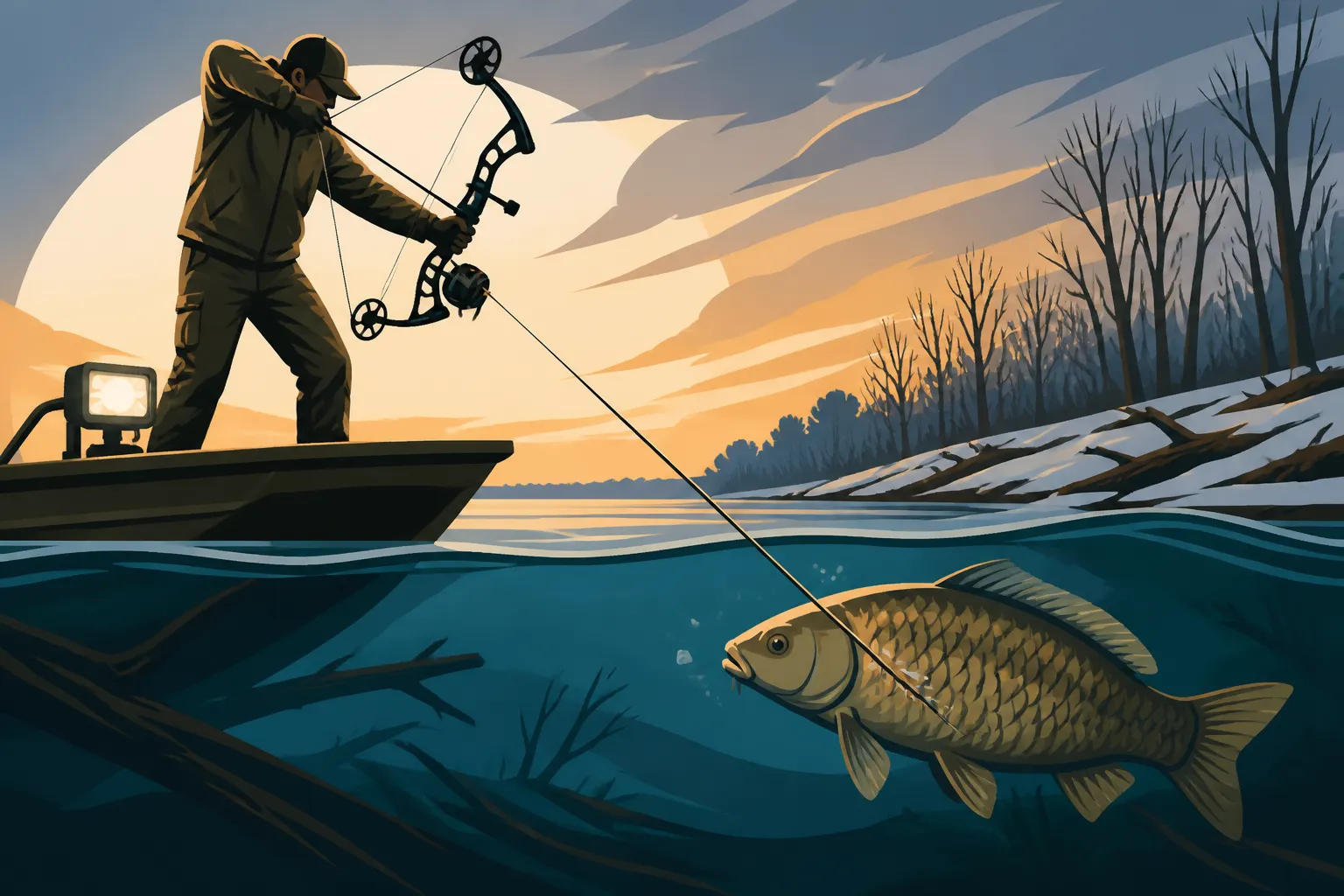
For many, bowfishing truly comes alive at night. Rough fish often move into shallows to feed under the cover of darkness, and the lack of glare on the water makes them easier to spot with powerful lights. This means a boat is almost essential for serious bowfishing, rigged with a generator and bright LED lights (often mounted on a raised platform) to illuminate the water. A flat-bottomed jon boat or a specialized bowfishing rig with a raised deck is ideal for navigating shallow waters and giving you a better vantage point for spotting fish. You'll also need a trolling motor to quietly maneuver through the shallows.
Beyond the specialized gear, never forget safety. Always have life jackets for everyone on board, a first-aid kit, and communication devices. While bowfishing isn't quite as adrenaline-pumping as Running Dogs on Mississippi Feral Hogs, you're still dealing with sharp arrows, powerful bows, and potentially slippery boats in the dark. A good pair of polarized sunglasses is a must for daytime bowfishing to cut glare and help you see into the water. And remember, when you're out there, you're responsible for the safe operation of your vessel, just like any other time on the water.
| Item | Description | Key Considerations |
|---|---|---|
| Bow | Recurve, compound, or dedicated bowfishing bow (30-50 lbs draw weight) | Durable, simple, good for quick shooting. |
| Reel | Bottle/Drum reel or Spincast reel | Bottle reels for reliability, spincast for speed. |
| Arrows | Solid fiberglass or carbon, barbed point, line attachment point | Heavy, won't float, designed for fish penetration and retrieval. |
| Line | Heavy braided line (e.g., 200-400 lb test) | Strong enough to retrieve fish and withstand snags. |
| Arrow Rest | Specialized full-containment rest for thick bowfishing arrows | Must hold heavy arrows securely. |
| Boat (optional) | Jon boat, flat-bottomed boat, or specialized bowfishing rig | Stable, shallow draft, often with raised platform for visibility. |
| Lights (night) | Generator and powerful LED or halogen lights | Illuminates shallow water for spotting fish at night. |
| Trolling Motor | Quiet, electric motor for stealthy navigation | Essential for silently approaching fish in shallow areas. |
| Polarized Glasses | Reduces glare, helps spot fish in daylight (GoHunt recommended) | Crucial for daytime visibility into the water. |
| Safety Gear | Life jackets, first-aid kit, communication device, knife | Non-negotiable for any boating activity. |
| Gloves | Protects hands from line burns, fish scales, and sharp fins | Helps with grip and reduces minor injuries. |
Mastering the Art of Bowfishing on Mississippi Waters
Bowfishing isn't just about shooting; it's about stalking, reading the water, and understanding fish behavior. It takes practice, patience, and a willingness to adapt to different conditions. The "off-season" means you might be dealing with hotter temperatures, lower water, or dense aquatic vegetation, all of which present unique challenges. But that's part of the fun – it’s a constant learning experience that keeps your senses sharp. While you might spend time in the spring Scouting Mississippi Public Land Before Season for deer sign, this off-season scouting is for reading water for fish.
Spotting Fish and Aiming True
This is where the art comes in. Unlike hunting deer or turkeys, you're shooting at a moving target that is underwater, which means refraction is a huge factor. Water bends light, making fish appear shallower than they actually are. The general rule of thumb is to aim low, but how low depends on the depth of the fish and your angle of approach. The deeper the fish and the steeper your angle, the lower you need to aim. It takes a lot of trial and error to get a feel for it. Look for subtle signs: a fin breaking the surface, a muddy swirl, a dark shadow, or even a fish's back exposed in super shallow water. Patience is key. Sometimes, waiting for the fish to turn broadside or move into a clearer area can make all the difference. Using a quality pair of polarized sunglasses, like those you might find through a resource like GoHunt, can dramatically improve your ability to see into the water and accurately judge depth.
Retrieval, Handling, and Ethical Considerations
Once you've made a successful shot, the next step is retrieval. Your line is attached to the arrow, so you simply reel the fish in. Be prepared for a fight, especially with larger carp or buffalo. Once the fish is at the boat, you'll need to dispatch it quickly and humanely. A stout club or a swift knife to the brain is usually effective. Be mindful of the barbs on your arrow – they're designed to hold tight, so you might need pliers or a specialized arrow puller to remove them safely.
Regarding ethical considerations, while most bowfished species are non-game or invasive, we still owe them a respectful end. Don't waste the meat; carp and buffalo, when properly cleaned and prepared, can be quite delicious, especially smoked or deep-fried. If you don't plan to eat them, consider using them for fertilizer in a garden or sharing them with others who will. Always follow local regulations for disposal. Also, be aware of what not to shoot. Game fish are generally off-limits for bowfishing, and you should always be able to positively identify your target before releasing an arrow. Remember that if you see a large, dark shape near the surface, it could be a protected species. For instance, knowing more about the Mississippi Alligator Population can help you avoid any accidental encounters or violations in certain waters. Just like with Mississippi Trapping License Requirements, understanding the nuances of the law makes for a responsible outdoorsman.
Disclaimer
Hunting and fishing regulations can change frequently. Always consult the latest Mississippi Department of Wildlife, Fisheries, and Parks (MDWFP) regulations before heading out. This article is for informational purposes only and does not supersede state laws or regulations. Be safe, be responsible, and enjoy your time in the great Mississippi outdoors.