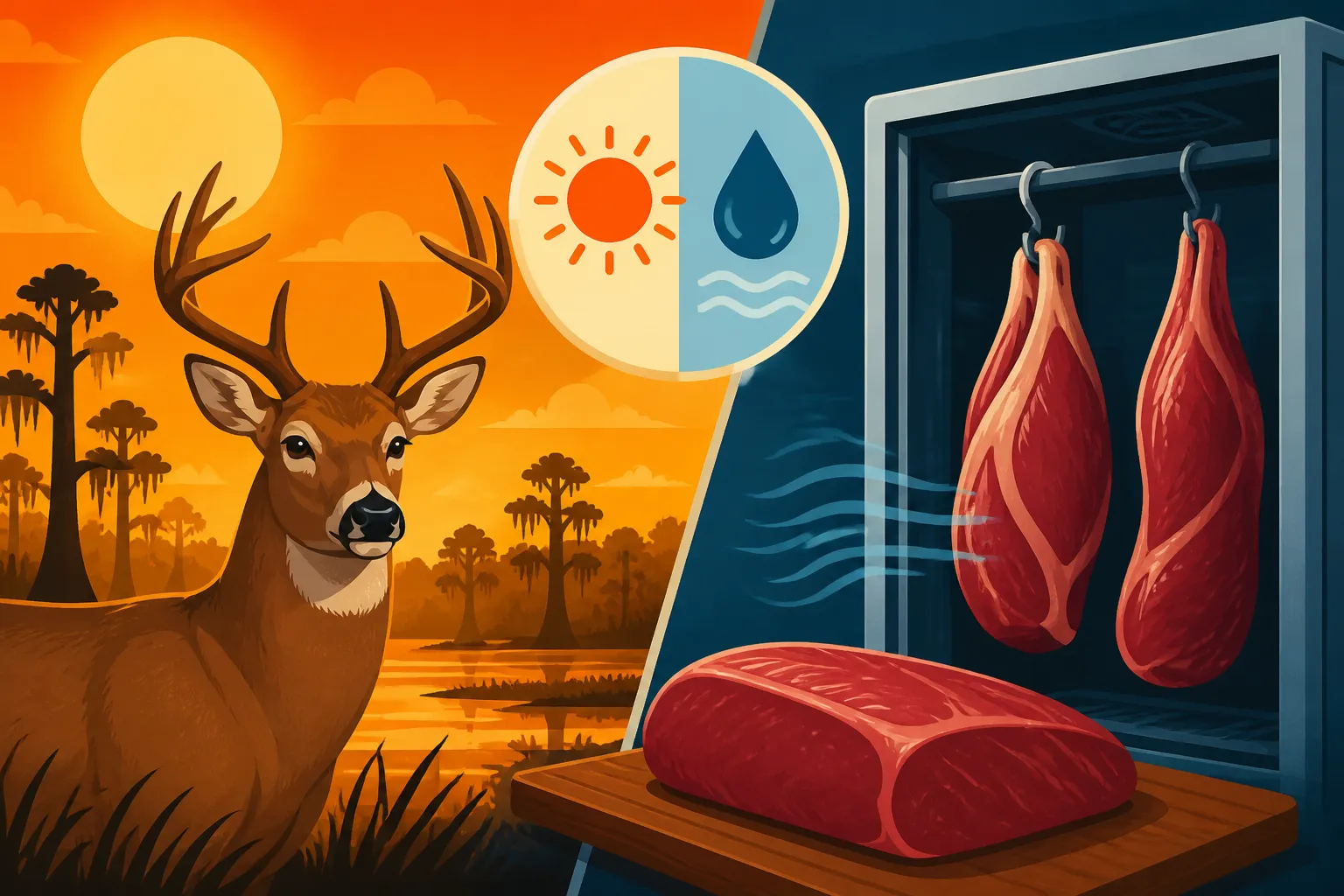
Aging Venison in Warm Weather
The shot was true, the deer is down, and you’re filled with that familiar mix of exhilaration and relief. But then, the Mississippi sun starts beating down, and a new kind of clock starts ticking: the one for proper meat care. Aging venison can be a game-changer for tenderness and flavor, but doing it safely when the thermometer is pushing 80 degrees, or even 90 in the early or late season, is a challenge many hunters face. This guide will walk you through the essential steps and considerations for successfully aging your hard-earned venison, even when Mississippi’s warm weather tries to work against you.
The "Why" Behind Aging Venison, Especially in a Humid Climate Like Mississippi's
Let’s be honest, many of us grew up with the “gut it, skin it, cut it, freeze it” mentality. And while that works, it often leaves a lot to be desired in terms of tenderness. Aging, when done correctly, elevates venison from tough and gamey to tender and flavorful. But in a place like Mississippi, with its notorious humidity and often-balmy temperatures, this traditional practice demands extra diligence.
What Happens During the Aging Process?
When you age meat, you're essentially allowing its natural enzymes to go to work. Right after an animal is harvested, its muscles are full of glycogen. Over time, this glycogen converts to lactic acid, which causes the muscles to stiffen—a process called rigor mortis. As aging continues, those enzymes start breaking down the connective tissues and muscle fibers within the meat. Think of it like a natural tenderizer, working from the inside out. This breakdown not only increases tenderness but also enhances the meat's natural flavors, leading to a richer, less "gamey" taste profile. The moisture content also changes subtly, concentrating the flavors further.
The magic truly happens over several days, but it requires precise control. Without proper temperature and humidity, you're not aging; you're spoiling. The goal is to allow beneficial enzymatic action while preventing the growth of harmful bacteria and mold. It’s a delicate balance, and that balance becomes even more precarious when you factor in the Mississippi environment.
Why Mississippi's Climate Poses Unique Challenges
Our beloved Magnolia State is renowned for many things, but cool, dry weather isn't usually one of them, especially during the archery season openers or late-season hunts. High temperatures mean bacteria multiply at an alarming rate. Bacteria thrive in warmth, and they are the enemy of safe meat aging. If the internal temperature of the carcass stays above 40°F (4°C) for too long, those undesirable microorganisms will take hold, leading to spoilage, off-flavors, and potentially unsafe meat.
Beyond temperature, Mississippi's high humidity is another significant hurdle. In a perfectly controlled aging environment, a certain level of humidity helps prevent the meat from drying out too quickly and forming a hard crust, which can impede the enzymatic process. However, uncontrolled high humidity, combined with warmth, creates an ideal breeding ground for surface mold and bacteria. This isn't the good, edible mold you see on certain cheeses; this is the fuzzy, green, and dangerous kind. This is why just hanging a deer in an unconditioned shed for a few days in October simply won't cut it most of the time. The air needs to be cool and moving, and the relative humidity needs to be stable.
Critical First Steps: Post-Harvest Care in Warm Conditions
The battle for successfully aged venison begins the moment the animal is down. Every minute counts, especially when the air is warm and still. Rapid heat removal is your absolute top priority. You can't age meat that's already begun to spoil.
Getting the Carcass Cooled Down, Fast
First and foremost, you need to field dress the animal immediately. This removes the internal organs, which are a major source of heat and bacteria. As soon as the gut cavity is open, it allows air to circulate and begins the cooling process. Don’t delay this step; it’s non-negotiable in warm weather. You can find more specific advice on this critical step in Field Dressing a Deer in Warm Weather.
Once field dressed, get the deer out of direct sunlight. Even if you're still in the woods, drag it into the deepest shade you can find. If you have a vehicle capable of transport, get it on the move as quickly as possible to a cooler location. On a warm day, if you have a significant distance to cover, consider using ice immediately in the body cavity. Pack the chest cavity full of ice to accelerate internal cooling. You'll want to replace this ice as it melts, and ensure the melted water can drain out so the meat isn't soaking. Some hunters will even place large, frozen water bottles in the cavity if they plan to transport it for several hours. This is especially true if you are Recovering a Deer From a Delta Slough or Dragging a Deer Out of a Slough, where the animal might be wet and warming up quickly.
Initial Butchering and Cleaning for Aging Success
Before actual aging can begin, the carcass needs to be clean and prepared. This means skinning the animal as soon as possible after field dressing, ideally within an hour or two of harvest, especially in warmer conditions. The hide acts like an insulating blanket, trapping heat against the muscle. Once skinned, rinse any visible dirt, hair, or blood from the carcass. Some hunters prefer to quarter their deer at this stage, particularly if they are handling a Deer Meat Yield From a Mississippi Buck from a larger animal, as smaller sections cool down much faster. This also makes the meat easier to manage in coolers or refrigerators.
During this initial butchering, meticulously remove any bruised meat, bullet fragments, or areas contaminated by stomach contents. Trim off as much fat as practical, as deer fat tends to render an undesirable waxy flavor and can go rancid quickly. If you are quartering the deer, keep the quarters separate, allowing air to circulate around them. This attention to detail now will pay dividends in the quality of your aged venison later. It's also at this stage that you might consider any specific steps needed if you're in a Handling Venison From a CWD Management Zone or sending samples for Mississippi CWD Testing for Hunters.
DIY Warm-Weather Aging Methods for the Mississippi Hunter
For many Mississippi hunters, sending every deer to a commercial processor isn't always practical or desirable. Luckily, with careful planning and a few essential tools, you can successfully age venison at home, even when the outdoor temperatures are less than ideal.
The Cooler and Ice Method
This is a go-to method for many hunters in warmer climates, and for good reason. It’s effective and relatively inexpensive. After field dressing, skinning, and quartering your deer, place the quarters into large, clean coolers. You'll want to use high-quality, well-insulated coolers. The key is to pack the meat generously with ice. Don’t just throw a bag on top; layer the ice around and between the meat sections. This direct contact with ice draws heat out of the meat rapidly.
Crucially, you need to manage the meltwater. The meat should not sit in a pool of water. Many hunters will drill small drainage holes in the bottom of their coolers, or use a spigot if available, to ensure water constantly drains out. You'll need to check the ice frequently, usually twice a day, and replenish it as it melts. The goal is to keep the meat's internal temperature consistently between 34-40°F (1-4°C). An instant-read meat thermometer is your best friend here. The duration for this method can vary, but generally, 3-7 days is common. This method works by cold-shocking the meat and maintaining a low temperature, which limits bacterial growth while still allowing enzymatic tenderization.
Refrigerated Space: Garage Fridges and Walk-ins
If you're lucky enough to have an spare refrigerator or freezer in your garage that you can adjust to refrigerator temperatures, you've got a fantastic head start. An old standalone refrigerator can be an excellent aging cabinet. The ideal temperature range is again 34-40°F (1-4°C). The advantage here is consistent temperature control and often lower humidity than outdoors, which helps inhibit bacterial growth.
When using a refrigerator, don't just stack the meat directly on shelves. Hang the quarters if possible, using S-hooks, or place them on wire racks to allow air to circulate completely around each piece. This prevents moisture buildup and encourages even chilling. Make sure the refrigerator isn't packed too tightly, as this restricts airflow. You might even place a small fan inside to promote air circulation if your fridge isn't particularly good at it, but be mindful of drying out the meat's surface too quickly. For aging times, most home setups can manage 7-10 days, sometimes even longer for larger cuts, depending on how stable your temperature is. Remember, every time you open the door, you're introducing warmer air, so try to minimize openings. If you're a seasoned hunter often processing your own game after a successful Bowhunting Mississippi's Long Archery Season or even during Mississippi's Gun Deer Season by Unit, investing in a dedicated game refrigerator can truly up your game.
When to Call in the Professionals: Commercial Processing
While DIY methods are certainly viable, sometimes the best course of action, especially with larger animals or during particularly hot spells, is to rely on the expertise of commercial processors. They have specialized equipment and controlled environments that are difficult to replicate at home.
The Benefits of a Trusted Processor
Commercial processors have large walk-in coolers designed specifically for chilling and aging game. These coolers maintain precise temperatures and humidity levels, creating an optimal environment for tenderization without risking spoilage. They also have the space to hang entire carcasses or large quarters, allowing for ideal air circulation. This means less worrying about ice, draining water, or fluctuating temperatures for you.
Furthermore, a good processor has the experience to judge when the meat is perfectly aged. They understand the nuances of different cuts and can ensure proper handling from start to finish. They also offer a wide range of processing services beyond just aging, from custom cuts to sausage making, which can save you a tremendous amount of time and effort at Butchering a Deer at Camp. For out-of-state hunters, or those traveling a long distance after a hunt, a processor can also help with packaging for transport, ensuring your venison makes it home safely. Many hunters who utilize mapping apps like GoHunt to scout and plan their hunts also rely on local processors they've identified in advance, especially when hunting public lands like the Delta National Forest Hunting.
Asking the Right Questions About Their Aging Practices
Not all processors are created equal, and it’s important to do your homework. Before dropping off your hard-earned buck, call around and ask some key questions:
- Do you age venison? Some processors might just chill and cut, bypassing the aging process altogether. Make sure their practices align with your goals for tender meat.
- What are your aging temperatures and how long do you typically age deer? Look for answers in the 34-40°F range, and typically 5-10 days for a good balance. If they say they age it at 50°F, run the other way!
- How do you handle carcasses in warm weather? A good processor will emphasize immediate cooling and often has space to receive animals quickly.
- Do you hang the deer or process it immediately? Hanging allows for better aging. If they just cut it up right away, you're missing out on the tenderization benefits.
- What are your cleanliness and sanitation protocols? A clean facility is paramount to preventing contamination.
By asking these questions, you can gauge their professionalism and ensure your venison is in good hands. This proactive approach ensures that your decision to use a professional processor truly benefits the quality of your meal, rather than just convenience.
Signs of Success: Knowing When Your Venison is Perfectly Aged
After all the careful planning, rapid cooling, and diligent temperature control, how do you know your venison is perfectly aged and ready for the freezer? Trust your senses, but understand what you're looking for.
Visual and Tactile Clues
When venison has been properly aged, you’ll notice a few key changes. Visually, the surface of the meat may appear darker, often with a slight dry crust forming. This is normal and actually desirable in dry aging, as it indicates moisture loss and concentrated flavor. This crust will typically be trimmed off before final butchering. The color underneath, however, should be a healthy, deep red. There should be no signs of greenish discoloration, sliminess, or fuzzy mold. If you see anything like that, it's a red flag.
When you touch the meat, it should feel firm but yield slightly to pressure, not mushy or overly soft. The muscle fibers should appear more relaxed, a visual sign of the enzymatic breakdown that has occurred. If you're using the cooler method, the quarters might feel a bit more pliable than when they first went in. The general appearance should be clean and appetizing, free from any suspicious growths or wet, sticky surfaces.
When to Cut Your Losses: Recognizing Spoilage
This is where the realism comes in. Sometimes, despite your best efforts, warm weather just wins. It's crucial to be able to identify signs of spoilage and know when to discard the meat. Never risk eating spoiled game; it can lead to serious illness.
The most obvious sign of spoilage is odor. Properly aged venison will have a rich, slightly earthy or nutty smell—a deeper meat aroma, not unpleasant. If you detect any sour, rotten, putrid, or excessively strong ammonia-like smells, the meat is likely spoiled. This is not the "gamey" smell some refer to; that's often a sign of improper cooling or fat left on the meat. A truly spoiled smell is unmistakable and unpleasant.
Sliminess or stickiness on the surface is another major indicator. If the meat feels slick or sticky, even after a rinse, it's a sign of bacterial growth. This is distinct from a slight dry crust. Discoloration like green, grey, or iridescent patches, especially on deeper muscle tissue or around bone, also points to spoilage. Lastly, if you see fuzzy mold (not a benign dry pellicle) growing on the surface, especially if it's colorful, it's best to discard that section, or potentially the entire piece if the mold is widespread or penetrates deeply. It's tough to throw away a hard-earned deer, but your health is paramount. When in doubt, err on the side of caution.
Successfully aging venison in Mississippi’s warm weather is absolutely achievable with careful attention to detail, rapid cooling, and consistent temperature management. It’s an extra step, but one that many hunters find makes a world of difference in the final culinary experience.
Disclaimer
This article is for general informational purposes only and does not constitute professional advice. Laws, prices and regulations vary by location and change over time. Consult a qualified professional for guidance on your specific situation.