Alcohol Policies at Mississippi Hunting Lodges
You've booked that dream Mississippi hunting trip, picturing crisp mornings in the stand, successful retrieves, and evenings swapping stories. It's natural to wonder about every aspect of your stay, and for many, that includes how a hunting lodge approaches alcohol. It's not always a straightforward answer, and the policies can vary wildly, leading to confusion and sometimes even awkward situations if you're not prepared. This guide will walk you through the typical alcohol policies you might encounter at Mississippi hunting lodges, explain the reasons behind them, and give you the tools to clarify expectations before you ever pack your cooler.
General Expectations for Alcohol at Hunting Lodges
When you envision a hunting lodge, especially one nestled deep in the Mississippi Hunting Licenses and What They Cost backcountry or on the edge of prime Hunting the Mississippi Delta timber, there's often an unspoken expectation of camaraderie around a fire pit, maybe a celebratory drink after a successful day. It's part of the tradition for many, a way to unwind and share the day's experiences. However, that expectation needs to be tempered with the reality that lodges are businesses, often with strict insurance requirements and a paramount focus on guest safety.
The Social Aspect of Lodge Life
For many hunters, a trip to a lodge isn't just about the hunt itself; it's about the entire experience. It's the pre-dawn coffee, the shared meals, and yes, the evening wind-down. After a long day of Still-Hunting Hills Unit Ridges or sitting in a blind, there's a strong desire to relax. A cold beer or a glass of whiskey can feel like the perfect cap to a successful day, or even a way to commiserate after a tough one. This social lubricant can foster bonds between hunters, making the trip even more memorable. Think of it like a remote version of Mississippi Deer Camp Traditions, where sharing stories and enjoying good company is just as important as the pursuit of game.
However, this social dynamic is precisely where expectations can collide with reality. While many lodges understand and cater to this desire for relaxation, they must do so responsibly. They're balancing the guest experience with legal obligations and safety protocols. A lodge owner isn't just hosting friends; they're running a commercial operation with a duty of care to all their guests and staff.
Beyond the Hunt: Downtime and Camaraderie
The moments spent back at the lodge are often as cherished as the hunt itself. It's where friendships are forged, strategies for tomorrow are debated, and the day's events are replayed in vivid detail. You might spend an hour or two cleaning your gear, discussing Treestand Setups in Delta National Forest, or simply lounging by a fire. For many, a libation fits naturally into this downtime.
Imagine a scene: you've just come in from chasing White-Tailed Deer Across Mississippi all day, perhaps you tagged out, or maybe you just had a close encounter. You're exhausted but exhilarated. Gathering with your fellow hunters, recounting the chase, or just kicking back and enjoying the quiet evening, often feels incomplete without the option of a celebratory drink. These social gatherings contribute significantly to the overall satisfaction of a guided hunt experience. The challenge for lodges is to facilitate this atmosphere without letting it compromise the integrity of the hunt or the safety of their guests.
Types of Alcohol Policies You'll Encounter
Just like Mississippi's diverse hunting opportunities, from Spring Turkey Hunting in Mississippi to Waterfowl Hunting the Mississippi Delta, the alcohol policies at its lodges can be quite varied. There isn't a one-size-fits-all approach, and what you find at one operation might be entirely different at another. It's crucial to understand these distinctions before you arrive, so you're not caught off guard.
"Bring Your Own Bottle" (BYOB) Scenarios
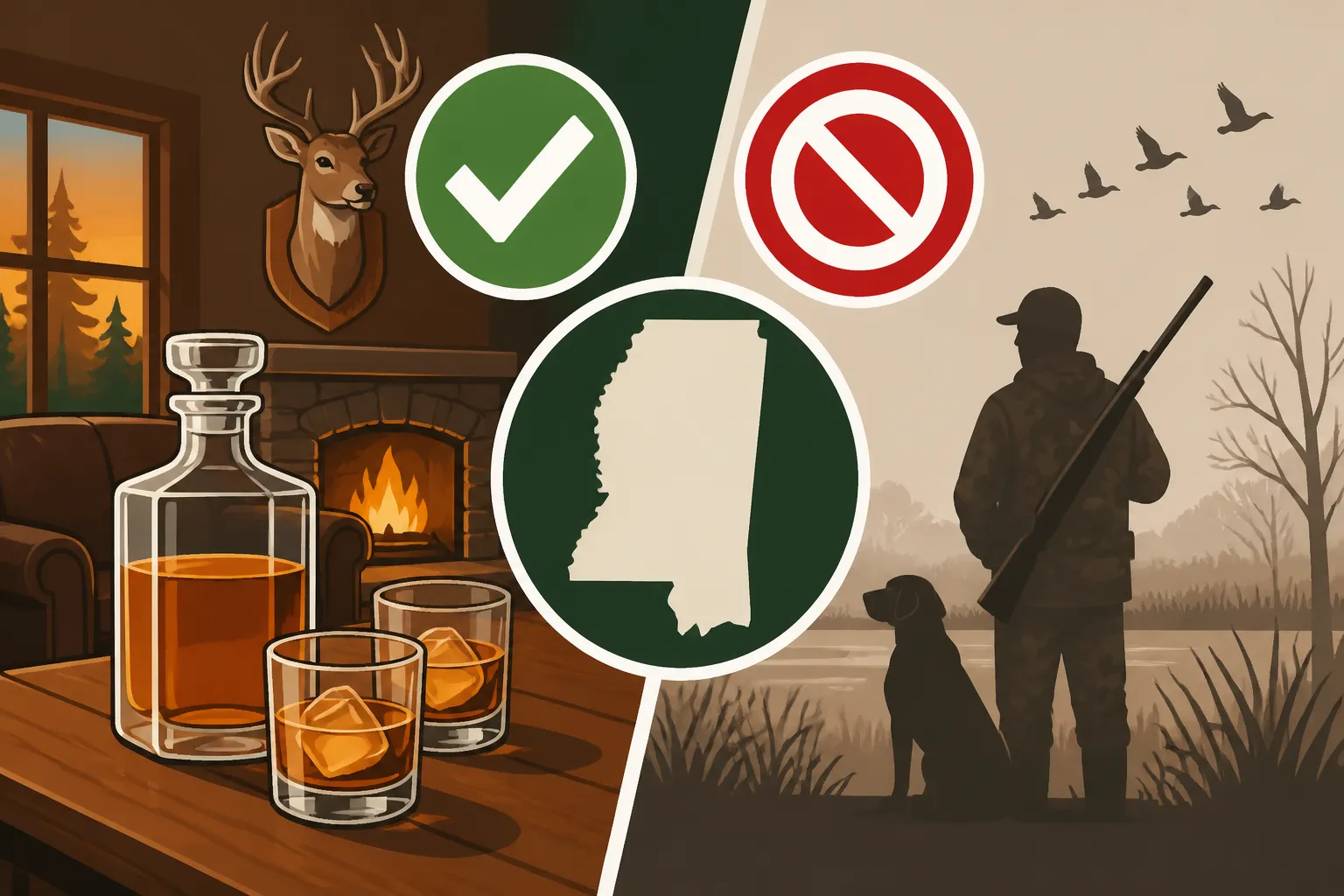
Many Mississippi hunting lodges operate on a "Bring Your Own Bottle" (BYOB) policy. This is often the most common scenario, especially at smaller, more rustic operations or those that are more focused purely on the hunt rather than an all-inclusive resort experience. Under a BYOB policy, guests are welcome to bring their own alcoholic beverages for consumption in designated areas, typically after hunting hours.
The understanding here is clear: you supply your own drinks, and the lodge is not responsible for purchasing, serving, or regulating your intake beyond ensuring responsible behavior. This arrangement works well for many hunters, as it allows them to choose their preferred brands and control their budget. However, even with BYOB, lodges will usually have unwritten or explicitly stated rules about when and where alcohol can be consumed (never before or during a hunt, and typically only in common areas or private rooms), and they always expect responsible consumption. Abuse of this policy can lead to immediate expulsion from the property, as Firearm Safety Rules on a Guided Group Hunt are paramount and any impairment is a serious liability.
Lodges with Provided Alcohol: Sometimes Included, Sometimes a Cash Bar
On the other end of the spectrum, some higher-end or all-inclusive Mississippi hunting lodges will provide alcohol as part of their package or offer a cash bar service. This is more typical of operations that cater to a more luxurious experience, where Lodge Accommodation and Meals are a significant part of the draw.
- Included Alcohol: In some premium packages, especially at a Booking a Delta Duck Lodge or a dedicated trophy deer outfit, a selection of beer, wine, and perhaps some spirits might be included in the price of your hunt. This is usually clearly stated in the package description. It creates a seamless, worry-free experience where guests don't have to worry about packing or purchasing drinks. However, even when included, there will almost certainly be limits on quantity and availability, and responsible service is always the rule. Guides and lodge staff are trained to monitor consumption and ensure safety.
- Cash Bar: More commonly, lodges might offer a cash bar, where alcoholic beverages are available for purchase from the lodge staff. This means the lodge holds the appropriate licenses to sell alcohol and operates much like a small restaurant or bar. Guests pay per drink, which can be convenient but also adds to the overall cost of the trip. This option allows the lodge to control inventory and ensure legal compliance with state and local alcohol sales laws. Regardless of whether it's included or a cash bar, the key is knowing this upfront. When looking at options on platforms like BookYourHunt or GoHunt, check the "amenities" or "what's included" sections carefully.
Strict No-Alcohol Policies
While less common, some Mississippi hunting lodges, especially those with a strong focus on youth hunting programs, religious affiliations, or those operating on certain public lands with specific regulations, may enforce a strict no-alcohol policy. This means no alcohol is permitted on the premises at all, whether brought by guests or provided by the lodge.
These policies are usually implemented for very clear reasons:
- Safety First: For operations heavily involving youth, eliminating alcohol removes one potential variable that could compromise the safety and well-being of young hunters.
- Focus on the Hunt: Some proprietors believe that the presence of alcohol detracts from the serious nature of the hunt and the skills required, particularly when dealing with the Physical Demands of a Delta Deer Hunt or Physical Demands of a Delta Duck Hunt.
- Legal/Insurance Mandates: In certain rare cases, a lodge's location, land lease agreement, or insurance policy might prohibit alcohol entirely.
If a lodge has a no-alcohol policy, it is imperative to respect it. Trying to sneak in alcohol or consume it discreetly can lead to immediate termination of your hunt and can damage the reputation of the outfitter. Always clarify these rules beforehand; it's better to know and choose a different lodge if this is a deal-breaker for you.
Here's a quick overview of common policies:
| Policy Type | Description | Key Considerations |
|---|---|---|
| BYOB | Guests bring their own alcohol. | Common, cost-effective for hunters. Lodge expects responsible consumption after hunting hours. No service provided. |
| Provided (Cash Bar) | Lodge sells alcohol; guests pay per drink. | Convenient, regulated by lodge. Adds to trip cost. Lodge holds licenses. |
| Provided (Included) | Alcohol is part of the overall package price. | Premium experience, cost included upfront. Limited selection/quantity. Lodge controls service and ensures responsible consumption. |
| No-Alcohol | Strictly no alcohol permitted on premises by guests or lodge. | Less common, often for safety, youth programs, or specific mandates. Must be strictly adhered to. |
Safety and Legal Considerations
The policies around alcohol at Mississippi hunting lodges aren't just arbitrary rules; they are deeply rooted in serious safety concerns, legal liabilities, and state regulations. Understanding these underlying reasons can help you appreciate why lodges have the rules they do and why they enforce them so strictly.
Hunter Safety and Impairment
The absolute top priority for any responsible hunting outfitter or lodge is the safety of their guests and staff. Hunting involves firearms, sharp knives, elevated stands, moving vehicles, and navigating potentially treacherous terrain, especially in environments like the Mississippi River Batture Public Access or flooded timber. Any impairment, even a slight one, can drastically increase the risk of an accident. This isn't just about avoiding catastrophic incidents; it's about minimizing any potential for mishap.
Therefore, virtually every lodge will have an ironclad rule: no alcohol before or during a hunt. This is non-negotiable. Guides are often responsible for the well-being of their clients, and they cannot risk their clients' safety or their own. If a guide perceives a hunter to be under the influence, they have every right, and indeed a professional obligation, to remove that hunter from the field. It’s a matter of life and limb, and it's a topic that falls under the umbrella of broader Firearm Safety Rules on a Guided Group Hunt.
Lodge Liability and Insurance
Beyond immediate safety, hunting lodges face significant liability risks. If an accident occurs on their property, particularly one involving firearms or vehicles, the lodge could be held responsible. Alcohol consumption significantly complicates this picture. Insurance providers for hunting operations often have specific clauses regarding alcohol, and a lodge could face increased premiums, denial of coverage, or even be put out of business if they are found negligent in managing alcohol consumption.
This means lodge owners are highly motivated to enforce their alcohol policies. They're not just trying to be buzzkills; they're protecting their business, their employees, and ultimately, ensuring they can continue to offer hunting experiences for years to come. A guest ignoring a policy could inadvertently jeopardize the entire operation. This is why when you're Vetting a Mississippi Outfitter Before You Book, you should look for clear communication on all policy fronts, including alcohol.
Mississippi State Laws and Local Ordinances
Mississippi, like all states, has specific laws governing alcohol sales, consumption, and public intoxication. These laws can vary by county and even by municipality. For instance, some counties might be "dry," meaning no alcohol can be legally sold within their borders, though personal consumption might still be permitted. Lodges must operate within these legal frameworks.
A lodge providing alcohol must hold the proper licenses, which involves stringent background checks and adherence to state Alcoholic Beverage Control (ABC) regulations. A BYOB policy avoids the need for a sales license, but lodges still need to be mindful of public intoxication laws and liability. Guests, too, are expected to know and abide by state laws regarding alcohol. Ignorance of the law is never an excuse, and violating state law on a lodge's property could lead to legal trouble for both the individual and the lodge. Always be aware of the laws surrounding Mississippi Legal Firearms for Deer Hunting and other equipment, just as you would with alcohol.
Asking the Right Questions Before You Book
The best way to avoid any surprises or uncomfortable situations regarding alcohol at a Mississippi hunting lodge is to do your homework and ask clear questions before you commit to a booking. Don't assume anything; clear communication is always your best friend.
Booking Agencies and Outfitter Websites
When you first start researching a hunting trip, you'll likely use online resources. Platforms like BookYourHunt and GoHunt are excellent starting points for finding potential outfitters in Mississippi and seeing what they offer. Many outfitters list detailed information about their services, including accommodations, meals, and often, their alcohol policies.
Look for specific sections on "Lodge Amenities," "What's Included," or an FAQ page. Some will explicitly state "BYOB" or "Alcohol included," while others might be less clear. If you're looking at an all-inclusive package, review What's Included in an All-Inclusive Deer Package very carefully. While these platforms are great for initial discovery, remember that the information can sometimes be generalized or outdated. It's a good first step, but not the final word.
Direct Communication with the Lodge
Even if a lodge lists its policy on a booking site like GoHunt, it's always wise to follow up directly with the outfitter or lodge manager. A simple phone call or email can clarify any ambiguities and give you peace of mind. Here are some specific questions you might ask:
- "What is your policy regarding alcoholic beverages at the lodge?"
- "Are guests permitted to bring their own alcohol?"
- "Do you have a cash bar or is alcohol included in the package price?"
- "Are there any specific times or areas where alcohol consumption is not allowed?"
- "Are there any local ordinances I should be aware of regarding alcohol in the area?"
These questions demonstrate that you're a responsible guest who wants to adhere to their rules, which lodges appreciate. This is especially important for Booking a Mississippi Hunt as a Nonresident, as you might not be familiar with local customs or specific Mississippi laws. Confirming details like these prevents misunderstandings and ensures a smoother, more enjoyable trip for everyone involved. It's also a great opportunity to ask about other logistics, such as What to Pack for a Guided Mississippi Hunt or typical schedules.
Respecting Lodge Rules
Once you've clarified the alcohol policy, the most important step is to respect it. A lodge's rules are there for a reason, whether it's for safety, legal compliance, or simply to maintain a certain atmosphere. Adhering to these rules shows professionalism and courtesy, not just to the lodge owner but also to your fellow hunters and guides.
If a lodge has a no-alcohol policy, don't try to circumvent it. If it's BYOB, drink responsibly and know your limits, especially when you're far from home. Remember that guides and staff are often working long hours and are dedicated to providing you with the best possible hunting experience. Their job is made much easier when guests are cooperative and respectful. And speaking of staff, don't forget the etiquette around Tipping Guides and Dog Handlers if you're pleased with their service – responsible enjoyment of your time at the lodge contributes to that positive experience. Your cooperation helps ensure that everyone, including the lodge, can focus on the incredible hunting opportunities that Mississippi has to offer.
Disclaimer
This article is for general informational purposes only and does not constitute professional advice. Laws, prices and regulations vary by location and change over time. Consult a qualified professional for guidance on your specific situation.