How Much to Tip a Mississippi Deer Guide
That moment you're packing up after a fantastic deer hunt in Mississippi, the adrenaline from the harvest (or even just the pursuit!) is still buzzing, and then it hits you: "What's the right amount to tip the guide?" It's a common question, a little awkward sometimes, and one that often leaves hunters scratching their heads. This guide is here to take the guesswork out of showing your appreciation, helping you understand the unspoken rules of tipping your Mississippi deer guide so you can leave with peace of mind.
Why Tipping Your Mississippi Deer Guide Matters
Tipping isn't just a casual gesture; it's a deeply ingrained tradition in the hunting and guiding world, especially here in Mississippi. It acknowledges the immense effort and passion that goes into making your hunt a success and often forms a significant portion of a guide's income. Understanding its importance helps you appreciate the service even more.
Acknowledging Hard Work and Dedication
Think about everything your guide does, much of which you might never even see. Long before you ever set foot in the stand, they've been out scouting, often in brutal heat or freezing rain, deciphering deer patterns, checking trail cameras, and ensuring food plots are thriving. They're hanging stands, checking wind directions, figuring out entry and exit routes that minimize disturbance, and staying on top of the latest Mississippi Deer Season Structure Explained. They're the ones who rise before dawn, often without a complaint, and are the last to bed down, often after gutting, skinning, and caping your deer.
This isn't just a job; it's a lifestyle for most Mississippi deer guides, whether you're chasing big bucks in the Delta or still-hunting the piney woods. They put in countless hours, both physically and mentally, to give you the best possible chance at a memorable experience. Your tip is a direct way to say, "I see your effort, and I appreciate it." It validates their dedication, especially when they've gone above and beyond, like helping you track a deer well after dark or adapting plans on the fly due to a sudden cold front or unexpected rain.
Setting Industry Standards and Morale
The hunting guide industry, much like hospitality or charter fishing, operates on a tipping culture. It's a fundamental part of a guide's compensation structure. When you tip appropriately, you're not just rewarding an individual; you're helping to uphold a standard of professionalism and service that benefits all hunters. Guides talk, and a reputation for fair tipping encourages high-quality guides to continue their work and attract new talent to the profession.
Conversely, a lack of tipping, or significantly under-tipping, can demoralize guides and even impact the overall quality of future hunts for others. It sets an expectation that their strenuous efforts aren't valued, which can understandably affect their enthusiasm. For guides who work hard through the Mississippi Gun Season Dates by Unit and the long archery season, knowing their efforts are recognized financially is a huge morale booster. It encourages them to continue providing that top-tier service, year after year.
Building Relationships for Future Hunts
Mississippi's hunting community, especially among guides and outfitters, can feel like a tight-knit family. Guides remember clients who are respectful, fun to hunt with, and, yes, those who are generous tippers. If you had a fantastic experience and hope to hunt with that guide or outfitter again, a good tip is an excellent way to solidify that relationship.
It's not uncommon for guides to prioritize returning clients, especially those they enjoy working with. Your tip signals that you value their expertise and professionalism, making them more likely to fit you into their schedule next season, or even give you first dibs on prime dates or properties. Think of it as investing in your future hunting adventures. Beyond the cash, a glowing personal recommendation and positive word-of-mouth are invaluable to a guide, reinforcing why platforms like BookYourHunt often feature client reviews prominently.
General Tipping Guidelines for Deer Hunts
So, what's the magic number? While there's no hard-and-fast rule etched in stone, there are widely accepted norms that can guide your decision, whether you're on a quick day hunt or an extended stay at a Mississippi lodge.
The Standard Percentage Range
For guided deer hunts across the country, and certainly here in Mississippi, a typical tipping range falls between 10% to 20% of the total hunt cost. This percentage is usually calculated on the price of the guided hunt itself, before licenses, tags, or personal gear purchases are factored in.
Let's break that down:
- 10-15% is generally considered a good tip for solid, professional service where the guide met all expectations. They were knowledgeable, worked hard, kept you safe, and provided a good experience, even if you didn't tag out.
- 15-20% (or even a little more) is for exceptional service. This is for the guide who went above and beyond, perhaps staying out later than expected, managing a difficult tracking job with grace, showing incredible patience, adapting expertly to challenging conditions, or simply making the entire experience truly unforgettable.
It's crucial to remember that this percentage is typically based on the total hunt cost, not just the "trophy fee" or if you harvest an animal. The guide's effort is largely independent of whether a deer steps into your shooting lane.
Factors Influencing Your Tip Amount
While the percentage is a good starting point, several elements can (and should) sway your final decision.
Guide's Effort and Attitude
This is arguably the most important factor. Did your guide put in a full day (or multiple full days) of work? Were they enthusiastic, even when conditions were tough? Did they adapt quickly to changing weather or deer patterns? Did they communicate clearly and make you feel comfortable and informed? A guide who works tirelessly, has a positive attitude, and genuinely tries to make your hunt enjoyable, regardless of the outcome, deserves to be rewarded. This might involve setting up multiple stands, walking extra miles with you, or staying late to field dress and transport game.
Hunter's Success (or Lack Thereof)
Here's a critical point that sometimes trips hunters up: a guide's tip should not be solely dependent on whether you kill a deer. A guide can't control the wild animals. They can put you in the best possible position, help you make ethical decisions, and give you every advantage, but ultimately, the deer has a vote too.
However, success can influence the upper end of your tip. If your guide helped you harvest a fantastic Mississippi buck, especially a target animal you've been after, or if they demonstrated exceptional tracking skills that led to a recovery, you might lean towards the higher end of the 15-20% range. But if you didn't tag out, and the guide still put in maximum effort and provided a safe, enjoyable experience, they still deserve a solid tip. Many outfitters understand the challenges, and a resource like Reading Outfitter Success Claims can give you a realistic view of typical harvest rates, which aren't always 100%.
Overall Experience and Hospitality
Beyond just the guide, consider the entire experience. If you booked a Mississippi Lodge and Package Hunts, how was the food? Were the accommodations clean and comfortable? Was the lodge staff (cooks, cleaners, other support personnel) friendly and attentive? Sometimes these folks are tipped separately, or there's a communal tip jar. A smooth, enjoyable overall experience from start to finish is a testament to the entire operation, and your tip can reflect that collective effort.
Additional Services
Did your guide provide services beyond the basic hunt? This could include extensive caping for a taxidermist, quartering your animal, making multiple trips to a game processor, helping with gear setup, or providing transportation from a distant airport. These extra efforts, while often part of the package, sometimes warrant a little extra recognition.
When to Adjust Your Tip Down (and Why It's Rare)
While it's uncomfortable to think about, there are rare instances where a guide's service genuinely falls short, and adjusting your tip downward might be warranted. However, this should be considered very carefully and usually only for serious issues, not simply because you didn't fill your tag.
Reasons for a reduced tip (or no tip at all, in extreme cases) might include:
- Safety Violations: This is paramount. If your guide compromised your safety or the safety of others due to negligence, intoxication, or reckless behavior.
- Clear Lack of Effort: If the guide was clearly disengaged, spent more time on their phone than focused on the hunt, showed up late repeatedly, or didn't seem to care about your success or experience.
- Unprofessionalism: This could involve disrespectful language, inappropriate behavior, or making you feel genuinely uncomfortable.
- Failure to Deliver Promised Services: If the outfitter or guide explicitly failed to provide services that were clearly outlined and promised in your booking, beyond the reasonable variability of a wild hunt.
Before deciding to reduce a tip significantly, it's often best to try and address the issue directly with the guide or the outfitter's management. Clear communication can sometimes resolve misunderstandings. Remember, a poor hunting outcome (like not seeing many deer) is almost never the guide's fault if they've put in the effort. Always separate a poor hunt from poor guiding.
Mississippi Specifics and Practical Tipping Scenarios
Tipping culture can vary slightly by region and type of hunt. While Mississippi generally follows national norms, understanding how to apply these guidelines to common local scenarios can be really helpful.
Tipping on Day Hunts Versus Multi-Day Packages
The duration and structure of your hunt often influence the practical application of tipping percentages.
Day Hunts
For a single-day guided deer hunt in Mississippi, whether it's an archery morning or an afternoon gun sit, you'll still apply the 10-20% rule to the cost of that day's hunt. If a day hunt costs, say, $500, a good tip would be $50-$100. Some hunters prefer a flat dollar amount for day hunts, often in the range of $50-$150, depending on the intensity of the hunt and the guide's effort.
For instance, if you're on a Deer Drives With Three or Four Hunters day hunt, and your guide is coordinating all the moving parts, scouting specific ambush points, and ensuring safety, their value far exceeds just the few hours you're in a stand. Their logistical efforts deserve recognition.
Multi-Day, All-Inclusive Packages
This is where the percentage rule truly shines. When you book an all-inclusive package with an outfitter, covering multiple days of hunting, lodging, and meals, your tip should be calculated as 10-20% of the entire package price. If the package is $3,000 for three days, your tip would range from $300-$600.
It's common for guides in lodge settings to share tips with the other staff (cooks, cleaners) who contribute to your overall experience, though sometimes there's a separate tip jar for non-guide staff. It's always a good idea to clarify the outfitter's policy on this when you make your booking, or by asking subtly upon arrival. You can also discreetly hand a separate amount to the cooks or cleaning staff if you feel they provided exceptional service that isn't covered by the guide's tip.
Handling Group Hunts and Multiple Guides
Hunting with a group can add a layer of complexity to tipping, but it's easily managed with a little coordination.
One Main Guide for the Group
If your group of hunters shares one primary guide throughout the hunt, it's best for the group to pool their tips. Each individual contributes their share (e.g., 10-20% of their portion of the hunt cost), and one person presents the combined cash tip to the guide at the end of the trip. This ensures fairness and simplifies the process for the guide. A quick, polite discussion among your hunting buddies before the trip's end can ensure everyone is on the same page.
Multiple Guides (One Per Hunter or Small Group)
If your outfitter provides a dedicated guide for each hunter, or a guide for every two hunters, then individual tipping is often more appropriate. Each hunter should tip their specific guide based on the service they received. This allows you to personalize the tip based on your direct interactions and the effort your particular guide put in for you. This is common in more high-end Trophy Buck Guides in the Delta services where personal attention is a premium.
Tipping for Specific Game: Trophy vs. Management Deer
Whether you're after a monster rack or filling the freezer with a management doe, the core tipping principles remain the same: effort matters more than outcome.
Trophy Buck Hunts
These hunts, especially those targeting specific age-class bucks, often involve more intense scouting, longer hours in specific stands, and immense pressure on the guide to deliver. The guide's efforts to position you for that "buck of a lifetime" in areas known for Why the Delta Grows Big Bucks are significant. While the percentage might stay the same, hunters often lean towards the higher end of the 15-20% range (or even a bit more) if a guide successfully helps them bag a truly exceptional trophy, reflecting the heightened effort and skill involved in such a specific pursuit.
Management Hunts
Even on hunts focused on harvesting does or younger bucks for herd management, the guide's knowledge of deer movement, food sources, and stand placement is crucial. They're still working to ensure you have a safe, ethical, and successful harvest. The 10-15% range is perfectly appropriate for these hunts, recognizing the guide's professional service and effort in helping you achieve your objective, whatever that may be.
Cash or Other Methods
When it comes to the actual exchange of the tip, cash is almost universally preferred by guides.
Cash is King
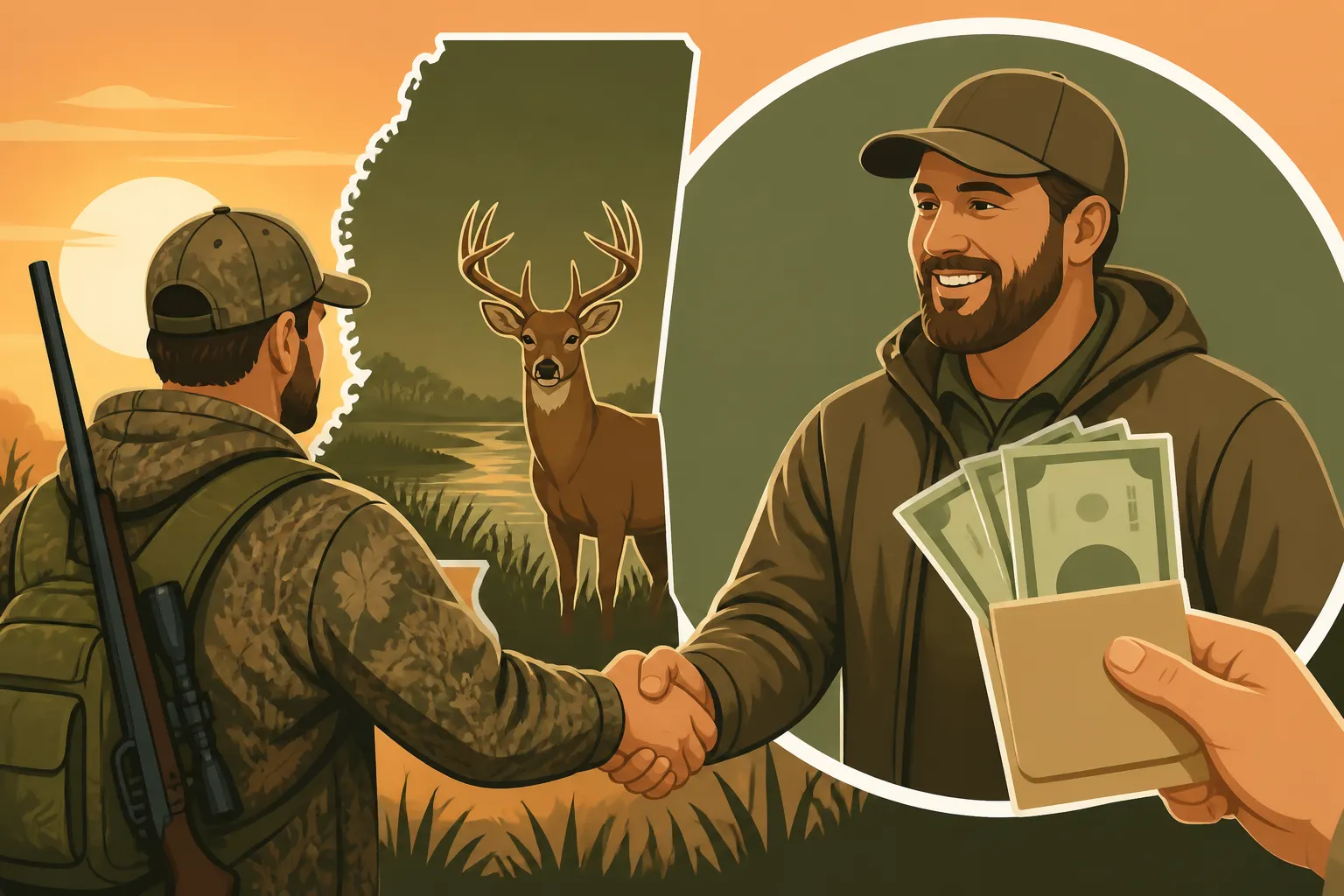
Cash offers immediate access and flexibility for the guide. It avoids any potential processing fees or delays associated with credit card payments. Presenting a crisp envelope of cash directly to your guide at the end of the hunt is the most common and appreciated method.
Checks and Other Options
If carrying a large amount of cash isn't feasible, a personal check made out directly to the guide is an acceptable alternative. Some outfitters may allow you to add a tip to your final bill paid via credit card, but this isn't always the case, and sometimes the guide doesn't receive the full amount due to processing fees, or they have to wait longer to receive it. It's best to inquire about the outfitter's preferred method when you make your Questions to Ask Before Booking a Mississippi Hunt.
Remember to tip before you leave the property. It ensures the guide receives it directly and at the appropriate time.
Beyond the Cash: Other Ways to Show Appreciation
While a monetary tip is the primary way to show gratitude, there are other meaningful gestures that can amplify your appreciation and truly make a guide feel valued. These acts of kindness and support can go a long way in building lasting relationships.
Public Reviews and Referrals
In today's digital age, online reviews are gold for guides and outfitters. Taking the time to write a positive, detailed review on platforms where you might have found them (like GoHunt or BookYourHunt), or even on their own website or social media pages, is incredibly helpful. Mention specific things your guide did well, their knowledge of the area (such as Hunting the Loess Bluff Hills or Hunting Delta Unit Bottomland Deer), and why you would recommend them.
Equally valuable are referrals. If you had a great experience, telling your friends, family, and fellow hunters about your guide is a huge compliment. Word-of-mouth remains one of the most powerful marketing tools for any service, and for a guide, a direct referral can lead to future bookings and sustained business. You might even send a personal thank-you note or email, perhaps with a few photos of your successful hunt, that they can share (with your permission) on their social media.
Small Gifts or Tokens of Gratitude
While never a substitute for a monetary tip, a thoughtful small gift can be a wonderful way to express extra appreciation. These are often things a guide might use in their daily work or personal life:
- Quality Gear: A good knife, a headlamp, a pair of warm gloves, a durable thermos, or even a gift card to an outdoor retailer can be incredibly useful.
- Local Delicacies: If you're from out of state, bringing a local treat or specialty from your hometown can be a fun exchange.
- Personalized Items: A custom hat or shirt with the guide's name or the outfitter's logo, or even a framed photo of your hunt together, can become a cherished keepsake.
- Beverages: A nice bottle of whiskey, a case of their favorite craft beer, or good quality coffee for the lodge can often be appreciated, provided it's appropriate and within their personal preferences.
The key with gifts is that the thought truly counts. It shows you paid attention and cared enough to bring something extra. Just make sure the gift is practical and appropriate, and doesn't replace the expected cash tip. It’s an "and," not an "or."
This table offers a general overview for tipping various services during a guided Mississippi deer hunt. Remember, these are guidelines, and your personal experience should always be the ultimate factor.
| Service Category | Who You're Tipping | Typical Range / Amount | Notes |
|---|---|---|---|
| Deer Guide | Your primary hunting guide(s) | 10-20% of the total hunt cost | Most important tip. Based on effort, knowledge, safety, and overall experience, not just harvest success. Higher end for exceptional service or trophy animals. For day hunts, often $50-$150 cash. |
| Lodge Staff | Cooks, cleaners, camp helpers | $50-$100+ per hunter for multi-day stay (pooled or individual) | If your hunt includes lodging and meals, these individuals work hard behind the scenes. A separate tip jar or handing individual tips can be appropriate. Amount varies with length of stay and quality of service. |
| Dog Handlers | If dogs are used for tracking | $20-$50 if they specifically track your wounded animal | Some guides handle their own dogs. If a separate handler is brought in for a track, a direct tip is appreciated for their specialized effort and equipment. |
| Other Support Staff | Gear porters, skinners (if not the guide) | $10-$20 per service, or inclusion in lodge staff tip | Less common, but sometimes a separate person handles specific tasks like skinning or caping. If they are not your guide, a small tip directly to them is a kind gesture. |
| Less Than Satisfactory | N/A | Below 10% or no tip | Rare and for serious issues only. This applies to genuine safety concerns, gross negligence, or extreme unprofessionalism, not simply a lack of harvest. Communication with the outfitter is recommended if you feel a tip is unwarranted. The MDWFP even offers ways to Reporting a Poacher in Mississippi if illegal activities are involved. |
Disclaimer
This article is for general informational purposes only and does not constitute professional advice. Laws, prices and regulations vary by location and change over time. Consult a qualified professional for guidance on your specific situation.