Mississippi Gopher Tortoise Range
You're out there, moving through the woods, focused on deer sign or maybe that distant gobble, and it’s easy to overlook some of the smaller, slower inhabitants of our Mississippi landscape. Many of us, even seasoned hunters, might walk right past a gopher tortoise without fully understanding its significance, or even realizing they're in its home range. This guide isn't about hunting them – they're a protected species – but it's about helping you recognize where these incredible creatures live, why their presence is so vital to our state's ecosystem, and how knowing their range makes you a more informed and responsible outdoors person, especially when you're on public lands or managed private tracts across Mississippi.
Understanding the Gopher Tortoise in Mississippi
Before we dive into where these unique reptiles make their homes, let's take a moment to appreciate what a gopher tortoise actually is. They're not your garden-variety turtle you see basking on a log in a creek. Gopher tortoises are a truly special part of the Southern landscape, and Mississippi is fortunate enough to host a portion of their population. For anyone who spends time in the field, understanding these creatures adds another layer to your connection with the wild places we cherish.
A Keystone Species of the Piney Woods
The term "keystone species" gets thrown around a lot, but for the gopher tortoise, it's absolutely spot-on. Imagine an archway where if you remove one stone, the whole thing collapses. That's what these tortoises are for their habitat. Their defining characteristic is their incredible ability to dig deep, extensive burrows, often over 30 feet long and 10 feet deep, with a large, spacious chamber at the end. These aren't just personal residences; they are communal apartments, offering refuge from heat, cold, and fire to hundreds of other species. Without the gopher tortoise tirelessly excavating these underground shelters, countless other animals – everything from gopher frogs and indigo snakes to rabbits, opossums, and even some insects – would struggle to survive in the often harsh conditions of the sandy, well-drained uplands. They're literally shaping the very foundation of their ecosystem.
It’s a truly humbling thought when you consider it. While you're out scouting for deer, thinking about Scouting Mississippi Public Land Before Season, or preparing for Spring Turkey Hunting in Mississippi, remember that the ground beneath your feet might be a bustling underground metropolis, all thanks to these shelled architects. Their long-term impact on the health and biodiversity of our pine forests is immeasurable, and it really underscores why any effort to protect them is so important for the broader wildlife community in Mississippi.
Physical Characteristics and Lifespan
Gopher tortoises are pretty distinctive, once you know what to look for. They typically have a domed, somewhat flattened carapace (the upper shell) that ranges from a dull gray to a grayish-brown, helping them blend in with the sandy soils they inhabit. Their plastron (the bottom shell) is usually a lighter yellow or cream color. What really sets them apart, though, are their shovel-like front limbs, perfectly adapted for digging. They’ve got strong, thick claws and stout, elephantine legs. Adults can grow to be quite substantial, often reaching lengths of 10 to 15 inches, though some larger individuals might push 16 inches or more. Don't let their slow, deliberate movements fool you; they are powerful excavators.
Their lifespan is another remarkable aspect. These are not short-lived creatures. In the wild, gopher tortoises can live for 40 to 60 years, and in some cases, even longer. This longevity means that an adult tortoise you see might have been living in the same patch of woods since before you were born. Think about that for a moment – an animal that has witnessed decades of change in its environment, steadfastly maintaining its vital role. This long life cycle also means that changes to their habitat or population can have very slow, cumulative effects, making conservation efforts a marathon, not a sprint. Their slow reproductive rate further emphasizes the need for long-term protection; they can't just bounce back quickly from a major setback.
Pinpointing the Gopher Tortoise Range in Mississippi
When we talk about the gopher tortoise range in Mississippi, we’re essentially talking about a very specific type of habitat. These aren't creatures you'll find just anywhere in the state. They have very particular needs when it comes to soil, vegetation, and climate, which narrow down their presence to a distinct southern portion of Mississippi. If you're hunting deer in the Delta or chasing squirrels in the northern Hills, you're likely outside their stomping grounds.
The Longleaf Pine Ecosystem Connection
The gopher tortoise is inextricably linked to the longleaf pine ecosystem. This isn't just a preference; it's a fundamental requirement for their survival. Longleaf pine forests, characterized by widely spaced, mature pines and an open, grassy understory, provide the ideal conditions. Why? First, the sandy, well-drained soils found in these areas are perfect for burrow digging. Clay-heavy soils or areas with high water tables just won't cut it. Second, the open understory, maintained by frequent natural fires or prescribed burning, allows sunlight to reach the ground, promoting the growth of low-growing, succulent plants that make up the bulk of the tortoise's diet. They're primarily herbivores, munching on grasses, legumes, and various forbs.
This reliance on longleaf pine is crucial for hunters and land managers to understand. Areas that are actively managed for longleaf pine, often through controlled burns, are essentially being managed for gopher tortoises and the dozens of other species that rely on this unique habitat. If you're in the Piney Woods Region or near the Mississippi Gulf Coast, and you see evidence of prescribed burns, there's a good chance you're in or near gopher tortoise country. It means that land managers are actively working to preserve this critical ecosystem, which benefits not just the tortoises, but countless other species of game and non-game wildlife. Understanding the importance of Why Mississippi Foresters Burn Longleaf Pine can give you a deeper appreciation for the work being done to sustain this unique habitat.
Key Counties and Regions
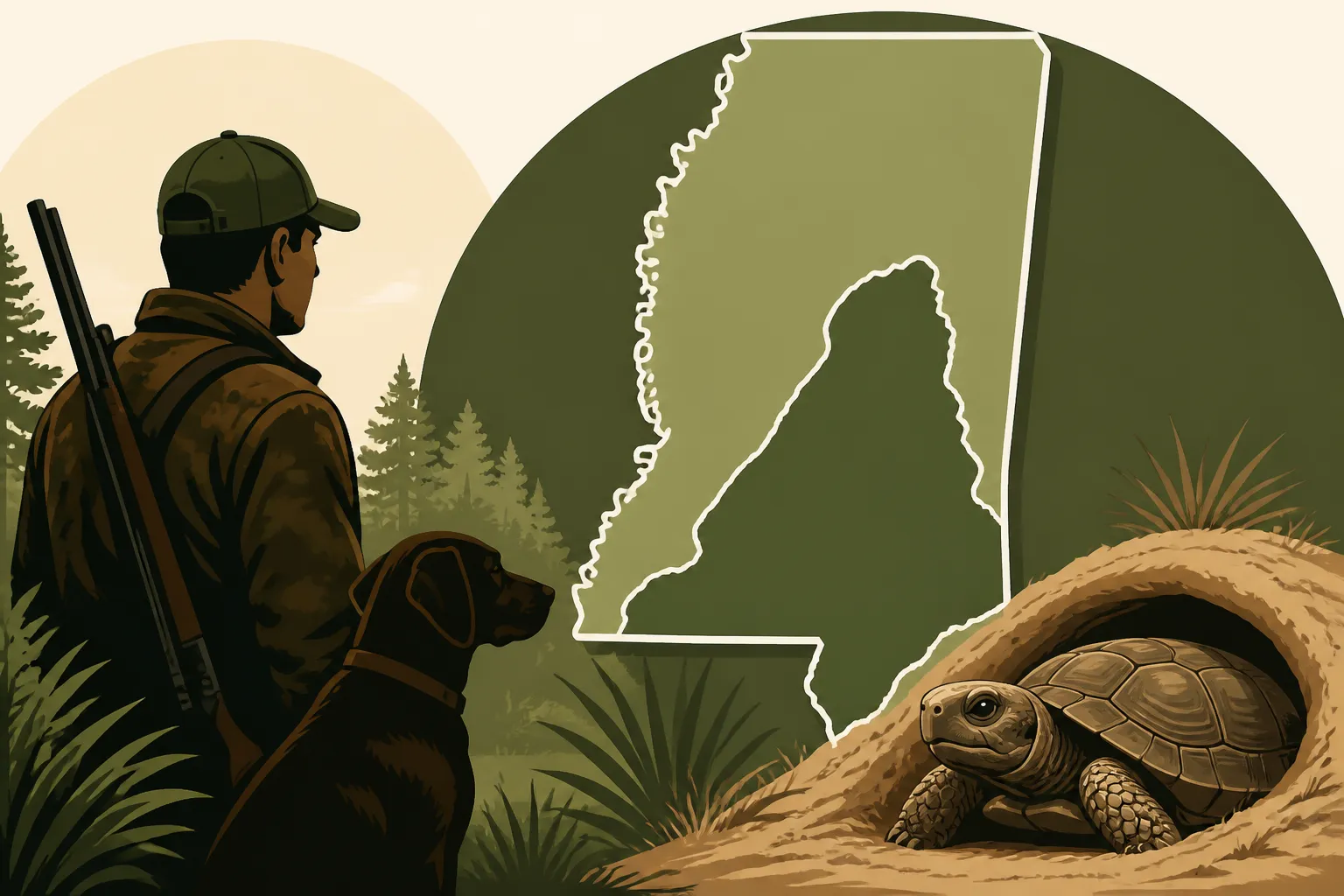
In Mississippi, the gopher tortoise range is primarily confined to the southern third of the state, stretching across the Lower Coastal Plain. This means if you're hunting in DeSoto, Marshall, or even Copiah County, you're generally outside their habitat. Their stronghold is found in a swath of counties south of an imaginary line that roughly runs from Natchez eastward to just north of Hattiesburg and then towards Meridian.
Specifically, you'll find the highest concentrations and most viable populations in counties like Harrison, Stone, George, Jackson, Pearl River, Lamar, Forrest, Perry, and parts of Wayne and Greene. These areas are characterized by vast stretches of longleaf pine savanna, often interspersed with sandhill communities. Large tracts of public land, such as the DeSoto National Forest, are critical strongholds for these populations, as they provide contiguous habitat that is managed with fire. If you’re trekking through a longleaf stand in these counties, keep an eye out for their distinctive, half-moon shaped burrow entrances. GoHunt, with its detailed mapping capabilities, can be an invaluable tool for identifying potential gopher tortoise habitat within these regions, allowing you to scout for terrain features like sandy ridges and open pine stands that indicate ideal conditions. Knowing this helps you be aware of their presence and how your activities might affect them.
Here's a simplified look at the primary gopher tortoise range in Mississippi:
| Region | Key Characteristics | Counties with Strong Presence | Public Lands |
|---|---|---|---|
| Lower Coastal Plain | Sandy, well-drained soils, Longleaf Pine Savanna | Harrison, Stone, George, Jackson, Pearl River, Lamar, Forrest, Perry | DeSoto National Forest, Pascagoula River WMA |
| Central Pine Belt | Transitional areas, slightly less dense populations | Parts of Wayne, Greene, Marion, Walthall (historically, some scattered smaller populations may persist in suitable habitat) | Smaller state-managed tracts, private lands |
It's vital to remember that while the table highlights key areas, isolated populations can exist in suitable habitat pockets even slightly outside these defined regions, especially where habitat has been restored or managed correctly.
The Importance of Gopher Tortoise Burrows
So, we've talked about where gopher tortoises live and what they look like, but let's really dig into why their presence is so incredibly important beyond just being another animal in the woods. Their burrows are not just homes; they are lifeline structures, acting as vital refuges for a vast array of wildlife. This concept of the tortoise as an "ecosystem engineer" is a profound one that every outdoors enthusiast should appreciate.
A Shelter for Dozens of Species
Imagine a wildfire sweeping through a longleaf pine forest, or a sudden, brutal cold snap that drops temperatures well below freezing. For many smaller creatures, these events would be catastrophic, leading to widespread mortality. But within a gopher tortoise burrow, there’s often a stable microclimate, offering protection from extreme temperatures, fires, and even predators. It’s like a natural bunker, a secure, climate-controlled apartment complex dug by a diligent, shelled landlord.
Researchers have documented over 360 different species using gopher tortoise burrows, either as temporary shelter, permanent homes, or escape routes. This list includes everything from the federally endangered sandhill crane (though they don't live in the burrow, their habitat overlaps) to various snakes like Eastern diamondback rattlesnakes and pine snakes, gopher frogs, several species of mice, rabbits, opossums, bobcats, foxes, and even insects like beetles and spiders. When you’re walking the lines, setting up a stand, or tracking a deer, think about the immense biodiversity concentrated around these subtle burrow entrances. These burrows are literally life-saving infrastructure for a huge segment of the local wildlife population, demonstrating a level of interspecies dependence that is truly remarkable.
This web of life extends even to species we actively pursue. Think about Squirrel Hunting Delta Bottomland Hardwoods or Rabbit Hunting Thick Mississippi Brush – those very same rabbits and squirrels you might be after often find temporary refuge in abandoned or even active gopher tortoise burrows during a particularly cold night or when escaping a predator. It’s a subtle connection, but a powerful one, showing how one species can underpin the survival of many others, enriching the entire ecosystem.
Impact on the Local Ecosystem
Beyond providing shelter, the mere act of digging burrows has a profound impact on the local ecosystem. The constant excavation turns over soil, bringing nutrients to the surface and improving aeration. This disturbance creates small, open patches of bare ground, which are crucial for the germination of certain plant seeds and the establishment of early successional vegetation. This microhabitat diversity is incredibly important for a wide variety of invertebrates, which in turn form the base of the food chain for many larger animals.
Furthermore, the tortoise's grazing habits help maintain the open, herbaceous understory that is characteristic of a healthy longleaf pine ecosystem. By eating grasses and other low-growing plants, they reduce fuel loads, making the habitat more resilient to intense wildfires and allowing prescribed burns to be more effective and less damaging. This natural "mowing" action helps prevent the encroachment of woody shrubs and hardwoods, keeping the longleaf forest structure open and healthy. So, when you see a gopher tortoise, you're not just seeing an individual animal; you're witnessing a vital agent of ecological health, a small but mighty force that actively shapes and sustains the rich biodiversity of Mississippi’s southern forests. Their quiet work has implications for everything from insect populations to the growth of new pine seedlings, showcasing their role as truly indispensable members of the natural community.
Threats to Gopher Tortoise Survival and Habitat
Despite their tenacity and crucial role, gopher tortoises face a number of significant threats that have led to their decline across much of their historic range, including here in Mississippi. These aren't just abstract ecological concerns; they're real, tangible pressures that impact the very landscapes we hunt and enjoy. Understanding these challenges helps us grasp the importance of current conservation efforts.
Habitat Loss and Fragmentation
The biggest, most pervasive threat to gopher tortoises is undeniably habitat loss and fragmentation. Historically, vast longleaf pine forests stretched across the southeastern United States, providing ample, contiguous habitat. Over the last century or so, much of this prime longleaf land has been converted for agriculture, commercial timber plantations (often fast-growing, dense loblolly or slash pine that shades out the understory), urban development, and road construction. Each time a tract of longleaf is cleared or altered, it's a direct hit to the gopher tortoise.
What remains of their habitat is often broken up into smaller, isolated patches. This "fragmentation" is particularly devastating because it restricts gene flow between populations, making them more vulnerable to disease and reducing their genetic diversity. It also makes it harder for young tortoises to disperse and find new territories, essentially trapping populations in shrinking islands of suitable land. Imagine trying to hunt a spread-out deer population when all the connecting travel corridors are suddenly gone. It's a similar challenge for these tortoises, only they move much, much slower. When you're driving through southern Mississippi, notice the large subdivisions and agricultural fields that used to be longleaf pine. Each development is a potential nail in the coffin for local tortoise populations, highlighting why efforts to protect remaining tracts are so vital.
Human Interaction and Road Mortality
Beyond habitat destruction, direct human interaction, often unintentional, poses another serious threat. Road mortality is a huge problem. Gopher tortoises are slow-moving and often attempt to cross roads, especially during warmer months when they might be searching for mates or new foraging grounds. A tortoise on a hot asphalt road has little chance against a vehicle, and these incidents sadly contribute significantly to population declines. It's a stark reminder to always be vigilant when driving in known gopher tortoise country, especially on rural roads that cut through pine forests.
Another issue, though less common now due to increased awareness and protection, has been illegal collection for pets or consumption. While these animals are now federally protected and heavily regulated by state agencies like the MDWFP, historically, they were sometimes taken from the wild. Furthermore, direct disturbance of burrows by heavy machinery during logging or land clearing, or even by well-meaning but uninformed individuals trying to "help" a tortoise by moving it without understanding proper protocols, can be detrimental. As hunters, we spend a lot of time in their world, and being mindful of their presence, avoiding their burrows, and staying informed is just good practice, similar to how we might avoid disturbing a turkey nest while Roost Hunting Mississippi Gobblers.
Conservation Efforts and How Hunters Can Help
Given the challenges facing gopher tortoises, significant conservation efforts are underway to protect them and restore their dwindling habitats. These efforts are not just for the tortoise itself; they are crucial for the health of the entire longleaf pine ecosystem, which supports a wide array of game species and other wildlife that many of us cherish. As hunters, we can play a vital role in these initiatives, both actively and by simply being more aware.
Prescribed Burning and Habitat Restoration
One of the most critical tools in gopher tortoise conservation is prescribed burning. As mentioned earlier, longleaf pine ecosystems evolved with fire, and regular, low-intensity burns are essential for maintaining the open understory that tortoises need for foraging and burrowing. Without fire, woody shrubs and competing hardwoods encroach, shading out the herbaceous plants and making the habitat unsuitable. Land managers, including federal agencies like the U.S. Forest Service on lands such as DeSoto National Forest, and state agencies like the MDWFP, actively implement burn regimes to mimic natural fire patterns.
Beyond burning, large-scale habitat restoration projects are ongoing, focusing on converting degraded pine plantations back to native longleaf pine savanna. This often involves thinning existing timber, planting longleaf seedlings, and reintroducing fire. These projects are long-term investments, but they are absolutely vital for creating the expansive, healthy habitat that gopher tortoises need to thrive. When you see signs of these efforts, whether it's recently burned ground or newly planted longleaf, know that it's all part of a larger plan to sustain the ecosystem. These are the same principles that often benefit other game species, like creating better cover for deer or opening up areas for turkeys, making conservation a win-win for many of us. This is why knowing about Mississippi Longleaf Pine and Quail Habitat is so relevant – the management practices often overlap to benefit both.
Reporting Sightings and Protecting Burrows
As individuals who spend a lot of time in the woods, hunters are uniquely positioned to be the "eyes and ears" for conservationists. If you're out scouting, hunting, or simply enjoying the outdoors in southern Mississippi and you come across a gopher tortoise or an active burrow, reporting your sighting can be incredibly helpful. The Mississippi Department of Wildlife, Fisheries, and Parks (MDWFP) and other conservation organizations often have programs to track populations and identify critical habitats. While you don't need to report every single sighting, if you see a tortoise in an unusual location, or if you notice significant habitat degradation in a known tortoise area, it's worth reaching out.
Crucially, never disturb a gopher tortoise or its burrow. They are protected by law, and interfering with them can carry penalties. If you see a tortoise on the road, and it's safe to do so, you can gently guide it in the direction it was headed, but never relocate it far from where you found it. Arbitrarily moving a tortoise can disorient it, expose it to unfamiliar predators, or place it in unsuitable habitat, potentially signing its death warrant. Remember, these creatures are deeply tied to their specific patches of earth. If you encounter a situation that genuinely concerns you, like an injured tortoise or blatant habitat destruction, contact your local MDWFP office. Being a responsible steward of our natural resources, which includes understanding and protecting species like the gopher tortoise, is just as important as knowing Mississippi Hunter Education Requirements or Mississippi Hunting Licenses and What They Cost. It's all part of being a true conservationist.
Disclaimer
This article is for general informational purposes only and does not constitute professional advice. Laws, prices and regulations vary by location and change over time. Consult a qualified professional for guidance on your specific situation.