Squirrel Hunting Delta Bottomland Hardwoods
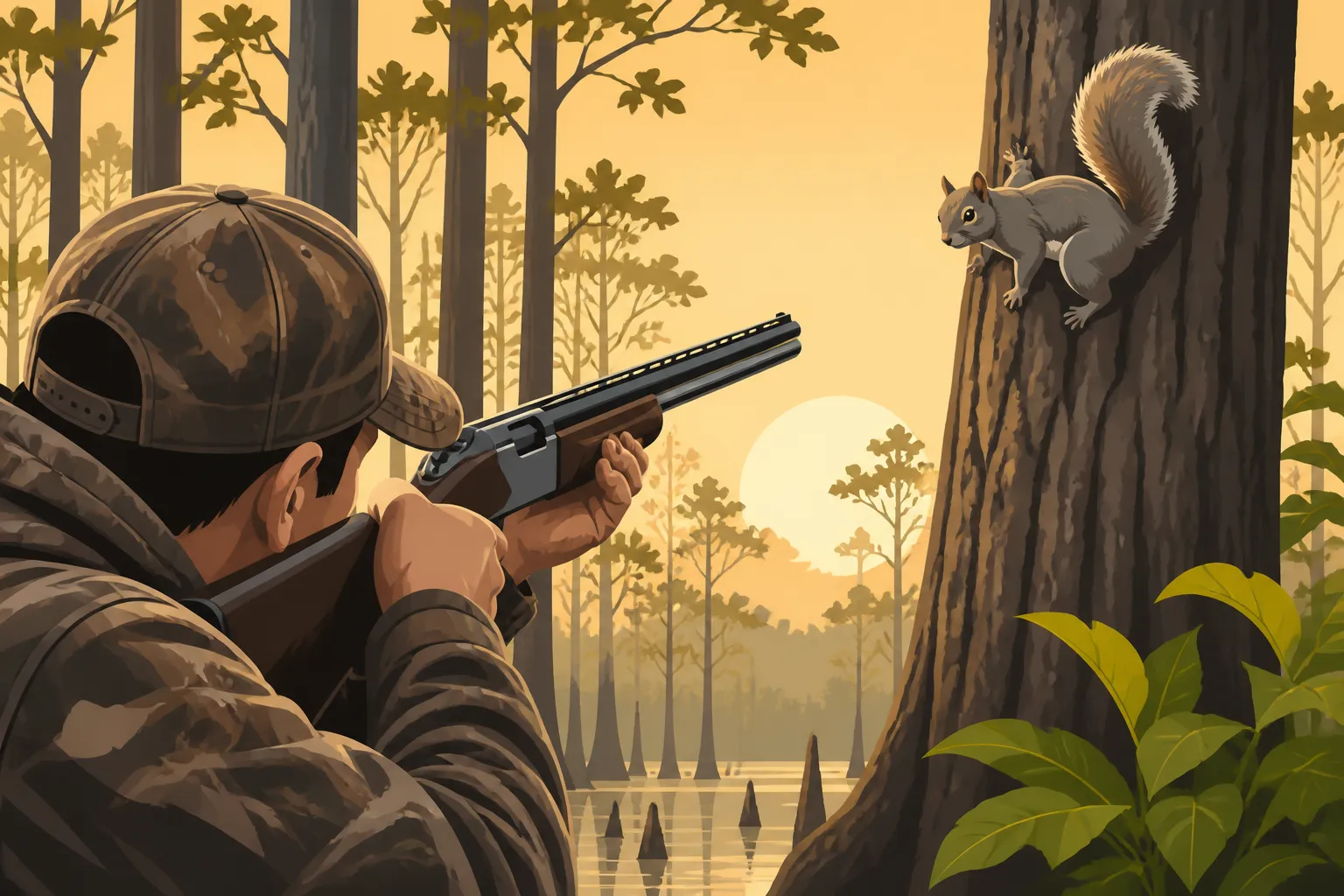
The rich, ancient woods of Mississippi's Delta bottomlands offer a squirrel hunting experience unlike any other. If you've ever felt the allure of chasing bushy-tails through the unique, often challenging, terrain where cypress knees meet towering oaks, you know the frustrations and the sheer joy it can bring. This guide is dedicated to equipping you with the knowledge and tactics to successfully navigate these vibrant woods, ensuring a more fruitful and enjoyable squirrel hunting experience in the heart of the Mississippi Delta.
Understanding Delta Bottomland Hardwoods
Hunting squirrels in Mississippi's Delta bottomland hardwoods isn't just about finding a tree with a squirrel; it's about understanding an entire ecosystem. These unique areas, defined by the periodic flooding from the Mississippi River and its tributaries, create a challenging yet incredibly productive environment for a host of wildlife, squirrels included. The sheer scale and density of these woods can be intimidating, but once you learn to read the landscape, you'll unlock its secrets.
The Unique Ecosystem of the Delta
The Delta bottomlands are characterized by their dominant tree species – massive water oaks, willow oaks, Nuttall oaks, and overcup oaks that produce vast quantities of acorns. You'll also find towering pecan, sweetgum, and cypress trees, all contributing to a rich and diverse canopy. These ancient forests are often interspersed with sloughs, oxbow lakes, and seasonally flooded timber, making travel difficult but creating incredible habitat diversity. During the fall and winter, after the leaves drop, the woods can open up, but dense pockets of cane, briars, and privet still exist, offering thick cover for squirrels and other game.
The constant influence of water is what truly defines these areas. Annual flooding, even minor events, reshapes the landscape, creating new food sources, exposing roots, and depositing nutrient-rich silt. This dynamic environment ensures a constant cycle of growth and decay, providing squirrels with an unending supply of nuts, seeds, and fungi. Walking through these woods, you'll often encounter old loggings roads, drainage ditches, and slight rises that become critical travel corridors for game when the water rises. The high humidity and dense canopy also create a distinct microclimate, often feeling cooler and more damp than the surrounding uplands.
Squirrel Species You'll Encounter
When you head into the Delta bottomlands for squirrels, you'll primarily be targeting two species: the Eastern gray squirrel and the fox squirrel. While both are common, they often exhibit different behaviors and preferences, making it important to understand their distinctions. Grays are generally smaller, quicker, and tend to be more social, often seen in groups chasing each other through the canopy. Their fur is typically a mix of gray and white, sometimes with a rust-colored tinge on their flanks, and they have that iconic bushy white-edged tail.
Fox squirrels, on the other hand, are larger and often more solitary. They move with a slower, more deliberate pace, and you'll frequently find them foraging on the ground. Their coloration can vary wildly, from a reddish-brown to a more grizzled gray-black, and they often lack the distinctive white fringe on their tail that grays possess. In the Delta, you might even encounter some of the darker phases of fox squirrels. Understanding these differences, as discussed in Gray Versus Fox Squirrels in Mississippi, can help you adjust your tactics. For example, a group of chattering grays might mean a shotgun is preferred, while a lone fox squirrel might offer a better target for a .22 rifle.
Why These Areas Are Squirrel Hotbeds
The Delta bottomland hardwoods are, quite simply, squirrel paradise. The primary reason is the incredible abundance and diversity of mast-producing trees. The various species of oak provide a consistent acorn crop, which is a staple for both gray and fox squirrels. Beyond acorns, you'll find pecans, hickory nuts (especially in areas highlighted in Squirrel Hunting Delta Hickory Groves), and the seeds of sweetgum and cypress. This smorgasbord ensures a plentiful food supply from early fall through late winter. Squirrels rely heavily on these resources not just for immediate sustenance but also for caching, burying nuts for later consumption, which you'll often see them doing in a frenzy before winter.
Beyond food, the dense canopy and countless mature trees offer an unparalleled amount of cover and denning opportunities. Old growth timber provides natural cavities for den sites, offering protection from predators and the elements. Leaf nests, built high in the forks of trees, are also common, serving as temporary or supplemental shelter. The maze of sloughs, fallen timber, and thick undergrowth also provides excellent escape routes when a predator, or hunter, is detected. All these factors combine to create high squirrel densities, making the Delta bottomlands a prime destination for small game hunters.
Prime Time for Delta Squirrels
Timing is everything when it comes to squirrel hunting, and the Delta bottomlands are no exception. Knowing when to hit the woods, considering both the calendar and the daily conditions, can significantly increase your chances of success.
Optimal Season Dates
Mississippi's squirrel season typically kicks off in the fall, offering hunters two distinct experiences: early season and late season. The Mississippi Squirrel Season Opening Day usually falls around October, often coinciding with still-warm weather and full foliage. Early season hunting presents both opportunities and challenges. The dense leaves make spotting squirrels incredibly difficult, forcing hunters to rely more on sound and careful movement. However, squirrels are often highly active, busy caching nuts, and haven't yet experienced significant hunting pressure. Bugs, especially mosquitoes, can be a major nuisance, so come prepared with good repellent.
As the season progresses into late fall and winter, usually by December and January, the leaves drop, significantly opening up the canopy. This "late season" can be fantastic for squirrel hunting. Visibility improves dramatically, making it easier to spot squirrels at a distance, whether they're on a limb or scampering up a trunk. Colder weather means fewer bugs, but it also means squirrels might be more prone to holing up in dens during severe cold snaps. It's during these later months that many hunters find their most productive days, especially after a good mast crop has fallen to the forest floor. Always check the current Mississippi Small Game Season Rules for exact dates, as they can shift slightly year to year.
Weather and Time of Day
Squirrels, like most wildlife, are creatures of habit influenced heavily by weather patterns. The absolute best time to find them active is typically on cool, calm mornings, especially after a cold front has moved through, breaking a spell of warm or humid weather. The drop in temperature seems to invigorate them, sending them out to feed and cache. Overcast days without much wind are also excellent, as the subdued light makes them less wary and the lack of wind allows you to hear their movements more clearly. A light drizzle can sometimes push them to feed more aggressively before a heavier rain, but heavy downpours will usually send them to their dens.
As for time of day, squirrels are most active during the first few hours after sunrise and the last few hours before sunset. During these prime windows, they're typically out of their dens, foraging for food and moving between trees. The midday hours often see a lull in activity, especially on warmer days, as they might retreat to the shade or take a siesta. This doesn't mean you can't find them at midday, but you'll likely have to work harder, focusing on known food sources or den trees. Pay attention to the wind direction too; a steady breeze can carry your scent, but a gusty wind can make squirrels more cautious and harder to hear.
Impact of Mast Production
The annual mast crop is perhaps the single most influential factor in determining squirrel density and distribution in the Delta bottomlands. A "mast year" – when oak trees, hickories, and pecans produce an abundance of nuts – can lead to incredibly high squirrel populations and concentrated feeding activity. In these years, squirrels will be everywhere, often ignoring hunters in their frenzy to gather and bury food. Knowing Hunting After a Poor Acorn Year for deer can also inform your squirrel hunting; if acorns are scarce, squirrels might shift their focus to other food sources like persimmons, wild grapes, or even fungi, and might be more spread out or concentrated in specific pockets where alternative foods are available.
Conversely, a poor mast year can make squirrel hunting significantly tougher. With fewer natural food sources, squirrels might have lower populations, be more scattered, or be forced to travel longer distances to find sustenance. This means hunters need to be more diligent in scouting, looking for any evidence of recent feeding such as cut nuts, chewed bark, or squirrel sign around less common food trees. A smart hunter will always pay attention to the previous spring's flowering and the current summer's development of nuts to anticipate the fall mast crop. Satellite imagery, which can be found on mapping platforms like GoHunt, can even help identify areas with high concentrations of preferred mast trees.
Essential Gear and Preparation
A successful squirrel hunt in the Delta bottomlands isn't just about showing up; it's about being prepared. The right gear can make the difference between a frustrating day and a fantastic outing, especially when dealing with the challenging terrain and conditions of these unique woods.
Firearms and Ammunition
When it comes to taking squirrels in the Delta, hunters typically opt for either a shotgun or a .22 caliber rifle, and often, both have a place depending on the specific hunting situation. Shotguns, particularly a 20 gauge or .410, loaded with smaller shot sizes like #6 or #7.5, are excellent for fast-moving targets darting through the canopy or for hunting in very dense cover where precision shots are difficult. A 12 gauge can certainly work, but the recoil might be more than necessary for squirrels, and pattern density can be excessive at close range. Shotguns offer a wider margin for error, making them a good choice for newer hunters or in situations where squirrels are not fully visible.
For those who prefer a more precise challenge, a .22 long rifle is hard to beat. The venerable .22 LR is quiet, accurate, and its low recoil makes it a joy to shoot. It's ideal for making clean headshots on squirrels that are holding still, allowing for minimal meat damage. Ammunition choice matters here; standard velocity or even subsonic rounds are often preferred for their reduced noise, which can sometimes allow for follow-up shots on other squirrels in the area. The newer .17 HMR also offers impressive accuracy and flat trajectory, though it's a bit more powerful and louder than a .22 LR. Whichever firearm you choose, practice is key. Knowing your weapon's capabilities and limitations will dramatically improve your success rate in the field.
Clothing and Footwear
The Delta bottomlands can be hot, humid, cold, or muddy, sometimes all in the same day. Layering is your best friend when it comes to clothing. Start with a moisture-wicking base layer, add an insulating layer for warmth, and top it off with a durable, water-resistant outer shell. Camouflage patterns that blend well with the browns, grays, and greens of a hardwood forest are ideal. Remember, squirrels have excellent eyesight, so breaking up your silhouette is crucial. During the late season, when Mississippi's Gun Deer Season by Unit or other firearm seasons might overlap, wearing a sufficient amount of blaze orange is often legally required and always a smart safety practice.
However, the most critical piece of gear for Delta squirrel hunting is your footwear. You'll be traversing uneven terrain, often through mud, standing water, and dense undergrowth. Waterproof boots, preferably knee-high or hip boots, are almost a necessity, especially if you plan to navigate sloughs or flooded timber. Rubber boots are excellent for this. Furthermore, given the prevalence of venomous snakes like cottonmouths and rattlesnakes in these habitats, snake-proof boots or gaiters are a highly recommended safety measure. Comfortable, well-broken-in boots will prevent blisters and fatigue, allowing you to hunt longer and more effectively.
Navigation and Scouting Tools
Before you even step foot in the woods with your gun, thorough preparation, particularly scouting and navigation, is paramount. Aerial maps are invaluable for understanding the layout of the land, identifying potential food sources, pinpointing dense cover, and locating access points. Modern mapping apps, such as GoHunt, are incredibly useful for this, allowing you to mark waypoints, measure distances, and track your movements in real-time. These tools are especially helpful when Scouting Mississippi Public Land Before Season, enabling you to identify productive areas like old logging roads, creek bottoms, or stands of specific mast trees.
Beyond digital maps, a good old-fashioned compass or a standalone GPS unit can be a lifesaver, particularly in dense bottomland forests where cell service can be spotty. As mentioned in Using the MDWFP App Without Cell Service, having offline map capabilities is a must. Don't underestimate the power of binoculars. A good pair (8x or 10x magnification) will help you spot subtle movements in the canopy, identify cut nuts on the ground, or confirm a squirrel's location high in a tree. Always carry a small backpack with essentials: water, snacks, a small first-aid kit, a headlamp, and a knife. Being prepared for the unexpected is a hallmark of any responsible hunter, especially when venturing into remote Delta bottomlands.
Hunting Strategies and Tactics
Successfully hunting squirrels in the varied and often challenging terrain of the Delta bottomland hardwoods requires a blend of patience, stealth, and adaptability. There's no single "best" way to hunt them; rather, a combination of tactics will yield the most consistent results.
Still-Hunting and Stalking
One of the most effective and rewarding ways to hunt squirrels in bottomland hardwoods is through still-hunting or stalking. This method involves moving through the woods at an incredibly slow pace, stopping frequently to listen and scan. The key here is patience; take a few steps, then freeze for a minute or two, allowing your eyes and ears to do their work. Squirrels are often active but will freeze when they detect movement, only to resume their activity once they feel safe. It's during these pauses that you'll often spot a twitching tail or hear the subtle rustle of leaves as a squirrel resumes its foraging.
Focus your efforts on areas with high concentrations of mast trees – particularly oaks, pecans, and hickories. Look for signs of recent feeding, such as freshly cut nut fragments on the ground or gnaw marks on acorns. When you spot a squirrel, use natural cover like large trees or thick undergrowth to slowly close the distance, always moving when the squirrel's head is down or it's obscured by branches. If a squirrel "busts" you and runs up a tree, circle the tree slowly and quietly. They often flatten themselves on the opposite side of the trunk from you. Patience will often reveal them as they try to peek around the tree to locate you. This method allows you to cover ground while remaining engaged, and it's particularly good for targeting the typically more solitary fox squirrels.
Sitting and Ambushing
Sometimes, the best strategy is to let the squirrels come to you. This is where sitting and ambushing comes into play. Identify a productive area, such as a grove of heavily mast-producing oaks, a cluster of den trees, or a well-used travel corridor along a slough. Sit quietly with your back against a large tree for concealment, and remain absolutely still. This tactic works exceptionally well during the peak activity hours of early morning and late afternoon when squirrels are actively foraging.
Bring a small stool or cushion for comfort, as you might be sitting for extended periods. Once you're settled, focus your attention on listening for the tell-tale sounds of squirrels – the gnawing of a nut, the rustle of leaves, or their distinctive barks and chatters. Squirrel calls, mimicking their barks or the sound of feeding, can also be effective in drawing them closer or making them reveal their location. These calls can sometimes spark a "conversation" that gives away their position. This strategy is less physically demanding than still-hunting and can be very productive if you've done your homework and chosen a high-traffic area.
Hunting with Dogs
For many Mississippi hunters, especially those with deep roots in the Delta, squirrel hunting means hunting with dogs. This traditional method is not only highly effective but also incredibly engaging. Specialized squirrel dogs, typically breeds like mountain curs, feists, or various mixed breeds, are bred and trained to locate squirrels by scent and sight, then "tree" them, barking relentlessly to alert the hunter to the squirrel's location. A good squirrel dog can significantly increase your success rate, especially in dense bottomland cover where spotting squirrels can be nearly impossible.
Hunting with dogs in the Delta bottomlands is an active pursuit. You'll follow your dog, sometimes at a brisk pace, through briars, over fallen timber, and across sloughs. The dog's excited barks guide you to the tree where the squirrel has sought refuge. Once treed, the challenge shifts to locating the squirrel in the branches, often high above. This is where a keen eye and binoculars come in handy. It's a fantastic way to introduce new hunters to the sport, as the dog's enthusiasm and the action it provides keeps everyone engaged. This method also allows you to cover a much larger area than still-hunting, making it ideal for scouting new territory or for when squirrels are spread out.
Safety Considerations in the Field
Hunting in the Delta bottomlands, while incredibly rewarding, demands a heightened awareness of safety. The dense cover, challenging terrain, and potential for other hunters mean you need to be constantly vigilant. Always identify your target clearly and ensure you have a safe backdrop before taking a shot. Remember, a .22 bullet can travel a long distance and retain lethal energy, even when aimed at a small squirrel. If Deer Drives With Three or Four Hunters are happening in the area, or if it's general gun season, ensure you're wearing plenty of blaze orange, even if it's not legally required for small game, just to increase your visibility to others.
The terrain itself presents hazards. Fallen logs, hidden sloughs, and uneven ground can lead to trips and falls. Be especially cautious when crossing water or navigating dense thickets. Always inform someone of your hunting plans – where you're going and when you expect to return. Carry a fully charged cell phone (with offline maps), a whistle, and a basic first-aid kit. Finally, be aware of wildlife beyond squirrels. Black bears, though rare, are recovering in parts of Mississippi, and encounters with feral hogs, which are abundant in the Delta, are always a possibility. Knowing how to react to these animals is part of being a responsible hunter in these wild places.
Post-Hunt Considerations
The hunt doesn't end when the squirrel hits the ground. Proper post-hunt care ensures your harvest is respectfully handled and prepared for the table, maximizing the enjoyment of your hard-earned meal. Plus, understanding regulations is key to staying a responsible hunter.
Field Dressing and Care
Once you've harvested a squirrel, prompt field dressing is crucial, especially in the often-warm Mississippi climate. Cooling the meat quickly prevents spoilage and improves the flavor. The simplest method is to gut the squirrel as soon as possible. Make a small incision from the sternum to the pelvis, carefully removing the internal organs. This step allows the body cavity to cool down. Many hunters will simply carry their squirrels whole back to camp or home for skinning, but in really warm weather, especially on long hunts, gutting is a good precaution.
Some hunters also like to rinse the cavity with a bit of water if available, though this isn't strictly necessary. Once gutted, place the squirrels in a game bag or a cooler with ice to keep them cool during transport. Avoid piling them in a warm game vest, as this can quickly degrade the meat quality. Proper cooling not only preserves the meat but also makes the skinning process easier, as the skin tends to separate more cleanly when the animal is cold.
Processing and Cooking Your Harvest
Processing squirrels for the table is a skill every small game hunter should learn. There are several methods for skinning squirrels, but a common one involves making an incision across the back, then stepping on the tail and pulling the hide down over the body, much like pulling off a sweater. With practice, you can skin a squirrel in a matter of minutes. After skinning, remove the head, feet, and any remaining entrails, then wash the carcass thoroughly. You can then section the squirrel into individual pieces (front legs, back legs, torso) or keep it whole, depending on your preferred cooking method.
Squirrel meat is lean, flavorful, and incredibly versatile. It's often compared to chicken or rabbit, but with a unique, slightly nutty flavor. A classic Mississippi preparation is fried squirrel: bread the pieces in seasoned flour and fry until golden brown and tender. Squirrel can also be slow-cooked in a rich gravy, often served over rice or biscuits, which is perfect for tougher, older squirrels. Squirrel stew or chili are also fantastic options, as the slow cooking breaks down the connective tissues, resulting in fall-off-the-bone tender meat. Don't be afraid to experiment with different seasonings and recipes; wild game is meant to be enjoyed.
Regulations and Reporting Requirements
Responsible hunting always involves adhering to all state regulations. For squirrels in Mississippi, this includes understanding the daily bag limit and possession limit. The Mississippi Squirrel Daily Bag Limit is typically a generous number, allowing hunters to take a good harvest. The possession limit often refers to the maximum number of squirrels you can have in your possession after multiple days of hunting. These limits are in place to ensure sustainable populations and fair chase for all.
While Mississippi generally doesn't have mandatory reporting requirements for small game like squirrels in the same way it does for deer or turkey, it's good practice to be aware of any changes the MDWFP might implement. Staying informed through the MDWFP website or their official app is crucial. Additionally, contributing to surveys or harvest reports if requested helps wildlife biologists monitor populations, as they do when tracking Mississippi Squirrel Harvest Numbers. Being a law-abiding hunter ensures the future of our hunting traditions and the health of our wildlife populations.
Public Land Access and Specific Locations
Mississippi offers ample opportunities for public land hunting, even for squirrels in the Delta bottomlands. Knowing where to go and how to navigate these areas is crucial for a successful and legal hunt.
Navigating Public Access Points
Finding and utilizing public land in Mississippi requires a bit of homework, but resources are readily available. The Mississippi Department of Wildlife, Fisheries, and Parks (MDWFP) provides maps and information on all state-managed Wildlife Management Areas (WMAs). These areas often have specific rules that can differ from general state regulations, so always check the WMA's specific guidelines before you go. This includes rules on vehicle access, camping, and even specific hunting dates within the broader state season.
For national forest lands, like the Delta National Forest, federal regulations apply, often managed in conjunction with state rules. Using digital mapping tools like GoHunt or the MDWFP app is highly recommended. These platforms allow you to view public land boundaries, identify access roads, and even scout for good habitat from your couch. While you might not need to understand Hunting the Mississippi River Backwaters for squirrels, knowing the topography and how water shapes the land is paramount. Always be respectful of signage, parking restrictions, and walk-in only areas, ensuring you don't inadvertently trespass or impede access for others.
Key Delta Bottomland Areas
The Mississippi Delta is home to some of the most extensive and productive bottomland hardwood forests in the state, offering fantastic squirrel hunting. The Delta National Forest, near Rolling Fork, is one of the premier destinations. As the only bottomland hardwood national forest in the U.S., it's a vast expanse of towering oaks, sloughs, and cypress brakes, perfect for both gray and fox squirrels. Within the Delta National Forest, the Sunflower WMA provides additional hunting opportunities, though it often sees significant pressure.
Another excellent option is the Panther Swamp National Wildlife Refuge Hunting area, part of the larger Yazoo National Wildlife Refuge Complex. These refuges are specifically managed for wildlife and offer incredible habitat. Remember that NWRs often have specific permit requirements or hunting schedules, so always check their websites. Other WMAs like Mahannah Wildlife Management Area or parts of Malmaison Wildlife Management Area also feature significant bottomland hardwood acreage that can be highly productive. While you might know these areas from Hunting Delta Unit Bottomland Deer, don't overlook their potential for small game. The key is to study maps, identify areas with dense mature timber and good mast production, and be willing to walk deep into the woods to escape pressure.
Respecting the Land and Other Hunters
Hunting on public land is a privilege, and it comes with the responsibility of ethical conduct and respect for others. Always practice Leave No Trace principles: pack out everything you pack in, including spent shell casings. The Delta bottomlands are wild and beautiful; keep them that way. Be mindful of other hunters you might encounter, especially during overlapping seasons. A friendly nod or wave goes a long way, and giving other hunters ample space is crucial. If you see someone already set up in an area you planned to hunt, simply move to another spot.
Furthermore, remember that public lands are multi-use areas. You might encounter hikers, birdwatchers, or other recreational users. Always treat them with courtesy and respect. Educating non-hunters about the role of hunting in conservation, if the opportunity arises, can help foster a better understanding of our sport. By demonstrating responsible and ethical behavior, we ensure that public lands remain accessible for hunting for generations to come.
Disclaimer
Hunting is an inherently dangerous activity. This guide provides general information and recommendations but cannot cover every potential hazard or regulation. Always consult the official Mississippi Department of Wildlife, Fisheries, and Parks (MDWFP) regulations for the current hunting seasons, bag limits, licensing requirements, and specific rules for any public lands you plan to visit. Prioritize safety, be aware of your surroundings, and hunt ethically and legally.