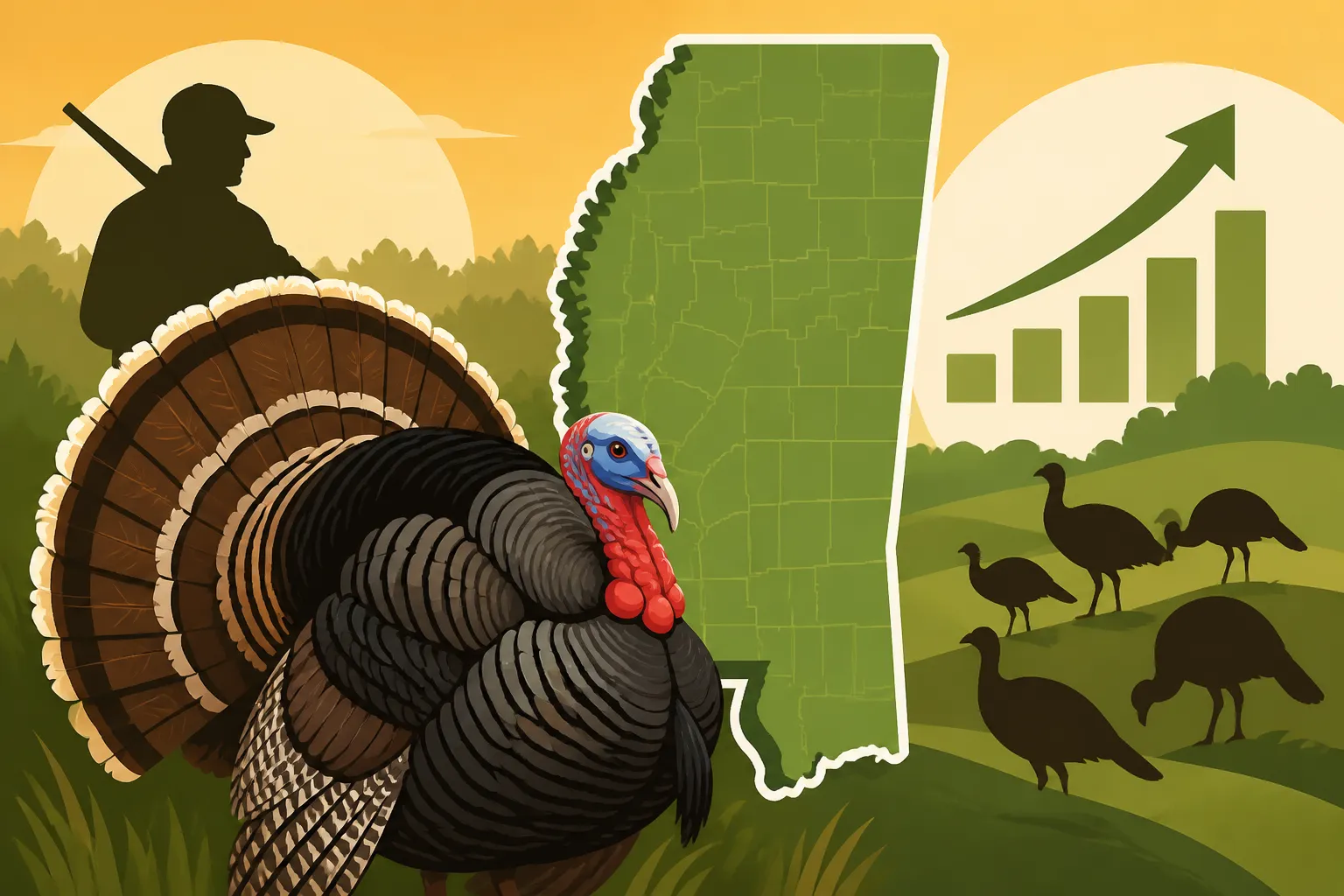
Mississippi Turkey Population Estimate
It can be incredibly frustrating to hear whispers and rumors about turkey numbers being up or down in certain areas, leaving you wondering if your favorite spring woods will be silent or roaring with gobblers. Trying to plan a successful hunt, especially when you've invested time and effort, feels like a shot in the dark without reliable information. This guide is here to shed some light on how Mississippi estimates its wild turkey population, what those numbers actually mean for you as a hunter, and what factors truly influence the health of our beloved birds.
Understanding the "Estimate": More Than Just a Number
When the Mississippi Department of Wildlife, Fisheries, and Parks (MDWFP) releases a "turkey population estimate," it's easy to dismiss it as just another statistic. But for serious turkey hunters, understanding what this number represents, and more importantly, how it's derived, can be a game-changer for planning successful hunts and appreciating the broader conservation picture. It's not just about a simple head count; it's a dynamic snapshot of the health and distribution of one of our state's most iconic game birds.
Why Population Estimates Matter to Hunters
For many of us, turkey hunting is about tradition, challenge, and the thrill of matching wits with a wary gobbler. But behind every successful season, there's a foundation of sound wildlife management. A solid population estimate allows the MDWFP to set sensible Mississippi Spring Turkey Season Rules and bag limits, like the Mississippi Adult Turkey Bag Limit or Mississippi Youth Turkey Bag Limit, that ensure we can continue to enjoy hunting for generations to come. Without these estimates, we'd be flying blind, risking overharvest in some areas or missing opportunities in others. It helps manage expectations, too. If you know populations are struggling in your usual haunt, you might explore new public lands or adjust your tactics. Using tools like GoHunt to layer this public land data with habitat maps can really help zero in on potentially healthier turkey areas.
The estimate also helps identify areas where conservation efforts are most needed. If a certain region shows a consistent decline, it signals a need for habitat restoration, predator management, or other interventions. As hunters, we have a vested interest in these efforts, and understanding the data helps us advocate for programs that support healthy turkey populations. It's about being part of the solution, not just observing the problem.
What the Numbers Actually Represent
A turkey population estimate isn't a precise tally of every single bird in the state. That would be an impossible task across Mississippi's diverse landscapes, from the Delta's bottomland hardwoods to the Piney Woods. Instead, it's an educated projection based on scientific sampling methods, observed trends, and hunter data. It’s essentially a best guess, developed through rigorous data collection, to provide a reasonable approximation of the number of birds present.
These estimates typically focus on breeding populations and reproductive success. For example, a high number of hens doesn't automatically mean a booming population if poult survival is low. Wildlife biologists are looking at the overall health of the population, including age structure, sex ratios, and recruitment (the number of young birds surviving to join the adult population). It's a complex puzzle, and each piece of data helps build a clearer picture of the real situation on the ground, guiding management decisions that directly affect future hunting opportunities.
The Science Behind the Count: How Mississippi Figures It Out
You might wonder how on earth wildlife biologists come up with these numbers. It’s not like they're out there counting every gobbler. The process is actually a combination of various scientific methods, each contributing a piece to the larger puzzle, allowing the MDWFP to make informed decisions about hunting seasons and habitat management. It's a continuous cycle of data collection, analysis, and adjustment.
Brood Surveys: The Foundation of Future Success
One of the most critical tools for estimating turkey populations is the annual brood survey. These surveys, often conducted by MDWFP staff, landowners, and even volunteer hunters, take place primarily during the summer months. The goal is simple: observe hen turkeys and, most importantly, the number of poults (young turkeys) accompanying them. This data helps calculate the "poult-to-hen ratio," which is a direct indicator of reproductive success. A strong poult-to-hen ratio suggests a good hatch and favorable conditions for young turkeys to survive.
Think about it this way: if a hen hatches ten poults, but only one or two survive to fall, that's not a healthy population trend. Conversely, if most poults make it through the critical early weeks, then the future looks brighter. These surveys help track those vital Poult-to-Hen Ratios and What They Mean. Factors like weather during nesting and brooding season, predator presence, and habitat quality all play a huge role here. A cold, wet spring can devastate a hatch, while a warm, dry spring often means more young birds make it. This information is key for predicting the number of gobblers available for hunters in subsequent years.
Hunter Harvest Data and Reporting Requirements
Hunters themselves provide invaluable data. Every time a hunter checks in a turkey, whether through the MDWFP app or an online portal, that information contributes to the overall picture. This harvest data includes location, date, sex of the bird, and sometimes even spur length or beard length. This doesn't just tell biologists how many birds were taken; it can reveal trends in hunter effort, success rates, and the distribution of harvest across the state. Mississippi's deer and turkey reporting requirements are crucial for this.
For example, if harvest numbers are consistently declining in a certain county despite stable effort, it might signal an underlying population issue. Conversely, if a particular unit shows a steady increase in reported gobblers, it could indicate a thriving local population. This data is cross-referenced with brood surveys and other observations to create a more comprehensive view of Mississippi Turkey Harvest Numbers. It's a powerful feedback loop where hunter participation directly informs future management decisions, ensuring sustainability.
Habitat Assessments and Regional Variations
Beyond counting birds and harvest, biologists also conduct habitat assessments. They look at the quality and quantity of suitable turkey habitat—things like mature hardwood forests for roosting, open woodlands for foraging, and dense cover for nesting. Changes in land use, logging practices, and development can all impact turkey populations. Identifying prime turkey habitat or areas experiencing habitat degradation is vital for understanding why populations might be doing well or struggling in certain regions.
Mississippi is a diverse state, and turkey populations aren't uniform. The birds in the fertile Delta bottomlands face different challenges and opportunities than those in the rolling Hills Unit or the dense pine forests of the Southeast. By studying these regional differences, the MDWFP can tailor management strategies to specific areas. For instance, efforts to restore Mississippi Longleaf Pine and Quail Habitat might also benefit turkeys in certain regions. A mapping tool like GoHunt can give you an amazing aerial view of these habitat features, helping you scout potential turkey hotspots from your couch before you even set foot in the woods. This allows hunters to understand where they might find the Best Mississippi Counties for Turkeys or anticipate varying conditions across the different units.
Mississippi's Turkey Population: Current Health and What It Means for Hunters
Understanding the "how" behind the estimate is important, but what most hunters really want to know is the "what" – what's the current state of Mississippi's turkey population, and what does it mean for their chances of tagging a gobbler this spring? Just like any wild game species, turkey populations naturally fluctuate due to a myriad of environmental factors, habitat changes, and biological influences.
Overall Trends in Recent Years
Mississippi's wild turkey population has seen its share of ups and downs over the years. Following historic declines due to overhunting and habitat loss in the early 20th century, turkeys experienced a remarkable recovery thanks to widespread trapping and translocation efforts, essentially moving birds from strong populations to areas where they had been eliminated. These restoration efforts are a true conservation success story, illustrating How Turkeys Were Restored to Mississippi. For many years, hunters enjoyed robust populations.
However, in more recent times, some areas have experienced subtle shifts. Biologists carefully monitor Mississippi Turkey Population Trends, noting localized declines in certain regions while other areas remain stable or even see modest increases. These trends are complex, influenced by a blend of factors that are constantly at play. It’s rarely one single issue but rather a combination of elements that dictate the health of the population in any given year.
Factors Affecting Turkey Numbers
Several key factors contribute to the overall health and size of Mississippi's turkey population:
- Habitat Quality and Quantity: This is arguably the most significant factor. Turkeys need a mosaic of habitat types: mature timber for roosting, open areas for bugging and breeding, and dense cover for nesting and poult rearing. Loss of mature timber, conversion of diverse forests to monoculture pine plantations without proper management, or fragmentation of habitat due to development can all negatively impact turkey numbers. Healthy habitat directly supports higher Mississippi Turkey Population Estimate numbers.
- Weather Patterns: As mentioned with brood surveys, weather during nesting and brood-rearing periods is crucial. Prolonged cold, wet springs can lead to high poult mortality, as young turkeys are susceptible to hypothermia and diseases. Conversely, severe droughts can impact food sources and water availability, affecting overall health.
- Predation: While predators are a natural part of the ecosystem, an imbalance can sometimes put pressure on turkey populations, particularly nests and poults. Raccoons, opossums, coyotes, and even feral hogs can all impact Nest Predation and Mississippi Turkey Hatches. However, predation is usually only a major limiting factor when combined with poor habitat conditions.
- Disease: Wild turkey populations can also be affected by various diseases, though widespread outbreaks are less common than in some other species. Avian influenza or other pathogens can occasionally cause localized issues, but typically don't drive statewide declines.
- Hunting Pressure: While regulated hunting is generally sustainable and not a primary driver of population decline, understanding Hunting Pressure on Mississippi Public Land can help individual hunters find less disturbed areas. Strict bag limits and season structures are designed to prevent overharvest.
What This Means for Your Next Hunt
For hunters, understanding these dynamics means approaching each season with both knowledge and adaptability. If you've been noticing fewer gobblers in your usual stomping grounds, it might be a reflection of a localized dip in the population due to one or more of these factors. This doesn't mean the state is devoid of birds, but it might mean you need to adjust your strategy.
Consider targeting areas known for healthier populations or those with better habitat. Public lands managed for diverse wildlife, like those you can find using GoHunt mapping layers, often present better opportunities. Scouting for fresh sign, like dusting bowls, tracks, and droppings, becomes even more important. Learning to identify Where Mississippi Gobblers Roost can give you a significant advantage. Ultimately, it’s about being an informed and adaptable hunter, ready to adjust your approach based on what the landscape and the birds are telling you, rather than solely relying on past experiences.
Navigating the Future: A Hunter's Role in Turkey Conservation
The future of Mississippi's wild turkey population isn't solely in the hands of wildlife biologists; it's also shaped by hunters like us. Our actions, from how we hunt to how we advocate for habitat, play a significant role in ensuring strong turkey numbers for generations to come. Being a responsible and engaged hunter means understanding these roles and stepping up to help.
Responsible Hunting Practices
Ethical and responsible hunting is the cornerstone of sustainable wildlife management. This starts with adhering strictly to all Mississippi Spring Turkey Season Rules, bag limits, and reporting requirements. Every bird harvested counts, and accurate reporting helps the MDWFP maintain precise data for future management decisions. Understanding how to properly identify legal birds and avoiding accidental takes of hens or jakes is also vital.
Beyond the legal aspects, consider your impact on the resource. Avoid over-pressuring specific areas, especially early in the season, which can make birds call-shy. Practicing calling without over-calling live birds, giving gobblers space, and minimizing disturbance in nesting areas can all contribute to healthier local populations. Remember, the goal is not just to kill a turkey, but to have a rich hunting experience that respects the game and its habitat. Even something like Decoy Placement for Pressured Mississippi Birds can have a subtle impact on how wary birds become.
Supporting Habitat and Conservation Efforts
One of the most impactful things hunters can do is support habitat conservation. Healthy habitat is the foundation of healthy turkey populations. This can take many forms:
- Financial Support: Purchasing your hunting licenses, federal duck stamps (if applicable for other species), and any special turkey stamps directly funds MDWFP conservation efforts. These funds are often dedicated to habitat improvement, research, and enforcement. The new Mississippi Wild Turkey Stamp is a prime example of a direct way to contribute to turkey conservation.
- Advocacy: Become an advocate for sound land management practices. Support policies that protect mature forests, promote diverse timber management, and limit habitat fragmentation. Join conservation organizations like the National Wild Turkey Federation (NWTF), which actively works to improve turkey habitat across the state and nation.
- Direct Action: If you're a landowner, consider implementing turkey-friendly habitat practices on your property, such as prescribed burning, planting native grasses and forbs, or creating diverse forest stands. Even on a smaller scale, managing fencerows or small woodlots can create valuable micro-habitats.
By actively participating in these efforts, hunters ensure that the wild turkey continues to thrive across Mississippi. We are not just consumers of the resource; we are its most dedicated stewards.
The Role of Technology in Modern Turkey Hunting
Modern technology offers hunters powerful tools to become more effective and responsible. GPS mapping apps, like GoHunt, have revolutionized how we scout and navigate. These tools allow you to study public land boundaries, identify potential roosting areas, locate historical timber cuts that might offer good foraging, and even mark sign found in the woods. By understanding the lay of the land before you even step foot in it, you can make more informed decisions about where and how to hunt.
| Factor Affecting Turkey Populations | Impact on Hunter Success | Management Relevance |
|---|---|---|
| Habitat Quality | Direct link to bird density and distribution. | Prioritize habitat restoration, selective logging. |
| Weather (Spring) | Crucial for poult survival, affecting future harvests. | Track poult-to-hen ratios, adjust bag limits if needed. |
| Predation Levels | Can impact nest success and poult survival. | Predator management in specific, problematic areas. |
| Disease Outbreaks | Localized population dips, rarely statewide. | Monitoring, carcass disposal guidelines. |
| Hunting Pressure | Can make birds wary, push them to remote areas. | Hunter education, public land regulations, spread pressure. |
| Food Availability | Impacts overall bird health and condition. | Promoting diverse food sources (acorns, insects). |
Beyond scouting, technology can also help you track your own success and observations, contributing to your personal understanding of local turkey populations. You can mark gobbling locations, track successful setups for Run-and-Gun Turkey Tactics on Public Land, and record observations of hens and poults. This personal data, combined with the broader information provided by the MDWFP, helps paint a more complete picture, making you a more knowledgeable and successful turkey hunter year after year.
Disclaimer
This article is for general informational purposes only and does not constitute professional advice. Laws, prices and regulations vary by location and change over time. Consult a qualified professional for guidance on your specific situation.