Mississippi Red Wolf Recovery Program History
For many long-time hunters and conservation enthusiasts in Mississippi, the mention of "red wolves" often brings a mix of curiosity and a touch of melancholy. It's a reminder of a species that once roamed our wild spaces, an apex predator that shaped the very deer and small game populations we pursue today, but has since vanished from our landscape. This guide dives deep into the historical presence of red wolves in Mississippi, explores the reasons behind their disappearance, and examines the broader recovery efforts that, unfortunately, never fully brought them back to the Magnolia State.
The Ghost of the Mississippi Landscape: Red Wolves Before Extirpation
Imagine the vast, wild Mississippi of centuries past – dense bottomland hardwoods, sprawling pine forests, and intricate river systems. In this vibrant ecosystem, a formidable hunter reigned: the red wolf. These animals were not quite as large as their grey wolf cousins of the far north, but they were significantly bigger and rangier than coyotes. They were perfectly adapted to the southern landscape, a true ghost of the Mississippi wilderness, often heard more than seen, their howls echoing through the swamps and timber.
Historically, the red wolf’s range stretched across much of the southeastern United States, including a significant portion of Mississippi. They were common inhabitants of the Delta's rich river bottoms, the rolling hills of central Mississippi, and the piney woods further south. Their diet was diverse, primarily consisting of white-tailed deer, feral hogs (though pigs weren't as prevalent then as now), rabbits, raccoons, and various birds. As apex predators, they played a vital role in maintaining the health and balance of these ecosystems, culling weak or sick animals and preventing overpopulation of herbivores. This natural selection helped ensure a stronger, more resilient prey base. White-Tailed Deer Across Mississippi were certainly a primary food source.
Red wolves were also incredibly intelligent and social creatures, typically living in small family packs. Their hunting strategies were sophisticated, relying on teamwork and keen senses to track and ambush prey. They denned in hollow logs, dense thickets, or excavated burrows, raising their pups in secluded areas safe from threats. For hunters exploring the historical ecological context of our state, understanding the presence and role of the red wolf offers a profound insight into the complexity of Mississippi's natural heritage. This was a true wilderness species, shaping the very dynamics of the forests and swamps.
Why Red Wolves Vanished From Mississippi
The story of the red wolf's disappearance from Mississippi, and indeed from much of its historical range, is a somber tale of habitat destruction, direct human persecution, and a phenomenon known as "hybridization" with coyotes. It wasn't one single event, but a confluence of factors that gradually pushed these magnificent animals out of existence within the state.
Habitat Loss and Fragmentation
As European settlers moved across Mississippi, they brought with them an insatiable need for land. Forests were cleared for agriculture, swamps were drained for development, and the vast, unbroken wilderness that red wolves relied upon began to shrink and fragment. This loss of habitat meant less prey, fewer safe places to den, and increased conflict with humans. A species requiring large territories, the red wolf found itself increasingly boxed in, its natural migratory routes severed by farms, roads, and towns. This kind of landscape transformation severely impacted all large wildlife, forcing species to adapt or perish.
Direct Human Persecution
For centuries, predators like the red wolf were viewed as competitors and threats to livestock. Farmers, homesteaders, and even government bounty programs actively sought to eliminate them. Red wolves were trapped, shot, and poisoned relentlessly. There was little understanding or appreciation for their ecological role; instead, they were often demonized as varmints. This widespread, unchecked persecution had a devastating effect, leading to dramatic population declines throughout the 19th and early 20th centuries. The fear and misunderstanding surrounding predators meant a swift and brutal campaign against them, long before any real conservation ethics took hold.
The Rise of the Coyote and Hybridization
Perhaps the final, irreversible blow to pure red wolf populations in Mississippi came with the westward expansion of coyotes. Coyotes, originally a western species, began to move east as red wolf numbers declined and forests were cleared, creating more open, disturbed habitats they preferred. Smaller and more adaptable, coyotes filled the ecological void left by the disappearing red wolves.
The problem, however, was that as red wolf populations became critically low and individuals became isolated, they began to breed with the more numerous coyotes. This process, known as hybridization, diluted the red wolf gene pool. Instead of producing more pure red wolves, these pairings resulted in hybrid animals that were a mix of both species. Over time, the genetic distinctiveness of the red wolf was essentially absorbed by the coyote population. By the mid-20th century, identifying a genetically pure red wolf became incredibly difficult, and it's believed that true red wolves were entirely extirpated from Mississippi by the 1970s. Understanding how such vast tracts of diverse habitat were connected is crucial, and mapping applications like GoHunt can help visualize current landscapes, allowing us to mentally overlay what the wilderness might have looked like when red wolves roamed free.
Here’s a quick comparison of red wolves and coyotes, highlighting some key differences:
| Feature | Red Wolf (Historical) | Coyote (Present-day) |
|---|---|---|
| Size | Medium-large (45-80 lbs) | Small-medium (20-50 lbs) |
| Build | Lean, long-legged, lanky | More compact, brushy tail |
| Snout | Relatively broad and long | Narrow, pointed |
| Ears | Moderately large, rounded tips | Larger, more pointed |
| Coloration | Tawny, reddish-brown on back/legs | Grayish-brown, tan, sometimes reddish |
| Habitat | Swamps, forests, coastal prairies | Highly adaptable, open country, disturbed areas |
| Prey | Deer, hogs, raccoons, rabbits | Small mammals, birds, carrion, some deer fawns |
| Social Structure | Family packs | Smaller family groups, sometimes solitary |
| Status in MS | Extirpated (no longer present) | Widespread and common |
This table illustrates why Coyotes and Predators in Mississippi have taken such a strong hold in the state, essentially replacing the ecological niche once held by the red wolf, albeit with different population dynamics and impacts.
The Broader National Red Wolf Recovery Effort and Mississippi's Historical Context
While red wolves vanished from Mississippi decades ago, a monumental effort was underway nationally to save the species from complete extinction. This story is both inspiring and challenging, but it's important to understand Mississippi's place, or lack thereof, within this larger conservation narrative.
The Last Stand and Captive Breeding Program
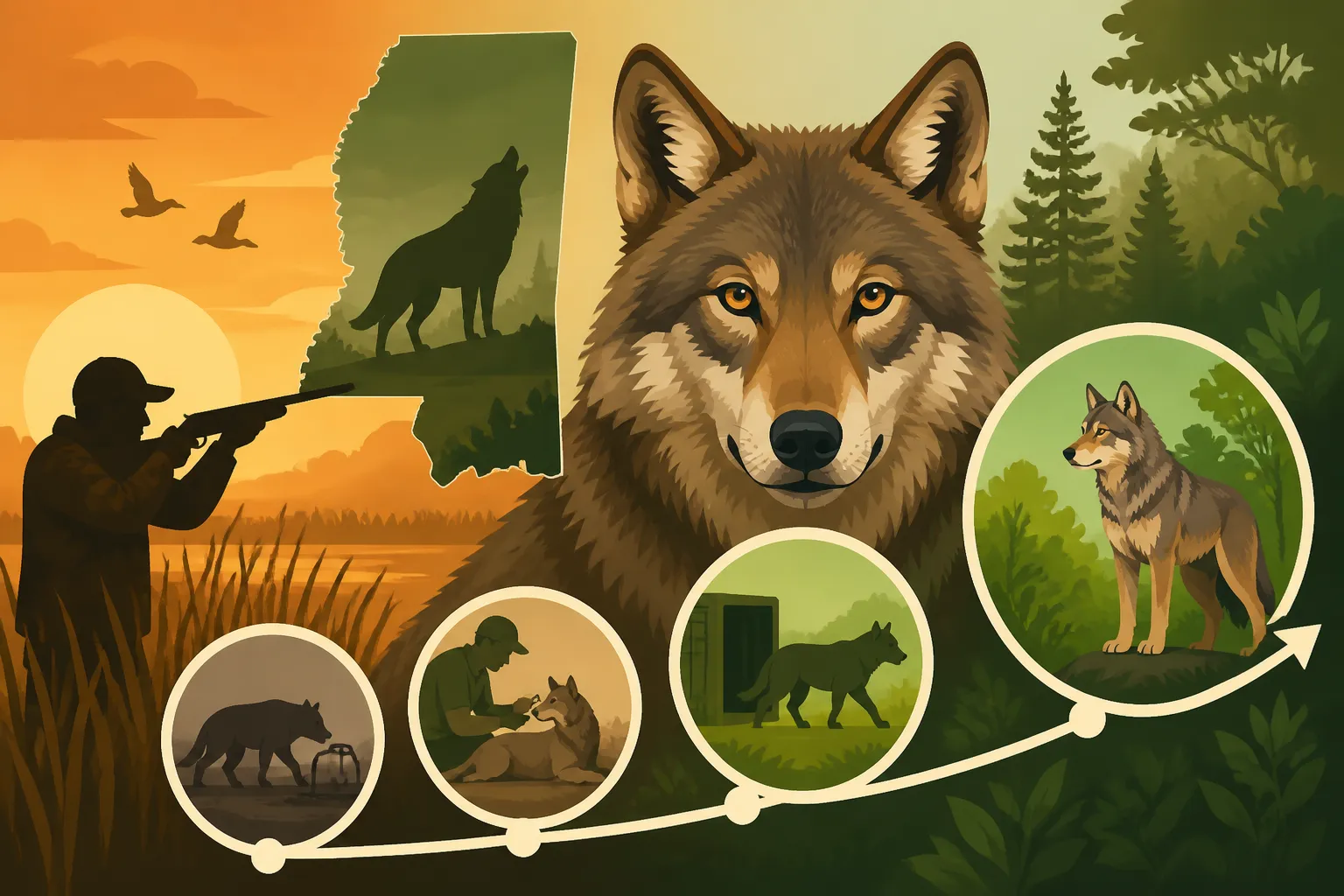
By the 1970s, the U.S. Fish and Wildlife Service (USFWS) recognized the dire situation of the red wolf. They launched an ambitious plan: capture the last remaining genetically pure red wolves from their final stronghold in coastal Texas and Louisiana. This was an incredibly difficult task, as many of the animals captured were already hybrids. However, a small number of genetically pure individuals were identified, and these became the founders of a captive breeding program.
This program was a last-ditch effort to preserve the species. These precious few wolves were bred in zoos and specialized facilities, slowly increasing their numbers in a controlled environment. The goal was always to reintroduce them into suitable wild habitats once their numbers were sufficient and threats could be mitigated.
Reintroduction Efforts: North Carolina's Bold Experiment
The first and most significant wild reintroduction began in 1987 in northeastern North Carolina, specifically in the Alligator River National Wildlife Refuge. This area was chosen because it offered large tracts of protected land, low human population density, and suitable prey. It was an incredibly complex undertaking, involving careful management of released animals, monitoring their movements, and working with local communities to minimize conflicts.
Over the years, the North Carolina reintroduction saw mixed success. Initially, populations grew, and the wolves began to establish territories and reproduce naturally. However, challenges persisted, including ongoing hybridization with coyotes, illegal shootings, and habitat limitations. The program faced criticism and encountered significant hurdles, leading to fluctuations in the wild population.
Why Mississippi Was Not a Reintroduction Site
Despite Mississippi being part of the historical red wolf range, it was not selected for reintroduction. Several factors likely contributed to this decision:
- Availability of Suitable Habitat: While Mississippi has some incredible wild lands, finding large enough, contiguous tracts of suitable habitat with minimal human-wildlife conflict potential, especially in areas free from dense coyote populations, proved challenging. Reintroduction sites require extensive buffers and social acceptance.
- Coyote Prevalence: By the time reintroduction efforts were conceptualized, coyotes were already firmly established across Mississippi. The risk of rapid hybridization, which had been a primary cause of the red wolf's original decline, would have been extremely high, making successful reintroduction of genetically pure red wolves very difficult, if not impossible.
- Political and Social Will: Any reintroduction project requires significant political and community support. While many Mississippians value wildlife, the historical fear and misunderstanding of predators, coupled with potential concerns from landowners and livestock producers, likely made a widespread reintroduction project politically unfeasible at the time.
While there were discussions and ecological assessments over the years, a formal, large-scale red wolf reintroduction program never materialized in Mississippi. The challenges faced by the North Carolina program also highlighted the immense difficulties and resources required for such an undertaking, further complicating any expansion to other states. While not directly a recovery tool, the spirit of understanding and exploring our wild places, perhaps even through a detailed app like GoHunt, keeps the conversation alive about what once was and what could potentially be.
Understanding the Future for Red Wolves in the Magnolia State
So, what does the future hold for red wolves in Mississippi? For now, the answer is complex, and perhaps a bit disheartening for those who dream of their return. However, understanding the challenges and the broader context of wildlife conservation is key to appreciating the efforts that continue for other species in our state.
Current Status and Remaining Challenges
Today, the red wolf remains one of the most endangered canids in the world. The only wild population still exists in northeastern North Carolina, and its numbers are critically low. The captive breeding program continues, serving as a genetic safeguard, but establishing robust wild populations remains an uphill battle.
For Mississippi, the direct reintroduction of red wolves currently faces insurmountable obstacles. The landscape has changed dramatically since their extirpation. Human population density has increased, much of the prime habitat is gone, and the omnipresent coyote population presents an ongoing threat of hybridization. Even if large tracts of public land like Delta National Forest Hunting or Homochitto National Forest Hunting exist, the surrounding landscape and social pressures make such a reintroduction incredibly difficult to manage effectively.
Could Red Wolves Ever Return to Mississippi?
A true, self-sustaining wild red wolf population in Mississippi would require a monumental shift in landscape, ecological conditions, and human perception. This would entail:
- Massive Habitat Restoration: Reconnecting large blocks of suitable habitat, potentially hundreds of thousands of acres, free from major human disturbance.
- Intensive Coyote Management: An unprecedented program to reduce or remove coyotes from designated reintroduction zones to prevent hybridization, which would be extremely challenging and controversial.
- Long-term Community Support: A widespread and sustained commitment from landowners, hunters, and the general public to tolerate and protect red wolves, understanding their ecological benefits.
- Significant Funding: A multi-decade commitment of state and federal funds to manage the reintroduction, monitor populations, and address conflicts.
Given the immense scale of these requirements, the prospect of a red wolf reintroduction in Mississippi in the foreseeable future seems unlikely. Conservation efforts in Mississippi rightly focus on managing existing game species and restoring habitats for species that are present and have a more immediate chance of recovery or stable populations, such as Mississippi's Recovering Black Bear Population or working to bolster Bobwhite Quail in Mississippi.
The Enduring Legacy and Lessons Learned
While red wolves may not grace Mississippi's forests and swamps again soon, their history here serves as a powerful reminder of several critical conservation lessons:
- The Importance of Apex Predators: Their absence highlights the crucial role predators play in ecosystem health. When they are removed, imbalances occur.
- The Impact of Human Activity: The red wolf's decline is a stark example of how habitat loss, fragmentation, and direct persecution can devastate even resilient species.
- The Challenge of Conservation: Saving an endangered species, especially one that requires large wild spaces and faces social hurdles, is incredibly complex and requires sustained effort.
For those curious about the ecological past of Mississippi, resources are out there. Modern tools, even something like GoHunt, which many of us use for scouting, can sometimes offer historical map overlays or insights into land features that might have once supported species like the red wolf. Even in their absence, the red wolf’s story continues to inform our understanding of Mississippi Wildlife Disease Monitoring and the delicate balance of our natural world, urging us to be better stewards of the wildlife we still have.
Disclaimer
This article is for general informational purposes only and does not constitute professional advice. Laws, prices and regulations vary by location and change over time. Consult a qualified professional for guidance on your specific situation.