Mississippi Wild Turkey Subspecies
Ever wondered exactly what kind of wild turkey you're chasing through those Mississippi hardwoods or pine flats? Many hunters, especially those new to the state or coming from other regions, find themselves pondering this question. While other states might boast a variety of subspecies, understanding the specific turkey you're pursuing here in Mississippi is key to effective hunting and appreciating the unique challenges and rewards our state offers. This guide will dive deep into the wild turkey subspecies calling Mississippi home, detailing their characteristics, preferred habitats, and the dedicated efforts that have brought them back from the brink.
The Regal Resident: Mississippi's Eastern Wild Turkey
When you're slipping through the pre-dawn woods, hoping to hear that thunderous gobble, you are undoubtedly pursuing the Eastern wild turkey (Meleagris gallopavo silvestris). This magnificent bird is the sole subspecies found throughout Mississippi, and indeed, it's the most widely distributed wild turkey subspecies across the eastern half of North America. There are no other distinct subspecies like the Rio Grande or Osceola running around our woods, which simplifies things in some ways but deepens the need to understand this specific bird.
The Eastern wild turkey is a resilient and intelligent game bird, well-adapted to the varied landscapes of Mississippi. Their physical characteristics are distinct and immediately recognizable, embodying the classic image of a wild turkey. Understanding these traits, from their plumage to their vocalizations, is crucial for identification and, of course, for successful hunting. These birds are a testament to successful wildlife management, thriving in a state where they once faced significant declines.
Distinguishing Physical Characteristics
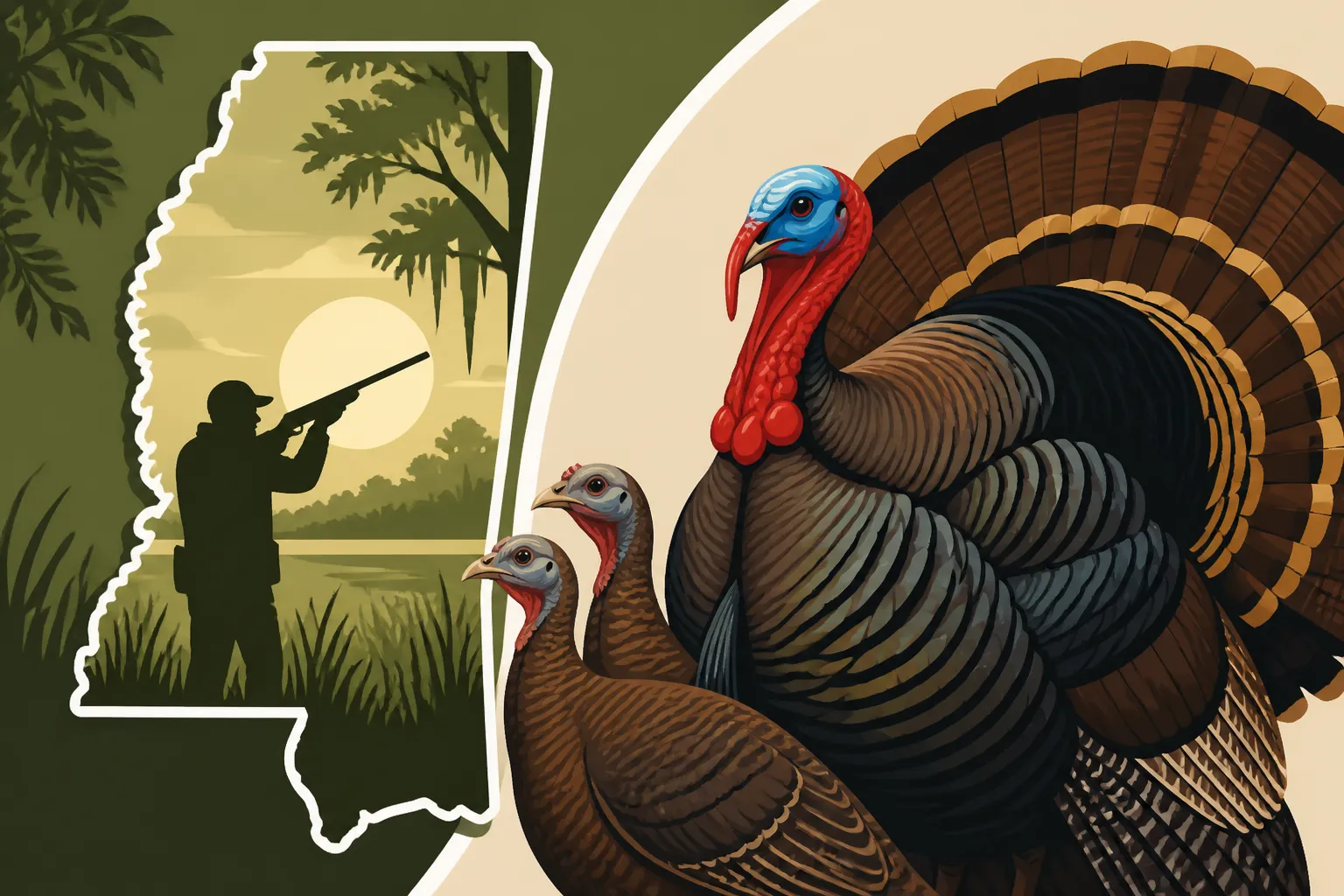
The Eastern wild turkey is a sight to behold, a mosaic of iridescent colors that shimmer in the sunlight. Adult gobblers typically boast rich, dark body feathers that appear coppery-bronze with green and red iridescence. Their tail feathers are tipped with a dark band, followed by a lighter, rusty-brown band, and then a broad, dark brown or black band. This light, rusty-brown tip is a key differentiator from other subspecies like the Merriam's or Osceola, which have whiter or buff-colored tips. Their wing feathers are barred with alternating black and white bands, giving them a distinct pattern when fanned or in flight.
Their heads are largely featherless, ranging in color from pale blue to white to red, often changing intensity with excitement or mood. Mature gobblers usually sport a prominent beard—a tuft of coarse, bristly feathers—that can be quite long, sometimes exceeding 10 inches. They also have sharp spurs on their legs, which are essentially bony core projections that can grow quite long and sharp with age, serving as formidable weapons during territorial disputes. These physical markers are what most hunters look for when determining age and sex, especially during the spring season when you're judging whether a bird is a legal gobbler under Mississippi Spring Turkey Bag Limit Rules or Mississippi Youth Turkey Bag Limit Rules.
Beyond the visual, their sheer size is impressive. Eastern gobblers are large, robust birds, with mature adults often weighing between 18 to 25 pounds, though some can tip the scales heavier. Hens are generally smaller and less iridescent, with duller plumage and shorter beards (or no beard at all), weighing in closer to 8 to 12 pounds. Their legs are strong and scaled, built for running through dense underbrush or standing silently in the shadows.
Statewide Distribution and Adaptation
The Eastern wild turkey is found in every county across Mississippi where suitable habitat exists, which is, thankfully, most of the state. From the hardwood bottomlands of the Delta to the pine plantations of the Southeast, and the mixed forests of the Hills, these birds have re-established strong populations. This widespread presence is a testament to their adaptability and the robust conservation efforts that have been in place for decades. You might find them in dense riverine forests, open pine stands, or even along the edges of agricultural fields, always seeking out a mix of cover for security and open areas for foraging.
While they are found statewide, local densities and specific behaviors can vary slightly depending on the dominant habitat type. For instance, turkeys in the Delta bottomlands might behave differently from those in the rolling hills of north Mississippi, simply due to the topography and vegetation differences. However, they are still genetically the same Eastern subspecies. Understanding this broad distribution and how it relates to specific regions is crucial for hunters planning trips, especially those navigating areas like our National Forests or various WMAs where scouting is critical. A mapping tool, perhaps like those found in an application such as GoHunt, can be instrumental in identifying prime turkey country across diverse Mississippi landscapes, helping you locate the specific habitat types Easterns prefer.
This adaptability is what makes the Eastern wild turkey such a magnificent quarry. They thrive in varying conditions, from the humid warmth of early spring to the cooler, crisp days later in the season. Their ability to find food, shelter, and nesting sites across such a diverse geographical range highlights their success. The restoration of Wild Turkeys in Mississippi has truly been a conservation success story, allowing hunters statewide to pursue this iconic game bird.
Eastern Turkey Habitat and Behavior in Mississippi
Understanding where Eastern wild turkeys live and how they act is paramount for any hunter in Mississippi. These aren't just random birds; they have specific needs and patterns that govern their daily lives, and knowing these can turn a frustrating hunt into a successful one. From what they eat to where they choose to roost, every detail provides a clue to their presence and behavior.
The diverse landscape of Mississippi plays a huge role in shaping these patterns. We have everything from vast agricultural fields bordering dense swamps to rolling pine forests, and turkeys have learned to utilize all of it. Recognizing these patterns and adapting your hunting strategy accordingly is what separates consistent turkey hunters from those who just get lucky.
Preferred Mississippi Habitats and Food Sources
Eastern wild turkeys in Mississippi thrive in a mosaic of habitat types, preferring areas that offer a blend of mature hardwood forests, pine timber, and open spaces like fields or clearings. They particularly favor mixed pine-hardwood forests, where they can find good roosting trees in the taller pines and abundant food sources in the hardwoods. River bottomlands, with their rich soils and diverse vegetation, are also prime turkey country, offering dense cover and a variety of mast crops. Many of our Wildlife Management Areas and National Forests, like those mentioned in Public Hunting Land in Mississippi, are managed to provide these ideal conditions.
Throughout the year, their diet shifts with the seasons. In fall and winter, acorns, pecans, and other hard mast are critical food sources. They’ll also scratch for seeds, berries, and waste grain in harvested agricultural fields. As spring approaches and during the breeding season, they transition to a diet rich in insects, fresh green vegetation, and soft mast like blackberries and wild grapes. Finding these seasonal food sources is often the first step in locating birds. Knowing what’s available in your specific hunting area, whether it's a creek bottom full of oaks or a newly greening field edge, can give you a significant advantage. This intimate knowledge of local food availability is key to Hunting the Statewide Turkey Opener in March, when birds are starting to spread out and forage more actively.
Hunters often use this knowledge to scout areas with abundant mast crops or lush green fields. When you're glassing a potential area, perhaps using mapping resources from GoHunt to identify specific timber types or agricultural boundaries, you're looking for these critical food sources as much as you are for tracks or droppings. The connection between food and turkey presence is undeniable, and birds will travel significant distances to access a reliable food source, especially after a long winter.
Roosting and Daily Movement Patterns
Wild turkeys typically roost in tall, sturdy trees at night, seeking safety from ground predators. In Mississippi, these are often mature pine trees, towering oaks, or cypress trees in swampier areas. They fly up to roost shortly before dark and fly down off the roost shortly after daybreak. Locating these roost sites is a classic early-morning hunting tactic. Listening for those first morning gobbles from the roost can tell you exactly where to set up. Guides often recommend listening from a distance and then carefully moving in to set up before the birds fly down, as detailed in Roost Hunting Mississippi Gobblers.
Once on the ground, their daily movements are generally dictated by foraging needs, breeding activity (in spring), and security. Hens will often move in groups, especially outside the breeding season, covering several miles a day as they feed. Gobblers, particularly during the spring rut, will range widely in search of hens. They establish strut zones, often in open areas or on logging roads, where they display for potential mates. Their movements are surprisingly quiet for such large birds, and they are incredibly observant, making stealth a paramount concern for hunters.
Understanding these patterns – where they roost, where they feed, and where they might strut – allows hunters to predict their movements and position themselves strategically. For example, if you know a particular ridge has good roost trees and a nearby creek bottom offers prime foraging, you can anticipate a gobbler's path and plan your setup accordingly. This kind of predictive hunting is a skill developed over time, but it’s rooted in observing and understanding the fundamental daily rhythms of the Eastern wild turkey. Tools like GoHunt can help you analyze terrain features and identify potential travel corridors between roosting and feeding areas, further refining your strategy.
Conservation Success and Modern Challenges
The story of the Eastern wild turkey in Mississippi is one of remarkable conservation success. Not too long ago, these iconic birds were scarce across much of their historic range, including our state. Through concerted efforts and dedicated funding, their populations have rebounded, providing ample hunting opportunities and a thriving ecological presence. However, this success doesn't mean we can rest on our laurels; modern challenges continually test the resilience of our turkey populations.
Understanding the history of this comeback and the ongoing threats helps every hunter appreciate the resource we have and encourages responsible participation in its management. Every license purchased, every turkey reported, contributes to the larger picture of conservation.
A Legacy of Restoration: The Turkey's Comeback
By the early 20th century, wild turkey populations in Mississippi and across much of the Southeast had plummeted due to unregulated hunting and extensive habitat destruction. It was a bleak time for the species. However, starting in the mid-20th century, aggressive restoration efforts began. The Mississippi Department of Wildlife, Fisheries, and Parks (MDWFP), often in partnership with organizations like the National Wild Turkey Federation (NWTF), spearheaded a massive trap-and-transfer program. Wild turkeys from areas with healthy populations were captured and relocated to suitable habitats where turkeys had been extirpated.
This program was incredibly effective. Unlike deer, which tend to migrate and spread more slowly, turkeys establish themselves quickly in new, healthy habitats. The success of these programs, coupled with improved habitat management and regulated hunting seasons, allowed the Eastern wild turkey to thrive once again. Today, Mississippi boasts a robust turkey population, offering one of the longest and most anticipated Spring Turkey Hunting in Mississippi. This turnaround is a shining example of how dedicated conservation efforts, funded largely by hunters through license fees and excise taxes on sporting goods, can bring a species back from the brink.
The restoration wasn't just about moving birds; it also involved extensive research into turkey ecology, habitat needs, and population dynamics. This scientific approach has been crucial in maintaining healthy populations and adapting management strategies as conditions change. Hunters today are reaping the benefits of these tireless efforts, participating in a tradition that was almost lost just a few generations ago.
Modern Pressures and Management Strategies
Despite the incredible comeback, Eastern wild turkeys in Mississippi still face a range of modern pressures. Habitat loss and fragmentation remain significant concerns, especially as agricultural and urban development encroaches on traditional turkey habitat. While clear-cutting in pine country can sometimes create temporary habitat for poults, large-scale, unmanaged timber harvesting can disrupt established populations. Changes in land use, such as the conversion of mixed forests to monoculture crops, also reduce the diversity of food and cover that turkeys need.
Predation is another ongoing challenge. Coyotes, bobcats, raccoons, and opossums all prey on turkeys, particularly on vulnerable nests and young poults. Understanding Nest Predation and Mississippi Turkey Hatches is crucial for monitoring population health. While predation is a natural part of the ecosystem, abnormally high predator numbers in certain areas can impact turkey recruitment rates. Disease, such as Avian Pox or Lymphoproliferative Disease, can also affect local populations, though widespread outbreaks are less common.
The MDWFP employs a variety of management strategies to address these challenges. This includes continued habitat improvement on public lands, working with private landowners on wildlife-friendly practices, and conducting rigorous population monitoring through brood surveys and harvest data analysis. Regulated hunting seasons, including specific rules like Crossbow Rules During Mississippi Archery Season (which don't apply to turkey but illustrate careful regulation), ensure sustainable harvests while allowing populations to grow. The MDWFP also uses data from reports like Mississippi Turkey Population Trends to inform future season structures and bag limits. By staying informed on current regulations and contributing to harvest reporting, hunters play an active role in these ongoing conservation efforts. Services like GoHunt can be invaluable in staying up-to-date on these regulations and understanding the nuances of how they apply to specific units or regions.
Practical Implications for the Mississippi Turkey Hunter
Knowing that you're hunting Eastern wild turkeys in Mississippi isn't just a piece of trivia; it directly impacts how you approach your hunt. Their specific behaviors, vocalizations, and preferences dictate the most effective strategies. While the thrill of a gobble is universal, tailoring your tactics to the Eastern's characteristics will lead to more consistent success.
Whether you're a seasoned veteran or planning your first spring turkey hunt, understanding the nuances of this specific subspecies in our local environment is paramount. It helps you make better decisions in the field, from choosing your calls to selecting your setup location.
Mastering Eastern Turkey Vocalizations and Decoys
Eastern wild turkeys have a rich vocabulary, and understanding their calls is fundamental to successful hunting. Gobbles are, of course, the most sought-after sound, signaling the presence of a tom. However, hens make a variety of calls that hunters must learn to mimic: yelps, clucks, purrs, cutts, and putts. The Eastern's yelp is typically a series of two to eight notes, often sounding full and resonant. Their cutting is sharp and assertive, used to get attention. Learning to replicate these calls accurately and appropriately is critical for luring a gobbler into range. Techniques described in articles like Calling a Mississippi Gobbler Off the Roost are specifically geared towards these Eastern birds.
Decoy use is also highly effective for Easterns. A jake or full-strut gobbler decoy, paired with one or two hen decoys, can often draw in a dominant tom who wants to challenge the perceived intruder or breed the "hens." However, placement is key; decoys should be visible but not too close, allowing the gobbler to approach naturally. Knowing when to use what call and what decoy setup to employ comes from experience and a deep understanding of the Eastern's breeding behaviors during the spring. This is where scouting and observing bird behavior before the season opens truly pays off.
It's also important to recognize the subtle changes in their calls. A "tree yelp" from a hen on the roost sounds different from a "lost yelp" on the ground. A soft cluck can mean something entirely different than an excited series of cuts. Mastering these nuances can be the difference between a bird that hangs up just out of range and one that comes strutting into your shooting lane.
Strategic Hunting Setups and Tactics
Hunting Eastern wild turkeys in Mississippi requires a blend of patience, stealth, and aggressive calling when the situation demands it. Given their keen eyesight and hearing, setting up effectively is crucial. Hunters often position themselves with a natural backdrop, like a large tree or dense brush, to break up their silhouette. Setting Up Against a Big Oak is a classic, time-tested strategy for a reason. Concealment is paramount, especially when birds are approaching.
Depending on the terrain, various tactics can be employed. In dense bottomland hardwoods, "run-and-gun" tactics might be effective, covering ground and calling frequently until a bird responds. For tips on this, check out Run-and-Gun Turkey Tactics on Public Land. In more open pine forests or along field edges, a more stationary approach, calling from a blind or a carefully chosen position, might be better. Understanding the topography and how it influences sound travel and turkey movement is also essential. For example, a gobble might echo deceivingly across a creek bottom, or birds might use a subtle ridge line to approach unseen.
Being aware of the entire hunting season structure, including Mississippi Spring Turkey Season Rules, helps you plan. Early season birds might respond more readily to aggressive calling, while late-season birds, having been pressured, might require more subtle tactics and patience. Adapting your approach based on the specific behavior of the birds you encounter—and knowing they are Easterns—is the hallmark of a skilled Mississippi turkey hunter. Using a robust mapping system, perhaps with layers provided by GoHunt, can help you visualize the terrain, identify potential strut zones, and plan discreet entry and exit routes, making your hunting strategies more efficient and effective.
Disclaimer
This article is for general informational purposes only and does not constitute professional advice. Laws, prices and regulations vary by location and change over time. Consult a qualified professional for guidance on your specific situation.