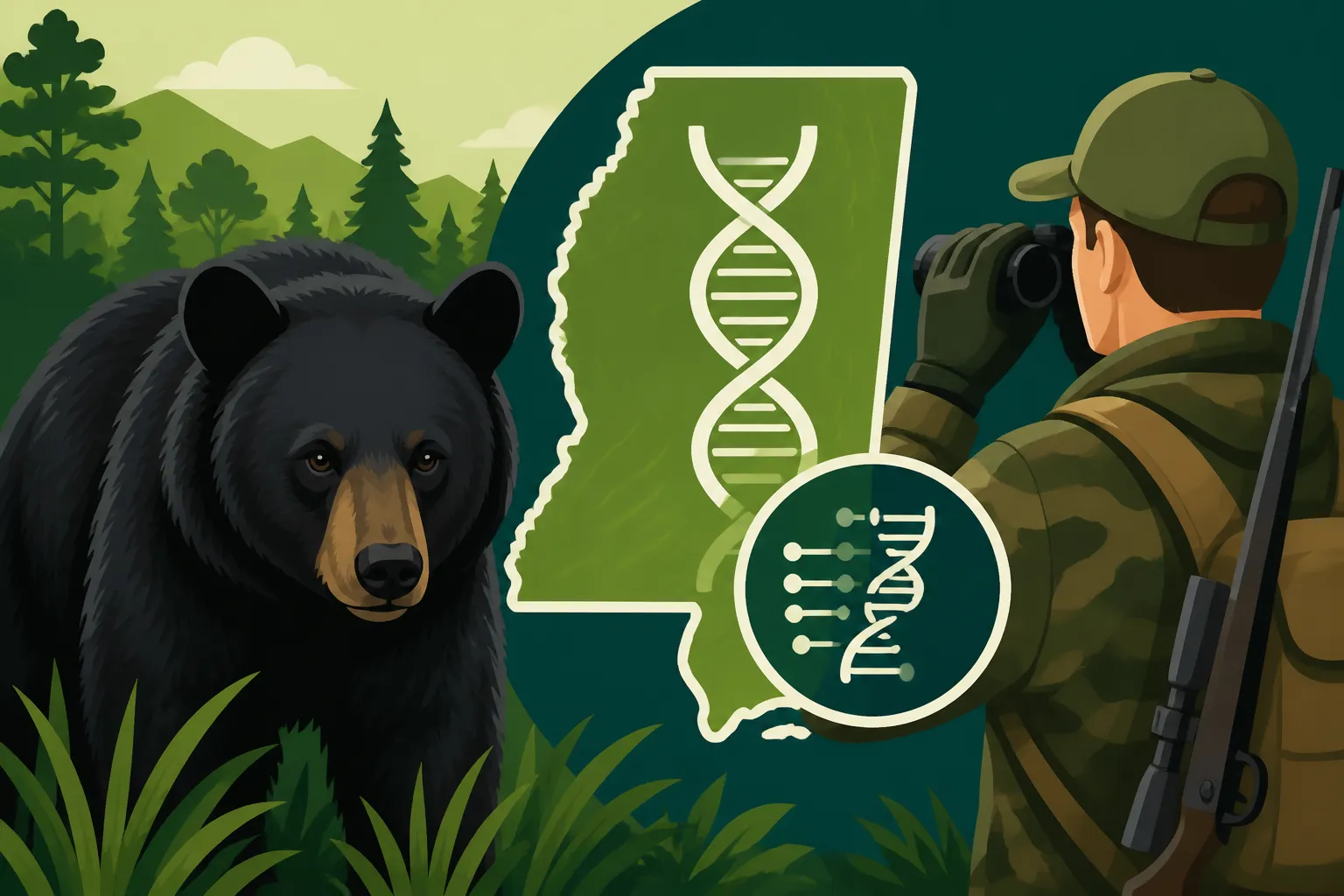
Mississippi Black Bear DNA Tracking Study
It's incredibly challenging to manage a wildlife population you can barely see. Black bears in Mississippi, with their secretive habits and dense habitat preferences, have long presented a puzzle for wildlife biologists and conservationists. This guide dives deep into the Mississippi Black Bear DNA Tracking Study, revealing how groundbreaking scientific methods are finally shedding light on these elusive creatures and informing their future in our state.
Why Tracking Mississippi's Black Bears is So Important
For years, getting a solid handle on Mississippi's black bear population felt like trying to count ghosts in the woods. These magnificent animals are shy, often nocturnal, and prefer to stick to the thickest bottomlands and swamps, making traditional census methods like aerial surveys or direct observation incredibly difficult and often inaccurate. This frustration of knowing bears are out there, but not knowing how many or where exactly, has been a significant hurdle for effective conservation.
The Elusive Nature of Mississippi's Bear Population
Imagine trying to count deer in a vast, dense forest just by walking through it—now multiply that difficulty by ten, and you're getting close to the challenge of counting black bears. They don't typically gather in open fields, and their home ranges can be quite large, meaning any single sighting is just a snapshot, not a clear indicator of overall population density. This elusiveness means that anecdotal evidence, while exciting for individual hunters or landowners, doesn't provide the robust, scientific data needed for serious wildlife management. We hear stories, we see tracks, but how do we turn that into a reliable number?
This lack of hard data means it's tough to truly understand the health and trajectory of Mississippi's Recovering Black Bear Population. Are they expanding? Are certain areas thriving more than others? Without concrete information, management decisions are often based on assumptions, which is far from ideal when dealing with a species that requires careful protection and planning. Hunters and non-hunters alike want to see these animals thrive, but informed decisions demand robust data.
Understanding Population Dynamics and Distribution
Knowing how many bears we have, where they live, and how they're moving across the landscape is absolutely fundamental for their long-term survival. Without this knowledge, we can't identify critical breeding areas, protect crucial travel corridors, or understand the genetic health of the population. A healthy population isn't just about sheer numbers; it's about genetic diversity and connectivity between different groups. If populations become isolated, they can face serious genetic challenges down the road.
This understanding is also key to mitigating human-bear conflicts. As bear populations expand, and Bears Moving Into Central Mississippi becomes more common, understanding their distribution helps predict where these interactions might occur. This allows wildlife agencies to proactively educate residents and offer strategies for coexistence, rather than reacting to problems after they arise. It’s about being smart and strategic, ensuring bears have space to roam without becoming a nuisance.
How a DNA Tracking Study Works on the Ground
So, if you can't see the bears, how do you count them and track them? This is where the ingenuity of DNA tracking comes into play. It's a non-invasive, highly effective method that allows biologists to gather a wealth of information from something as small as a single strand of hair. It's truly incredible what modern science allows us to learn about our wild neighbors.
Setting Up Hair Snares and Collection Points
The first step in a DNA tracking study involves setting up what are called "hair snares" in strategic locations across known or suspected bear habitats. These aren't traps designed to capture bears, but rather to gently collect hair samples as bears pass through. Imagine a few strands of barbed wire encircling a tree, or wrapped around a post, strategically placed at a height where a curious bear might rub against it. Sometimes a scent lure, like a sweet-smelling attractant, is placed in the center to encourage bears to investigate and, hopefully, leave behind some fur.
These snares are carefully distributed across areas known to host bears, such as the bottomland hardwoods of the Delta Region Bear Population or the dense swamps of the South Mississippi Swamp Bear Population. Biologists use GPS coordinates to precisely map each snare location, returning regularly—often every few weeks—to collect any hair samples. Each sample is meticulously recorded, placed in its own sterile bag, and labeled with the date and location. This fieldwork is physically demanding and requires a deep understanding of bear behavior and habitat.
The Lab Work: From Hair Follicle to Genetic ID
Once the hair samples are collected from the field, the real magic happens in the laboratory. Even a few strands of hair, especially those with root follicles attached, contain enough DNA to identify an individual bear. Scientists extract the DNA from these samples and then use specialized techniques to create a unique genetic profile for each bear, much like a human fingerprint. This allows them to differentiate between individual bears.
Not only can they identify individual bears, but the DNA analysis also reveals the bear's sex. By comparing multiple samples collected over time and from different locations, researchers can track the movements of specific individuals without ever having to tranquilize or tag a bear. This provides invaluable data on home ranges, travel patterns, and even genetic connectivity between different groups of bears. It’s a powerful tool, providing answers to questions that were once impossible to address.
Data Analysis and Mapping Bear Movement
After the lab identifies each unique bear and its associated collection points, the data moves to the analysis phase. Biologists combine the genetic profiles with the GPS coordinates from the hair snares. This allows them to create detailed maps illustrating where individual bears were detected, their presumed travel corridors, and overall population distribution. This isn't just dots on a map; it's a dynamic picture of bear life.
This data helps in estimating the total population size within the study area and identifies potential gaps in habitat or barriers to movement. While researchers utilize highly specialized software for this, the concept is similar to how many hunters use advanced mapping tools, like those found on GoHunt, to analyze terrain, pinpoint game sign, and predict animal movement patterns. It's all about understanding the landscape and the creatures within it, but on a much grander, scientific scale. The visual representation of bear movement and density allows wildlife managers to see patterns that would otherwise remain invisible.
What the Mississippi Black Bear DNA Tracking Study Reveals
The insights gleaned from a DNA tracking study are far-reaching, providing a scientific backbone for conservation efforts that extends beyond simple population counts. These studies transform speculation into concrete, actionable information.
Uncovering Population Estimates and Trends
Perhaps the most eagerly anticipated outcome of any DNA tracking study is the population estimate. For years, estimates of How Many Black Bears Mississippi Has were often based on educated guesses or limited observations. A robust DNA study provides a statistically sound number, giving conservationists and the public a much clearer picture of the actual bear population. This helps to validate that the efforts put into bear recovery are indeed working.
Beyond a single number, repeated studies over several years can reveal population trends. Are bear numbers increasing, stable, or declining in specific areas? This trend data is critical for adaptive management, allowing the MDWFP to adjust strategies as needed. It helps answer the fundamental question of whether the recovery trajectory is on track or if new measures need to be considered to support Where Mississippi Black Bears Live Today.
Identifying Key Habitats and Corridors
Another crucial revelation from DNA tracking is the identification of vital habitats and travel corridors. By mapping where bears are consistently detected and how individuals move between different areas, biologists can pinpoint which sections of the landscape are most important for their survival. This might include vast, undisturbed tracts of forest, or narrow strips of riparian habitat that allow bears to move safely between larger wilderness areas.
Understanding these critical habitats is paramount for land use planning and conservation initiatives. It helps direct efforts to protect or restore connectivity, ensuring bears have continuous access to food, water, and mates. This data is invaluable, for example, in guiding efforts to maintain forested river bottoms that link the main populations, preventing isolation and promoting genetic exchange.
Informing Future Management and Conservation Strategies
Ultimately, the DNA tracking study provides the factual basis for all future bear management and conservation decisions in Mississippi. This scientific evidence ensures that decisions are not driven by emotion or speculation, but by hard data. It allows the MDWFP to make informed choices about habitat protection, public education, and even the potential for future management options, such as those that were debated in The 2026 Bill That Almost Reopened Bear Hunting.
The data from these studies solidifies the understanding that Why Mississippi Bears Stay Fully Protected is a decision based on the health and vulnerability of the population. It supports the long-term vision for bears in the state, ensuring that conservation efforts are effective and sustainable. This commitment to science-based management is what ensures a future for these iconic animals in Mississippi.
Here's a quick look at how DNA tracking stacks up against more traditional methods:
| Feature | Traditional Tracking (e.g., visual counts, scat surveys) | DNA Tracking (e.g., hair snares) |
|---|---|---|
| Data Source | Direct observation, signs (tracks, scat), radio telemetry | Hair, scat, saliva (from bite marks) |
| Invasiveness | Low (visual) to Moderate (trapping/collaring) | Very Low (non-invasive hair collection) |
| Individual ID | Challenging (requires collaring or distinct markings) | Highly Accurate (unique genetic profile) |
| Sex Determination | Requires direct observation or collaring | Highly Accurate (from genetic markers) |
| Population Estimation | Often indirect, can be prone to undercounting | Statistically robust, more accurate |
| Movement Tracking | Requires active tracking (e.g., radio-collar follow-up) | Can infer movement over time from multiple hits |
| Genetic Health Info | None | Excellent (reveals diversity, relatedness) |
| Time/Labor Intensity | High for direct observation, moderate for sign surveys | Moderate for setup and collection, high for lab |
Hunter's Role and Coexistence with Bears
While DNA tracking is a scientific endeavor, the average Mississippian, especially hunters, has a crucial role to play in the ongoing recovery of black bears. These studies benefit everyone who values Mississippi's wildlife, and a collaborative approach is always best.
Reporting Sightings and Respecting Bear Habitat
As hunters, we're often the most observant eyes in the woods, covering vast amounts of ground that researchers might not. If you encounter a black bear or fresh bear sign, it’s incredibly helpful to report it to the MDWFP. This doesn't mean harassing the animal or disturbing its habitat, but simply noting the location, date, and any relevant observations. This information, combined with scientific studies, helps create an even richer picture of bear distribution.
Remember, seeing a bear in the wild is a privilege, and respecting their space is paramount. Knowing What to Do If You See a Mississippi Black Bear is important for both your safety and the bear's well-being. Keeping a respectful distance and understanding that these studies are helping to secure a future for this species ensures that our wild places remain vibrant and diverse. Every piece of anecdotal evidence from the field helps contribute to the larger puzzle.
The Future of Bears in Mississippi
The Mississippi Black Bear DNA Tracking Study represents a significant investment in the future of our state's largest carnivore. It underscores the commitment to managing wildlife based on sound science, ensuring that decisions, like those concerning Why Mississippi Bears Stayed Protected So Long, are well-informed. The data helps guide conservation efforts and public education, creating a pathway for bears to continue their recovery.
For hunters, this means a healthier, more robust ecosystem, and potentially, the chance for future generations to encounter these incredible animals in their natural habitat. While the immediate focus is on recovery and understanding, having solid data now prepares us for whatever future management decisions may arise. It’s about being proactive, not reactive, and ensuring Mississippi remains a rich and wild place for all its inhabitants.
Disclaimer
This article is for general informational purposes only and does not constitute professional advice. Laws, prices and regulations vary by location and change over time. Consult a qualified professional for guidance on your specific situation.