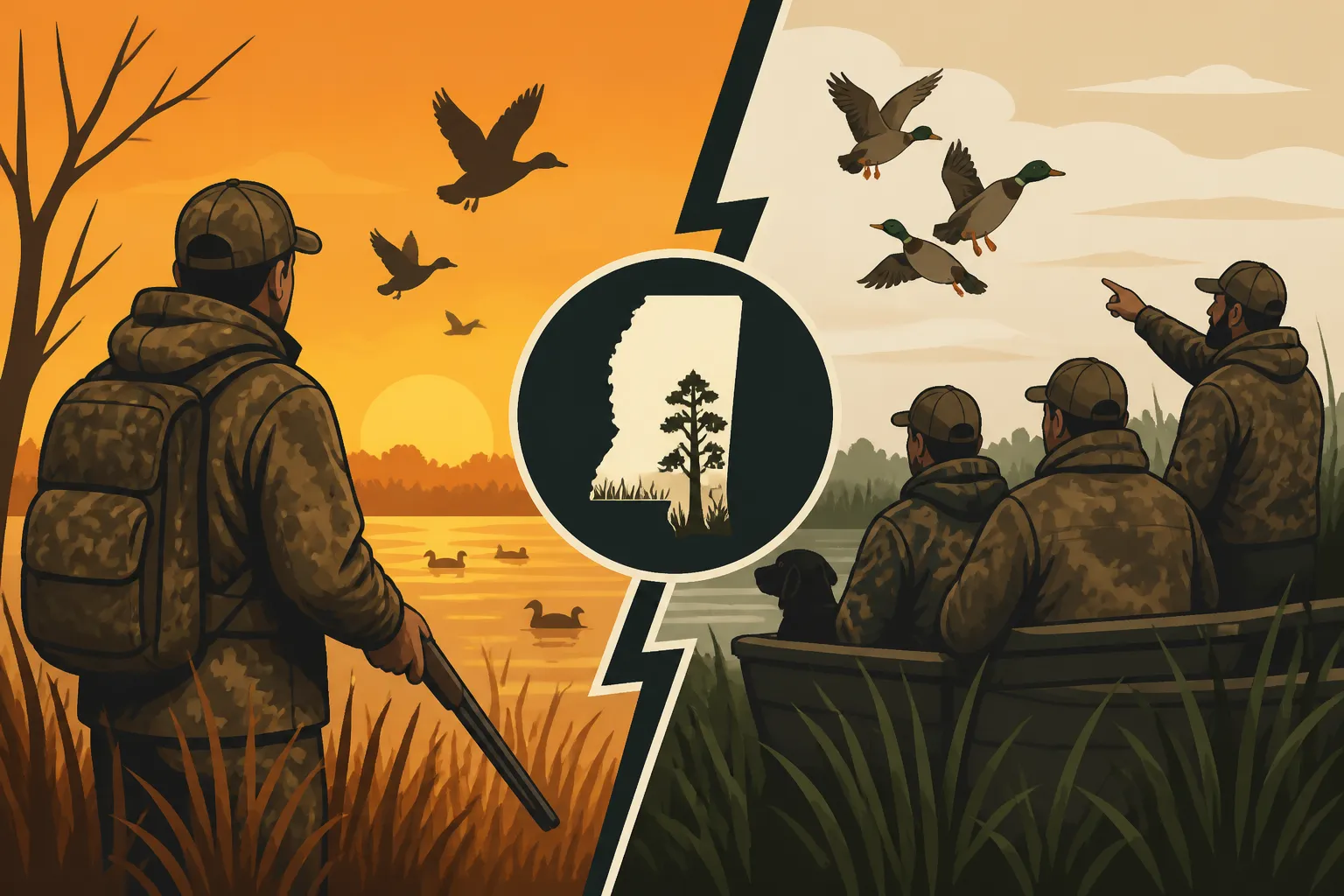
Self-Guided Versus Outfitted Mississippi Hunts
Every hunter who's ever dreamed of chasing whitetails through the Delta hardwoods or calling in a spring gobbler from a pine flat in Mississippi eventually faces a classic dilemma: do you go it alone, relying on your own grit and scouting, or do you enlist the help of a seasoned guide? It’s a choice that comes with unique challenges, rewards, and a good bit of soul-searching, especially when you're navigating the incredible diversity that Mississippi hunting offers. This guide is here to break down the ins and outs of both self-guided adventures and fully outfitted experiences, helping you figure out which path is truly right for your next trip to the Mississippi woods or waters.
The Allure of the Self-Guided Mississippi Hunt
There's something deeply satisfying about a hunt you've planned, scouted, and executed entirely on your own terms. For many, the self-guided route isn't just a way to save money; it's a fundamental part of the hunting experience itself, a true test of skill and woodsmanship. It's about connecting with the land on a personal level, learning its secrets through your own effort, and earning that success when it finally comes.
The Spirit of DIY and Self-Reliance
Picture this: you've spent months poring over maps, tracing creek bottoms and logging roads on your computer screen. You've identified a promising block of timber in a national forest, far from any paved road. The alarm clock shrieks at 3:00 AM, long before the first hint of dawn, and you're out the door, coffee in hand, driving down a dirt path you marked on your GPS. There's no one else to rely on but yourself to find the deer, set the stand, or make the shot. This self-reliance, the pure DIY spirit, is the beating heart of a self-guided hunt. It's about proving to yourself that you can find success in wild places through your own efforts, building skills like Scouting Mississippi Public Land Before Season that only grow with experience.
The stories you tell after a self-guided hunt are often less about the size of the rack and more about the journey: the unexpected rainstorm, the long walk through thick cover, the feeling of utter solitude as the sun rises over the swamp. These are the moments that forge a hunter's character, pushing you to understand every nuance of the habitat and the game. When you finally punch a tag on an animal you found, patterned, and harvested purely through your own determination, the sense of accomplishment is immeasurable. It’s a personal victory that resonates far beyond the freezer full of meat.
The Cost Savings and Budgeting
Let's be real, hunting can be an expensive hobby. Gear, fuel, licenses, tags – it all adds up. One of the most significant drawcards of a self-guided hunt is the potential for substantial cost savings. When you're not paying for a guide's expertise, their equipment, or an all-inclusive lodge stay, your primary expenses become your license, travel, and personal hunting supplies. This can make the difference between hunting once a year and getting out into the woods multiple times throughout the season.
Consider the cost of a Mississippi Resident Sportsman's License versus the potential daily rate for a professional guide. While a guided trip offers convenience and often a higher chance of success, a self-guided adventure keeps more money in your pocket, allowing you to invest in better optics, a new treestand, or more fuel for additional trips. This budget-friendly approach opens up opportunities for more frequent hunting, which, in turn, builds experience and deeper familiarity with various hunting areas across Mississippi. It also means you can often afford longer trips, giving you more days in the field without breaking the bank.
The Learning Curve and Skill Development
A self-guided hunt is, in many ways, an intensive masterclass in hunting. You are forced to develop a wide array of skills that might otherwise be outsourced to a guide. This includes everything from advanced e-scouting and map reading to understanding wind thermals, tracking, and game recovery. Every mistake becomes a valuable lesson, and every success reinforces a skill you've personally honed. There's no one else to blame or credit but yourself, which accelerates the learning process.
For instance, learning to interpret Reading Delta Mud for Fresh Deer Movement or identify prime bedding areas in the Delta National Forest Hunting takes countless hours in the field and a keen observational eye. When you're self-guided, you're the one making those decisions, analyzing the sign, and adjusting your strategy on the fly. This hands-on education creates a more knowledgeable, adaptable, and ultimately more capable hunter. The satisfaction of calling in a gobbler you’ve patterned on public land, or finally connecting with a deer after days of hard work, stems directly from the skills you independently acquired and applied.
Navigating Public Land for Self-Guided Adventures
Mississippi boasts an incredible amount of public hunting land, from vast national forests to numerous Wildlife Management Areas (WMAs). For the self-guided hunter, these public tracts are invaluable resources, offering diverse landscapes and game opportunities. However, navigating them successfully requires diligent planning, scouting, and a willingness to explore.
Identifying Productive Public Land Areas
Finding public land isn't usually the challenge; finding productive public land often is. Mississippi's public hunting lands are incredibly varied. You've got the immense bottomland hardwoods of the Delta, like those found within Delta National Forest Hunting, teeming with deer and hogs, and then the rolling pine and hardwood hills of places like Homochitto National Forest Hunting further south. Each offers different challenges and rewards. To identify the most promising areas, you need to understand the habitat preferences of the game you're pursuing and match those with available public acreage.
Start by researching specific WMAs and National Forests known for the species you target. The Mississippi Department of Wildlife, Fisheries, and Parks (MDWFP) website is your best friend here, offering maps and regulations for Mississippi Wildlife Management Areas. Look for areas with diverse terrain, water sources, and varied timber stages, as these often hold a wider variety and higher density of game. Don't be afraid to look at smaller, less-talked-about tracts; sometimes, the hidden gems are the ones that require a little more effort to find. Consider remote sections of these large public blocks, as they often see less pressure.
Scouting and E-Scouting Essentials
Before you ever set foot in the woods, the real work of a self-guided hunt often begins at your kitchen table with maps spread out, or more commonly, on your computer screen. E-scouting has revolutionized how we approach public land. Tools like satellite imagery, topographic maps, and land ownership overlays (which services like GoHunt excel at providing) allow you to identify potential bedding areas, travel corridors, food sources, and water before you even drive to the area. Look for pinch points, funnels between different habitat types, clear-cuts, and areas with thick cover adjacent to food.
Once you've narrowed down some promising spots, boots-on-the-ground scouting becomes critical. This might involve walking potential travel routes, looking for rubs, scrapes, tracks, and droppings. Pay attention to subtle topographical changes, wind directions, and entry/exit routes that keep you concealed. If you’re hunting waterfowl, scouting flooded timber or observing flight patterns into open fields can be the key. For deer, look for Scrape Lines Along a Logging Road or primary trails leading to late-season food sources like acorns, persimmons, or green fields. Effective scouting means spending time understanding how game uses the landscape in that specific area.
Managing Pressure and Finding Seclusion
Public land, by its very nature, is open to everyone, and with popularity comes pressure. If you're hunting during peak seasons, especially Why Mississippi's Gun Opener Draws the Biggest Crowds, you're going to encounter other hunters. The key to success on pressured public land is often to find areas that others overlook or are unwilling to access. This usually means walking further, finding difficult terrain, or hunting areas that require more effort to reach.
Consider hunting during weekdays, or during less popular times of day. Focus on areas that are a mile or more from common access points or roads. Look for natural barriers like creeks, swamps, or steep hillsides that deter casual hunters. Often, animals will retreat to these thicker, harder-to-reach pockets when pressure increases. Learning to read human sign (old stands, boot tracks) can also help you avoid areas that are heavily hunted. Sometimes, finding a small, overlooked woodlot near a town, as mentioned in Hunting Small Woodlots Near Suburban Jackson, can yield surprising results simply because most hunters flock to the bigger, more obvious public lands.
The Advantages of a Guided Mississippi Hunt
While the self-guided path has its own rewards, there are undeniable benefits to booking an outfitted hunt, especially if you're new to an area, have limited time, or are chasing a specific trophy. Outfitters in Mississippi offer a wide range of experiences, from dedicated deer hunts in the Delta to world-class duck hunting lodges.
Expertise and Local Knowledge
When you book a guided hunt, you're essentially tapping into years, often decades, of local knowledge and experience. A good guide lives and breathes the local hunting scene. They know the land intimately: where the deer typically bed, which fields the ducks are working, where the gobblers roost, and how to read the ever-changing conditions. This isn't just about general hunting knowledge; it's about hyper-local, real-time intelligence that only comes from continuous presence in the field.
Imagine flying in from out of state for a quick three-day hunt. Without a guide, you'd spend valuable time just trying to locate decent habitat, let alone game. A guide, however, can put you on a fresh sign or active feeding area almost immediately. They understand nuances like Wind and Thermals in Delta Bottomland or the specific calling sequences that work on pressured birds. Their expertise significantly shortens the learning curve and maximizes your limited time in the field, making the experience far more efficient and often more successful. This local insight is particularly valuable when dealing with species like Wild Turkeys in Mississippi, where understanding roosting patterns and calling tendencies is paramount.
Time Savings and Logistics Handled
For many hunters, time is a precious commodity. Juggling work, family, and other commitments often leaves little room for extensive pre-hunt scouting or dealing with logistical headaches. This is where an outfitted hunt truly shines. Guides and lodges handle almost all the planning and grunt work, allowing you to simply show up and hunt. They've secured the land access, scouted the current game movement, set up blinds or stands, and often provide transportation to and from the hunting area.
Think about a Booking a Delta Duck Lodge trip. Instead of worrying about finding private land access, setting hundreds of decoys, or wading through flooded timber in the dark, you're picked up, driven to a heated blind, and your guide handles the calling and logistics. Similarly, for deer hunting, a guide will have stands already hung in productive spots, saving you hours of pre-season work. This level of service transforms a hunting trip from a stressful logistical puzzle into a relaxing, focused pursuit of game. It's about maximizing your actual hunting time and minimizing the distractions.
Increased Success Rates and Trophy Potential
While no hunt is ever guaranteed, an outfitted hunt generally boasts a higher success rate compared to a self-guided trip, especially for hunters unfamiliar with the area. Outfitters often lease prime private lands or have exclusive access to well-managed tracts, meaning less pressure and higher game densities. Coupled with their intimate knowledge and continuous scouting, they can put you in front of more animals, including larger, older trophy-class game.
If your goal is to harvest a mature buck with impressive antlers, like those found in the Mississippi Deer Record Book, a trophy outfitter in the Delta region might be your best bet. They understand antler restrictions, herd health, and how to target specific age classes of deer. For waterfowl, booking with a reputable guide who manages their fields and waters for ducks can mean the difference between a few birds and a limit. This isn't just about ethical harvest; it's about placing you in the best possible position for a memorable and successful hunting experience, especially if you're traveling a long distance and have specific goals for your trip.
Understanding the Costs of Outfitted Hunts
It's no secret that guided hunts come with a higher price tag than going it alone, but understanding what you're paying for is key. The cost reflects the expertise, convenience, exclusive access, and often luxurious amenities that guides and lodges provide. While the figures vary widely, recognizing the components of the cost helps in budgeting and vetting potential outfits.
Deciphering Package Deals and Hidden Fees
Outfitter pricing structures can sometimes feel like a puzzle. Most offer "package deals" that bundle various services, such as a Three-Day Mississippi Deer Package Pricing or a multi-day duck hunt. These packages typically include a set number of hunting days, lodging, and meals. However, it's crucial to understand what isn't included. Some common additional costs might be licenses, processing fees for game, taxidermy services, ammunition, and transportation to and from the lodge or airport.
Always get a detailed written quote that explicitly lists everything included and itemizes potential extra charges. Ask about hidden fees like fuel surcharges, cleaning fees, or unexpected expenses for things like extra rounds of sporting clays if offered. A reputable outfitter will be transparent about their pricing. For example, a What's Included in an All-Inclusive Deer Package description should cover everything from guiding services to field dressing and transportation during the hunt. Platforms like BookYourHunt can sometimes help compare what different outfitters offer in their packages, giving you a clearer picture before you commit.
Tipping Etiquette and Expectations
One often-overlooked cost in a guided hunt is tipping. Guides, dog handlers, and lodge staff often rely on tips as a significant portion of their income, and it's customary to show your appreciation for their hard work and service. The amount can vary depending on the type of hunt, the level of service, and the success of your trip, but a general range for a good guide might be a percentage of the total hunt cost.
It’s always a good idea to clarify tipping expectations with your outfitter beforehand. Ask them directly: "What is the customary tip for guides and lodge staff?" This way, you can budget for it appropriately and avoid any awkward situations at the end of your trip. Remember, a tip isn't just for a successful harvest; it's for the effort, knowledge, hospitality, and overall experience provided. Whether you're grateful for your duck guide's persistent calling and expert dog handling, or your deer guide's patience and tracking skills, a thoughtful tip acknowledges their dedication.
The Value of Inclusions: Lodging, Meals, and More
Beyond the guiding service itself, many outfitted hunts offer comprehensive amenities that significantly enhance the overall experience. A comfortable lodge, delicious home-cooked meals, and a friendly atmosphere can turn a hunting trip into a true vacation. These inclusions contribute to the higher cost but also to the overall value. Imagine a warm bed after a cold morning hunt, a hearty breakfast before you head out, and a delicious dinner waiting for you when you return, all without lifting a finger.
Many lodges provide amenities like gear drying rooms, game cleaning stations, and even on-site pro shops. Some even offer recreational activities for non-hunting guests or during downtime, making it a viable option for family trips. The value of What's Included in a Delta Lodge Stay can extend to comfortable communal areas where you can swap stories with other hunters, review the day's events, and relax. These comforts mean you can focus entirely on the hunt and recovery, knowing that all your basic needs are met and even exceeded, adding to a truly memorable and stress-free experience.
Choosing the Right Outfitter or Guide
Selecting the right outfitter is a critical step in ensuring a successful and enjoyable guided hunt. It's an investment, and you want to make sure you're putting your trust (and money) into a reputable, ethical, and effective operation. This requires thorough research and asking the right questions.
Researching Reputable Mississippi Outfitters
The hunting industry has its fair share of great operators and, unfortunately, some less-than-stellar ones. Start your research by looking for outfitters with a long-standing reputation and positive reviews. Online forums, social media groups focused on Mississippi hunting, and word-of-mouth recommendations are excellent starting points. Ask fellow hunters about their experiences. Pay attention to consistency in positive feedback, especially regarding guide professionalism, quality of game, and adherence to regulations.
Don't just look for outfitters who promise giant trophies; look for those who emphasize ethical hunting practices, conservation, and a genuine passion for the outdoors. Check if they are licensed and insured, which is a key indicator of professionalism. While there are no specific state-mandated outfitter licenses for all hunt types in Mississippi, reputable operations will often carry insurance and be transparent about their business practices. Dig into their history: how long have they been operating? What is their primary focus (deer, ducks, turkeys, hogs)? Are their claims realistic?
Asking the Right Questions Before You Book
Once you've identified a few potential outfitters, it's time to start asking probing questions. This isn't just about price; it's about understanding the logistics, expectations, and ensuring a good fit. Some critical questions to ask include:
- What are your typical success rates for the species I'm targeting? Be wary of anyone promising 100% success.
- What is the guide-to-hunter ratio? A lower ratio often means more personalized attention.
- What specific hunting methods do you employ (stands, blinds, spot-and-stalk, dog drives)?
- What is the typical terrain and physical demand of the hunt?
- What is your policy on wounded game?
- Can you provide references from recent clients, particularly those who hunted the same species?
- What is your cancellation policy and deposit structure? This is important for managing unexpected life events.
- What licenses and permits do I need to acquire, and are they included or extra? (Mississippi Hunting Licenses and What They Cost is a good reference).
- What should I bring in terms of gear, clothing, and weaponry?
Getting clear, direct answers to these questions will help you manage expectations and make an informed decision. Don't rush this process; a good outfitter will appreciate your diligence.
The Role of Online Booking Platforms
In the digital age, online platforms have emerged to connect hunters with outfitters, streamlining the booking process. Websites like BookYourHunt and GoHunt provide databases of guides, often with reviews, photos, and detailed descriptions of their services. These platforms can be a convenient way to browse options, compare offerings, and initiate contact with multiple outfitters from the comfort of your home.
When using such platforms, leverage their search filters to narrow down options by species, location (e.g., Mississippi Outfitters in the Delta), price range, and available dates. Read reviews diligently, looking for common themes and recent experiences. While these platforms offer a valuable starting point, remember to still do your due diligence by contacting the outfitter directly, asking those critical questions, and getting references. They can help you discover options you might not have found otherwise, but the final decision should always be based on your personal research and comfort level with the outfitter.
Hybrid Approaches and Flexible Options
The choice between fully self-guided and fully outfitted isn't always black and white. Many hunters find a middle ground that combines the best aspects of both, offering flexibility, cost savings, and access to specialized services without committing to a full-service package.
Day Leases and Partial Guiding Services
For hunters who want some assistance but aren't ready for a full-fledged guided experience, day leases or partial guiding services can be an excellent option. A day lease might involve paying a landowner or outfitter for access to their private property for a single day or weekend, often with pre-hung stands or identified productive areas. You still do your own hunting, but the critical hurdle of land access is handled. This can be especially appealing for Hunting Small Private Tracts in Mississippi where direct access can be hard to secure.
Partial guiding services could mean hiring a guide for a single day to get you oriented to a new area, help with initial scouting, or assist with game recovery after a successful shot. For example, if you're planning a trip to the Homochitto National Forest Hunting and want an expert opinion on the best areas for turkey, you might hire a local guide for a morning to point you in the right direction and share some local tips. This allows you to leverage their knowledge without paying for the full, multi-day package, giving you a confidence boost before venturing out on your own. It's about getting targeted help where you need it most.
Joining a Mississippi Hunting Club
Hunting clubs are a cornerstone of the Mississippi hunting tradition, especially for deer and turkey. Joining a club often means gaining access to a private lease, typically thousands of acres, without the immense financial burden or logistical hassle of leasing it yourself. Clubs usually have established rules, management plans, and shared responsibilities, creating a strong sense of community and camaraderie. The Mississippi Hunting Club Territory Sizes can vary greatly, from smaller groups sharing a few hundred acres to large clubs managing thousands.
Club membership generally involves an annual fee, which covers the lease cost, food plots, and habitat improvements. While you're still "self-guided" in terms of your daily hunt, you benefit from shared resources, collective knowledge, and managed land that often produces quality game. It's a fantastic way to secure consistent access to private land and build lasting friendships with like-minded hunters. Many clubs even organize communal work days or social events, making it a year-round commitment. It's a significant step up from public land hunting in terms of access and quality, but still retains that independent hunting feel.
Mentored Hunts for Newcomers
For those new to hunting, or perhaps new to a specific type of hunting or a particular region of Mississippi, a mentored hunt can be an invaluable bridge between pure self-guided and fully outfitted. This often involves going afield with an experienced hunter (who might be a friend, family member, or a volunteer through a conservation program) who can teach you the ropes, share their knowledge, and guide you through the process step-by-step. It's about education and safety, without the commercial aspect of a guided hunt.
A mentored hunt provides practical, hands-on learning in a low-pressure environment. You learn things like proper firearm handling, reading game sign, setting up for a shot, and field dressing. This is particularly beneficial for youth hunters, as highlighted by Mississippi Youth Gun Season Rules, or adults who are just starting out. It builds confidence and competence, preparing you for successful future self-guided hunts while fostering a love for the outdoors. It's a foundational experience that sets you up for a lifetime of ethical and enjoyable hunting.
Comparing Your Options: Self-Guided vs. Outfitted
To help visualize the key differences and aid in your decision-making, here's a comparison table summarizing the main aspects of self-guided and outfitted hunts in Mississippi.
| Feature | Self-Guided Hunt | Outfitted Hunt |
|---|---|---|
| Cost | Lower (primarily licenses, travel, gear) | Higher (includes guide fees, lodging, meals, services) |
| Time Commitment | High (extensive scouting, planning, logistics) | Lower (most logistics handled by outfitter) |
| Local Knowledge | Acquired through personal research and experience | Immediate access to guide's expertise and real-time info |
| Success Rate | Variable (dependent on personal skill, luck, scouting) | Generally higher (prime land, expert guidance) |
| Comfort/Amenities | Basic (camping, self-catering, public facilities) | Often luxurious (lodge, chef-prepared meals, amenities) |
| Learning Curve | Steep (learn all aspects of the hunt) | Shorter for direct hunting skills, less for logistics |
| Flexibility | High (set your own schedule, change plans easily) | Moderate (adhere to outfitter's schedule and rules) |
| Land Access | Public lands (WMAs, National Forests) or private permission | Often private, managed land with exclusive access |
| Personal Effort | Very high (physical and mental exertion for all tasks) | Moderate (focus primarily on hunting, less on logistics) |
| Suitable For | Experienced, budget-conscious, independent hunters | Time-constrained, novice, or trophy-seeking hunters |
This table provides a quick overview, but remember that the "best" option always depends on your individual goals, budget, experience level, and the amount of time you have available. There's no single right answer, only the right answer for you and your next Mississippi hunting adventure.
Making Your Decision: Which Path to Choose?
Deciding between a self-guided and an outfitted hunt ultimately comes down to a few key personal considerations. There’s no universal "better" option; rather, it's about what aligns with your individual goals, budget, and hunting philosophy for a particular trip. Don't feel pressured to choose one and stick with it forever; many hunters enjoy both types of experiences depending on the season, the species, or even just their mood.
Assessing Your Experience Level and Confidence
If you're a seasoned hunter with years of experience navigating public lands, reading game sign, and a deep understanding of Mississippi's diverse ecosystems, a self-guided hunt might be your natural inclination. You likely thrive on the challenge of figuring things out for yourself and have the skills to adapt when conditions change. You know how to effectively scout areas, understand Reading Aerial Photos for Hills Unit Deer, and what it takes to recover game alone or with a trusted partner.
However, if you're new to hunting, new to Mississippi, or targeting a species you've never pursued before, a guided hunt can provide an invaluable foundation. The hands-on learning from an expert can save you years of trial and error, boosting your confidence and safety in the field. Similarly, if you're venturing into particularly challenging terrain or targeting elusive game, a guide's expertise can significantly enhance your chances of success and enjoyment. Consider where you are in your hunting journey and how much support you truly need to feel confident and successful.
Budgeting for the Adventure You Want
As we've explored, cost is a major differentiator. A self-guided hunt will almost always be more economical in terms of direct expenses. You pay for your license, gas, food, and perhaps a few camp supplies. This lean approach allows for more frequent trips or longer stays in the woods. If your budget is tight, or you prioritize simply being in the field over a specific harvest, self-guided is probably the way to go.
Conversely, if you view hunting as a significant investment of your time and want to maximize every minute, or if you're saving up for a special trip, an outfitted hunt might be worth the extra expense. You're paying for convenience, expertise, exclusive access, and often a higher probability of success. Consider it an investment in a high-quality, stress-free experience where the odds are stacked more in your favor. Be realistic about what you can afford and what you're willing to pay for in terms of service and opportunity. Remember to factor in all potential costs, including What a Guided Mississippi Deer Hunt Costs or What a Delta Duck Lodge Stay Costs.
What Kind of Hunting Experience Do You Crave?
Ultimately, the most important question is: what kind of experience are you truly looking for? Do you yearn for the solitude of a sprawling WMA, the challenge of deciphering public land puzzles, and the deep satisfaction of earning your harvest purely through your own efforts? Do you want to pitch a tent, cook over a fire, and immerse yourself fully in the rugged outdoors, perhaps exploring less-traveled areas like Mississippi River Batture Public Access?
Or do you dream of showing up to a comfortable lodge, having experienced guides lead you to prime hunting spots, enjoying delicious meals, and focusing solely on the thrill of the hunt without the worries of logistics? Do you want to tell stories of shared success in a warm hunting cabin, knowing every detail was expertly managed? Both experiences are incredibly rewarding, just in different ways. Reflect on what truly makes a hunting trip fulfilling for you. Perhaps one year it's a rugged DIY adventure, and the next, it's a luxurious guided experience chasing Mississippi Waterfowl on the Mississippi Flyway. The beauty of hunting in Mississippi is that both paths are wide open for you to explore.
Disclaimer
This article is for general informational purposes only and does not constitute professional advice. Laws, prices and regulations vary by location and change over time. Consult a qualified professional for guidance on your specific situation.